Rybicka Iga, Nunes Maria Leonor
CIIMAR Interdisciplinary Centre of Marine and Environmental Research Lisbon Portugal.
Poznan University of Economics and Business Poznan Poland.
EFSA J. 2022 May 25;20(Suppl 1):e200420. doi: 10.2903/j.efsa.2022.e200420. eCollection 2022 May.
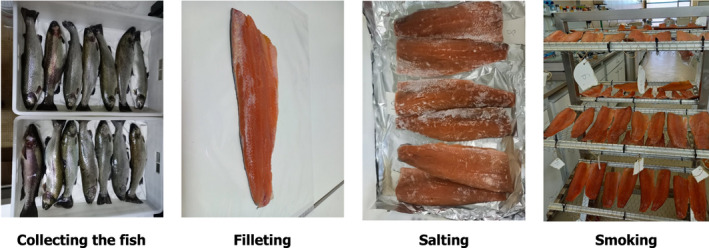
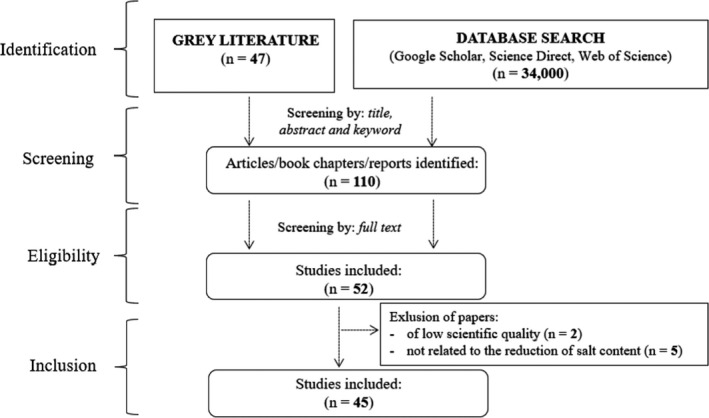
Sodium (Na) is primarily consumed as salt (sodium chloride, NaCl), which is a critical food ingredient that contributes to improve preservation, shelf-life and sensory attributes (e.g. texture and taste). On the other hand, the excessive Na intake is a risk factor for cardiovascular diseases including stroke and heart diseases. The actual NaCl intake in most countries is far above recommended level of 5 g NaCl/day. Therefore, the reduction of NaCl is among top priorities for health authorities around the globe and the World Health Organization (WHO) adopted a strategy to reduce NaCl intake by 30% until 2025. Integral part of the reduction strategy is to limit NaCl intake from seafood, which is especially relevant for regions with a significant fish and shellfish consumption. The purpose of the project was to (i) review the current situation of relevant strategies to reducing NaCl content in seafood (literature review), (ii) assess benefit/risk of NaCl replacement with other substances/ingredients in seafood and (iii) disseminate results obtained. In the first phase of the project, the literature review was performed and the review paper was prepared. The second part of the project was focused on the experimental studies on smoked trout which commercially available products can deliver up to 4 g NaCl in 100 g. The aim of this study was to optimise the development process of smoked trout with reduced NaCl content without compromising quality and safety attributes. Another part of the project was related to the dissemination of results which resulted in the preparation of three conference abstracts and two experimental papers.
钠(Na)主要以盐(氯化钠,NaCl)的形式被摄入,盐是一种关键的食品成分,有助于改善食品的保存、保质期和感官特性(如质地和味道)。另一方面,过量摄入钠是包括中风和心脏病在内的心血管疾病的一个风险因素。大多数国家的实际氯化钠摄入量远远高于建议的每日5克氯化钠的水平。因此,减少氯化钠的摄入是全球卫生当局的首要任务之一,世界卫生组织(WHO)通过了一项战略,到2025年将氯化钠摄入量降低30%。减少战略的一个组成部分是限制海鲜中的氯化钠摄入量,这对于鱼类和贝类消费量很大的地区尤为重要。该项目的目的是:(i)审查减少海鲜中氯化钠含量的相关战略的现状(文献综述);(ii)评估在海鲜中用其他物质/成分替代氯化钠的益处/风险;(iii)传播所获得的结果。在项目的第一阶段,进行了文献综述并撰写了综述论文。项目的第二部分重点是对烟熏鳟鱼的实验研究,市售的烟熏鳟鱼产品每100克中氯化钠含量可达4克。本研究的目的是优化降低氯化钠含量的烟熏鳟鱼的开发过程,同时不影响其质量和安全特性。项目的另一部分与结果传播有关,这导致撰写了三篇会议摘要和两篇实验论文。