Department of Clinical Science, Intervention and Technology, Division of Pediatrics, Karolinska Institutet, Blickagången 6A, Novum, S-141 57, Huddinge, Sweden.
Health Professionals Function, Medical Unit Occupational Therapy & Physiotherapy, Karolinska University Hospital, Hälsovägen 13, S-141 57, Huddinge, Sweden.
Int J Obes (Lond). 2022 Aug;46(8):1527-1533. doi: 10.1038/s41366-022-01146-8. Epub 2022 May 31.
Pediatric obesity lifestyle treatment is not always successful. Frequent clinical visits are of major importance to certify sufficient effect but are difficult due to the associated costs and the great demands on families. We hypothesized that an interactive digital support may reduce the need for frequent physical visits. The aim of the study was to assess 1-year weight outcome for patients using a digital support system compared with standard care.
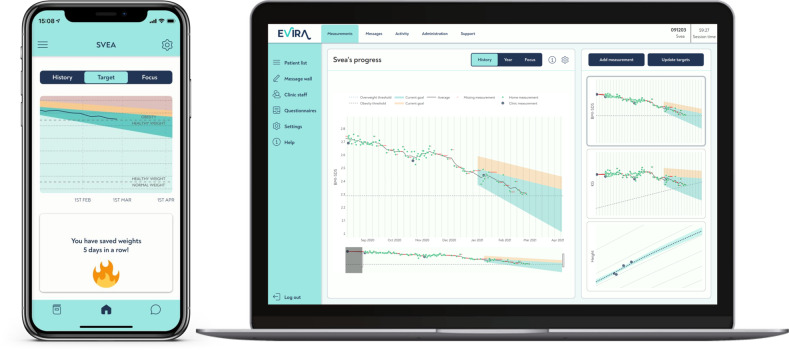
An obesity lifestyle treatment with a digital support system was implemented in one clinic in Stockholm, Sweden. Measurements from a custom-made body scale without digits for daily home measurement of weights were transferred via Bluetooth to a mobile application, where BMI Z-score was calculated and presented graphically with an individualized weight loss target curve. An automatic transfer of data to the web-based clinic interface enables a close monitoring of treatment progress, and frequent written communication between the clinical staff and families via the application. One-year outcome was compared with a randomly retrieved, age and sex matched control group from the Swedish childhood obesity treatment register (BORIS), which received standard treatment at other clinics. Main outcome was change in BMI Z-score and missing data was imputed.
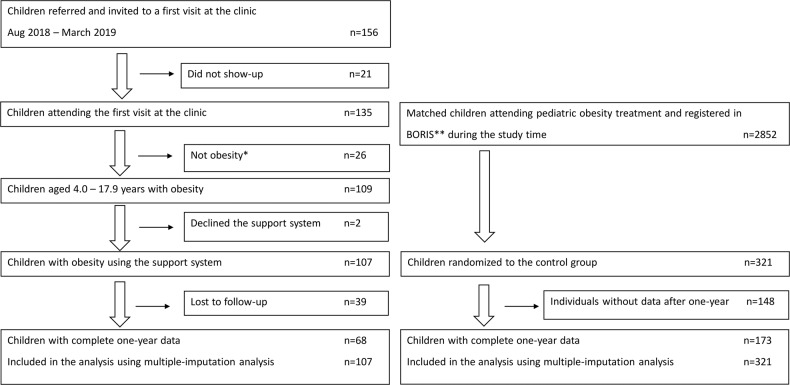
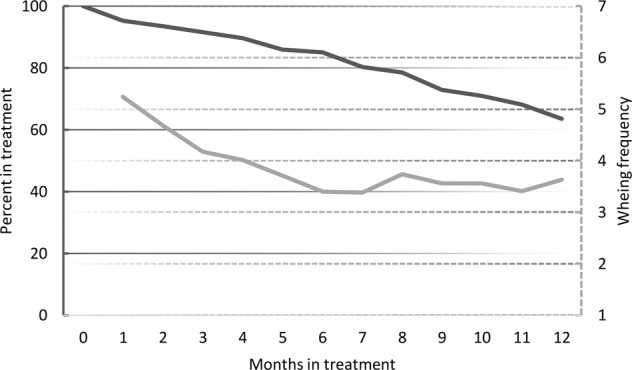
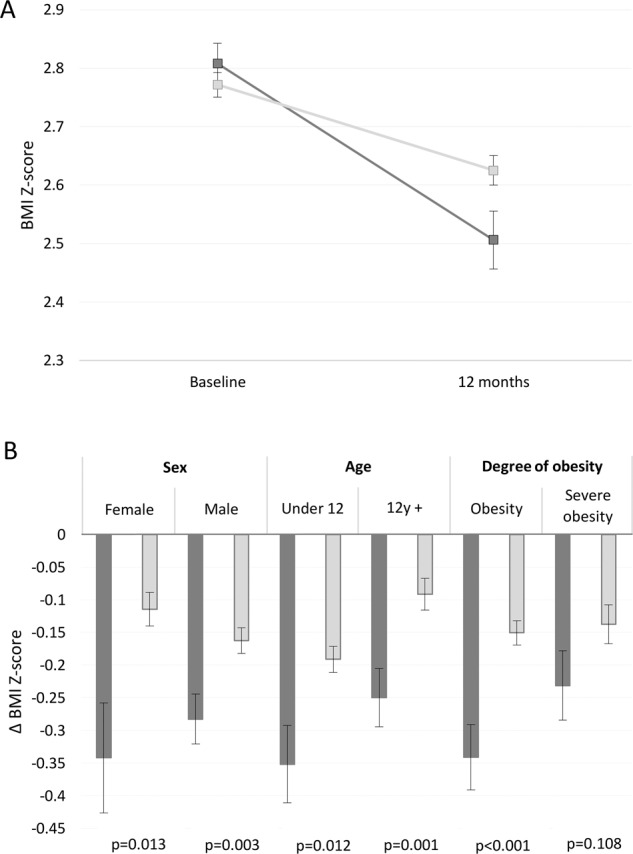
107 children were consecutively included to digi-physical treatment and 321 children to standard care. Age range 4.1-17.4 years (67% males). The attrition rate was 36% and 46% respectively, p = 0.08. After 1 year, the mean ± SD change in BMI Z-score in the treatment group was -0.30 ± 0.39 BMI Z-score units and in the standard care group -0.15 ± 0.28, p = 0.0002. The outcome was better for both sexes and all age groups in the digi-physical treated group.
A digital support system with a personalized weight-loss target curve and daily weight measurements shared by the family and the clinic is more effective than a standard care childhood obesity treatment.
NCT04323215.
儿科肥胖症的生活方式治疗并不总是成功的。频繁的临床就诊对于确保充分的疗效非常重要,但由于相关费用和对家庭的巨大需求,这很难做到。我们假设交互式数字支持可能会减少频繁的身体就诊需求。本研究旨在评估使用数字支持系统治疗的患者与标准护理相比在 1 年内的体重结果。
在瑞典斯德哥尔摩的一家诊所实施了一种肥胖症生活方式治疗,配备了数字支持系统。使用定制的无数字体脂秤进行日常家庭体重测量,通过蓝牙将测量值传输到移动应用程序,该应用程序计算 BMI Z 分数并以图形方式呈现,同时呈现个性化的体重减轻目标曲线。数据自动传输到基于网络的诊所界面,可密切监测治疗进展,并通过应用程序在临床工作人员和家庭之间进行频繁的书面交流。将 1 年的结果与瑞典儿童肥胖症治疗登记处(BORIS)中随机检索的年龄和性别匹配的对照组进行比较,该对照组在其他诊所接受标准治疗。主要结果是 BMI Z 分数的变化,缺失数据采用插补法处理。
107 名儿童连续接受数字-物理治疗,321 名儿童接受标准治疗。年龄范围为 4.1-17.4 岁(67%为男性)。治疗组的失访率为 36%,标准治疗组为 46%,p=0.08。1 年后,治疗组 BMI Z 分数的平均变化值为-0.30±0.39 BMI Z 分数单位,标准治疗组为-0.15±0.28,p=0.0002。在数字-物理治疗组中,无论是男性还是女性,以及所有年龄组,治疗效果均更好。
与标准的儿童肥胖症治疗相比,具有个性化减肥目标曲线和家庭与诊所共享日常体重测量值的数字支持系统更有效。
NCT04323215。