Trinkle Christine A, Broaddus Richard N, Sturgill Jamie L, Waters Christopher M, Morris Peter E
Department of Mechanical Engineering, College of Engineering, University of Kentucky, 277 Ralph G. Anderson Building, Lexington, KY, 40506, USA.
Division of Pulmonary, Critical Care and Sleep Medicine, College of Medicine, University of Kentucky, Lexington, KY, USA.
Intensive Care Med Exp. 2022 May 30;10(1):22. doi: 10.1186/s40635-022-00448-5.
Mechanical power is a promising new metric to assess energy transfer from a mechanical ventilator to a patient, which combines the contributions of multiple parameters into a single comprehensive value. However, at present, most ventilators are not capable of calculating mechanical power automatically, so there is a need for a simple equation that can be used to estimate this parameter at the bedside. For volume-controlled ventilation (VCV), excellent equations exist for calculating power from basic ventilator parameters, but for pressure-controlled ventilation (PCV), an accurate, easy-to-use equation has been elusive.
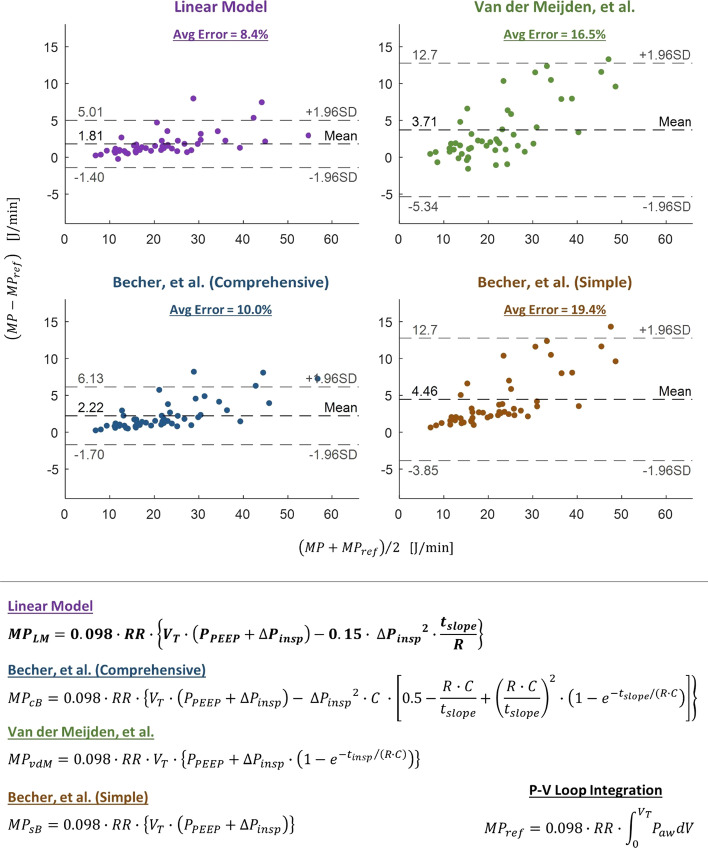
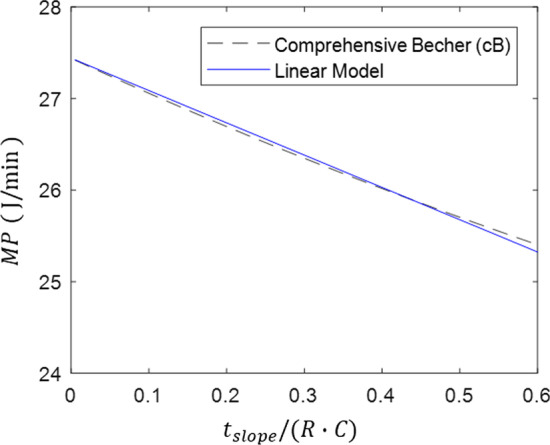
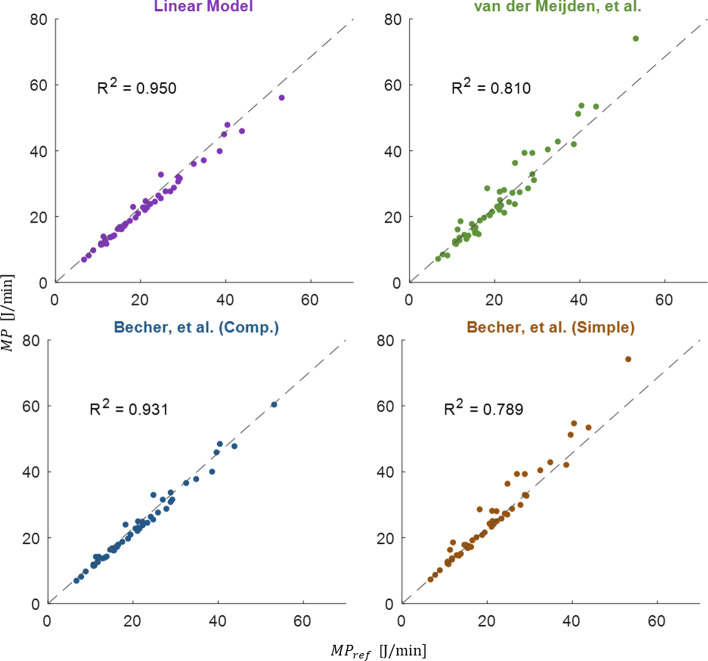
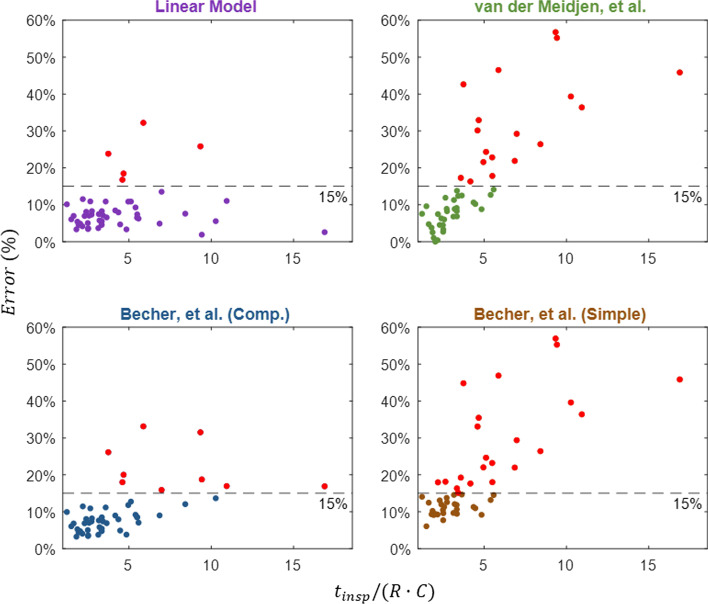
Here, we present a new power equation and evaluate its accuracy compared to the three published PCV power equations. When applied to a sample of 50 patients on PCV with a non-zero rise time, we found that our equation estimated power within an average of 8.4% ± 5.9% (mean ± standard deviation) of the value obtained by numerical integration of the P-V loop. The other three equations estimated power with an error of 19.4% ± 12.9% (simplified Becher equation), 10.0% ± 6.8% (comprehensive Becher equation), and 16.5% ± 14.6% (van der Meijden equation).
Our equation calculates power more accurately than the other three published equations, and is much easier to use than the only previously published equation with similar accuracy. The proposed new mechanical power equation is accurate and simple to use, making it an attractive option to estimate power in PCV cases at the bedside.
机械功率是一种很有前景的新指标,用于评估从机械通气机到患者的能量传递,它将多个参数的贡献整合为一个单一的综合值。然而,目前大多数通气机无法自动计算机械功率,因此需要一个简单的方程,可用于在床边估算该参数。对于容量控制通气(VCV),已经存在从基本通气机参数计算功率的优秀方程,但对于压力控制通气(PCV),一个准确、易用的方程一直难以找到。
在此,我们提出了一个新的功率方程,并将其与已发表的三个PCV功率方程相比评估其准确性。当应用于50例采用非零上升时间的PCV患者样本时,我们发现我们的方程估算的功率与通过P-V环数值积分获得的值平均相差8.4%±5.9%(均值±标准差)。其他三个方程估算功率的误差分别为19.4%±12.9%(简化的贝歇尔方程)、10.0%±6.8%(综合贝歇尔方程)和16.5%±14.6%(范德梅伊登方程)。
我们的方程计算功率比其他三个已发表的方程更准确,并且比之前唯一发表的具有类似准确性的方程更易于使用。所提出的新机械功率方程准确且易于使用,使其成为在床边估算PCV病例中功率的一个有吸引力的选择。