Institute of Digestive Diseases, LongHua Hospital, Shanghai University of Traditional Chinese Medicine, Shanghai 200032, China.
Department of Gastroenterology, Traditional Chinese Medicine Hospital of Shaanxi Province, Xi'an 710003, Shaanxi Province, China.
World J Gastroenterol. 2022 Apr 7;28(13):1315-1328. doi: 10.3748/wjg.v28.i13.1315.
Bone loss and osteoporosis are commonly described as extra-intestinal manifestations of inflammatory bowel disease (IBD). Jianpi Qingchang Bushen decoction (JQBD) is a prescription used in clinical practice. However, further studies are needed to determine whether JQBD regulates the receptor activator of nuclear factor kappa B (NF-κB) (RANK)/receptor activator of NF-κB ligand (RANKL)/ osteoprotegerin (OPG) pathways and could play a role in treating IBD-induced bone loss.
To evaluate the therapeutic effect of JQBD in IBD-induced bone loss and explore the underlying mechanisms.
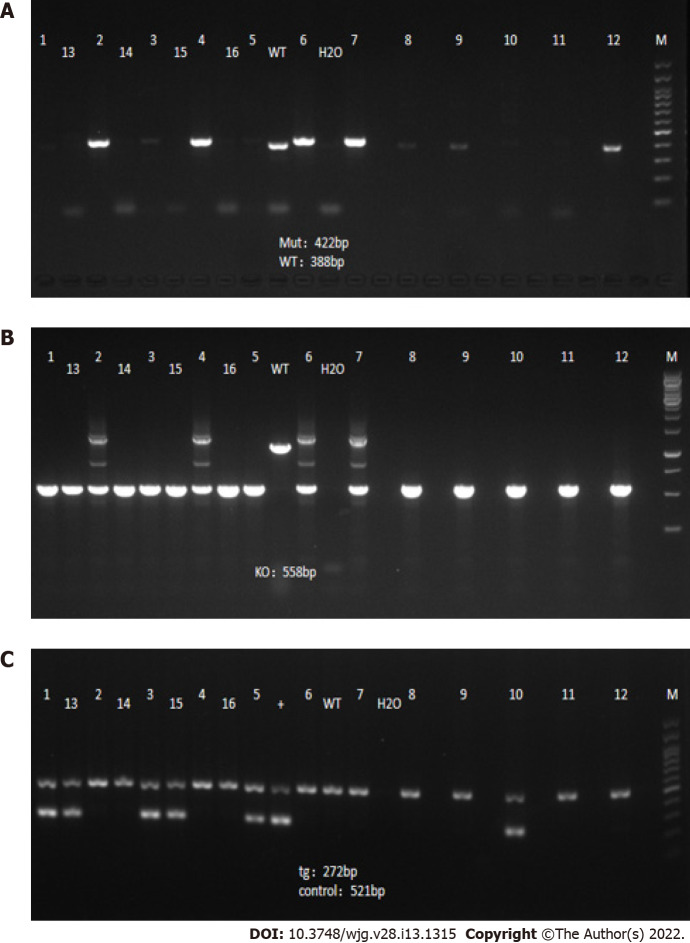
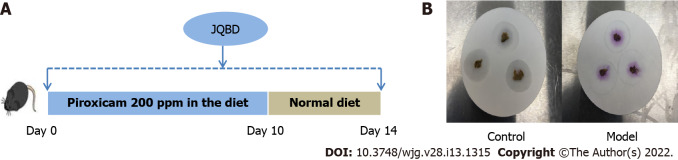
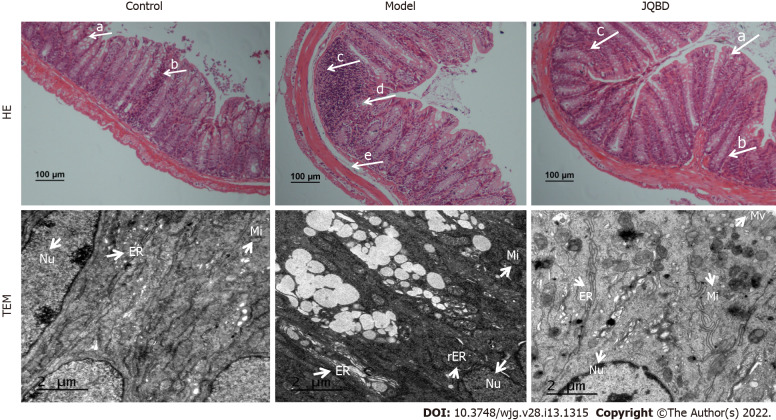
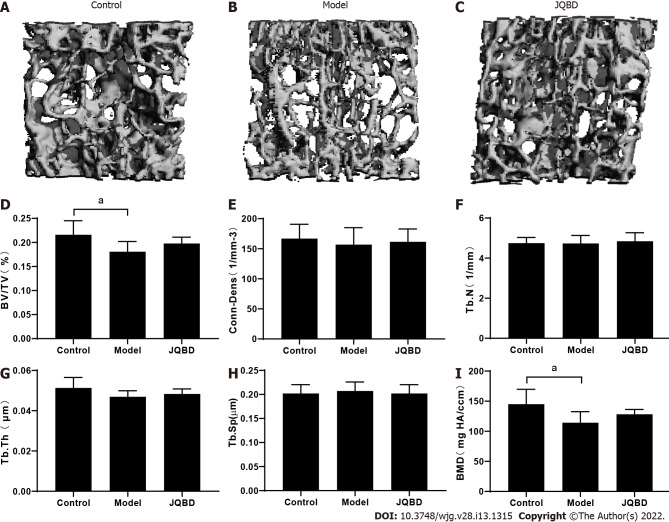
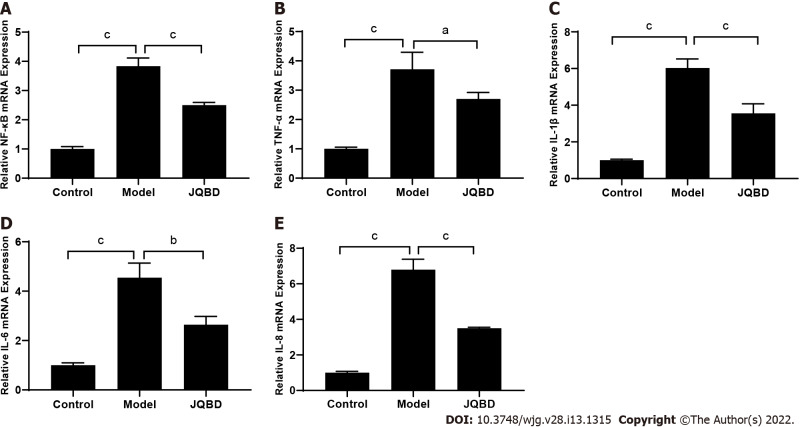
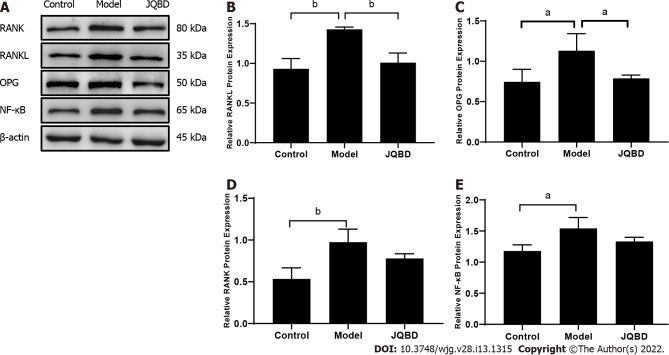
An IBD-induced bone loss model was constructed by feeding 12 6-to-8-wk-old interleukin-10 (IL-10)-knockout mice with piroxicam for 10 d. The mice were randomly divided into model and JQBD groups. We used wild-type mice as a control. The JQBD group was administered the JQBD suspension for 2 wk by gavage, while the control and model groups were given normal saline at the corresponding time points. All mice were killed after the intervention. The effect of JQBD on body weight, disease activity index (DAI), and colon length was analyzed. Histopathological examination, colon ultrastructure observation, and micro-computed tomographic scanning of the lumbar vertebrae were performed. The gene expression of NF-κB, tumor necrosis factor-α (TNF-α), IL-1β, IL-6, and IL-8 in the colon was evaluated by real-time polymerase chain reaction. Colon samples were assessed by Western blot for the expression of RANKL, OPG, RANK, and NF-κB proteins.
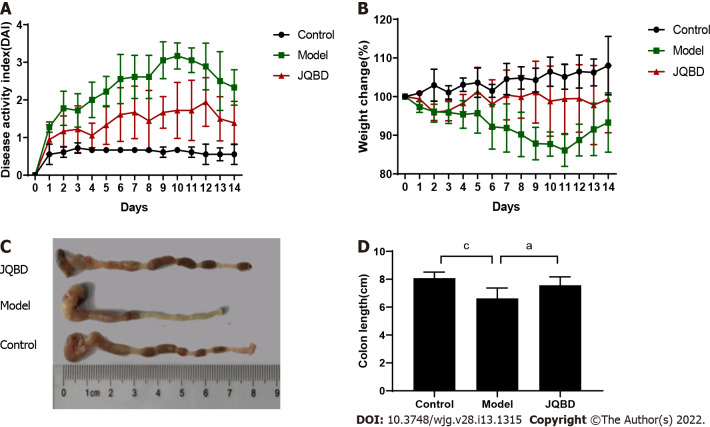
The model group lost body weight, had a shorter colon, and showed a dramatic increase in DAI score, whereas JQBD had protective and therapeutic effects. Treatment with JQBD significantly improved inflammatory cell infiltration and reduced crypt abscess and ulcer formation. Three-dimensional imaging of the vertebral centrum in the model group revealed a lower bone mass, loose trabeculae, and "rod-shaped" changes in the structure compared to the control group and JQBD groups. The bone volume/total volume ratio and bone mineral density were significantly lower in the model group than in the control group. JQBD intervention downregulated the NF-κB, TNF-α, IL-1β, IL-6, and IL-8 mRNA expression levels. The RANKL and OPG protein levels were also improved.
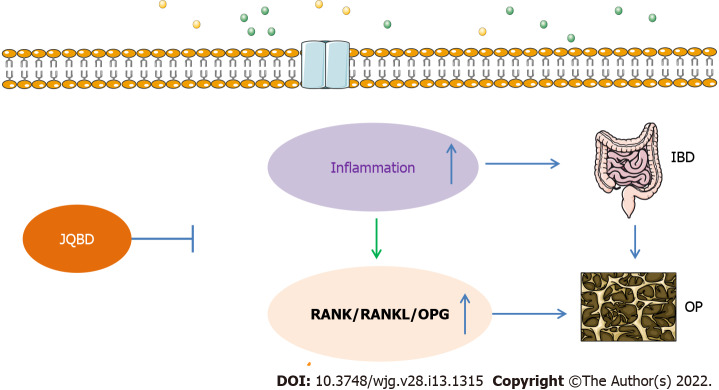
JQBD reduces inflammation of the colonic mucosa and inhibits activation of the RANK/ RANKL/OPG signaling pathway, thereby reducing osteoclast activation and bone resorption and improving bone metabolism.
骨丢失和骨质疏松症通常被描述为炎症性肠病(IBD)的肠外表现。健脾清肠补肾汤(JQBD)是一种临床应用的方剂。然而,需要进一步的研究来确定 JQBD 是否调节核因子κB(NF-κB)(RANK)/NF-κB 配体(RANKL)/骨保护素(OPG)途径,并在治疗 IBD 诱导的骨丢失中发挥作用。
评估 JQBD 在 IBD 诱导的骨丢失中的治疗效果,并探讨其潜在机制。
通过给予 12 只 6-8 周龄白细胞介素-10(IL-10)-基因敲除小鼠吡罗昔康 10 天构建 IBD 诱导的骨丢失模型。将小鼠随机分为模型组和 JQBD 组。我们以野生型小鼠作为对照。JQBD 组通过灌胃给予 JQBD 混悬液 2 周,而对照组和模型组在相应时间点给予生理盐水。所有小鼠在干预后处死。分析 JQBD 对体重、疾病活动指数(DAI)和结肠长度的影响。进行组织病理学检查、结肠超微结构观察和腰椎微计算机断层扫描。通过实时聚合酶链反应评估结肠中 NF-κB、肿瘤坏死因子-α(TNF-α)、IL-1β、IL-6 和 IL-8 的基因表达。通过 Western blot 评估结肠中 RANKL、OPG、RANK 和 NF-κB 蛋白的表达。
模型组体重减轻,结肠缩短,DAI 评分显著升高,而 JQBD 具有保护和治疗作用。JQBD 治疗显著改善了炎症细胞浸润,减少了隐窝脓肿和溃疡形成。模型组椎体中心的三维成像显示骨量较低、骨小梁疏松,结构呈“棒状”改变,与对照组和 JQBD 组相比。模型组的骨体积/总体积比和骨密度明显低于对照组。JQBD 干预下调了 NF-κB、TNF-α、IL-1β、IL-6 和 IL-8 的 mRNA 表达水平。RANKL 和 OPG 蛋白水平也得到改善。
JQBD 减轻了结肠黏膜炎症,并抑制了 RANK/RANKL/OPG 信号通路的激活,从而减少了破骨细胞的激活和骨吸收,改善了骨代谢。