Larionow Paweł, Sołtys Michalina, Izdebski Paweł, Mudło-Głagolska Karolina, Golonka Justyna, Demski Maksym, Rosińska Maja
Faculty of Psychology, Kazimierz Wielki University, Bydgoszcz, Poland.
Front Psychol. 2022 May 11;13:870392. doi: 10.3389/fpsyg.2022.870392. eCollection 2022.
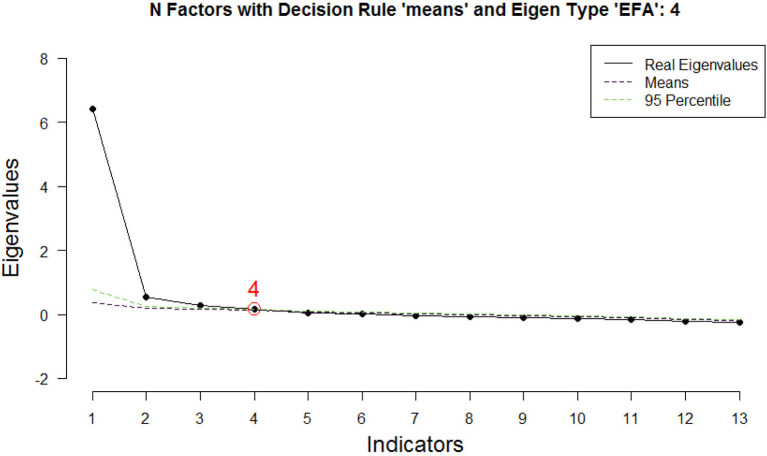
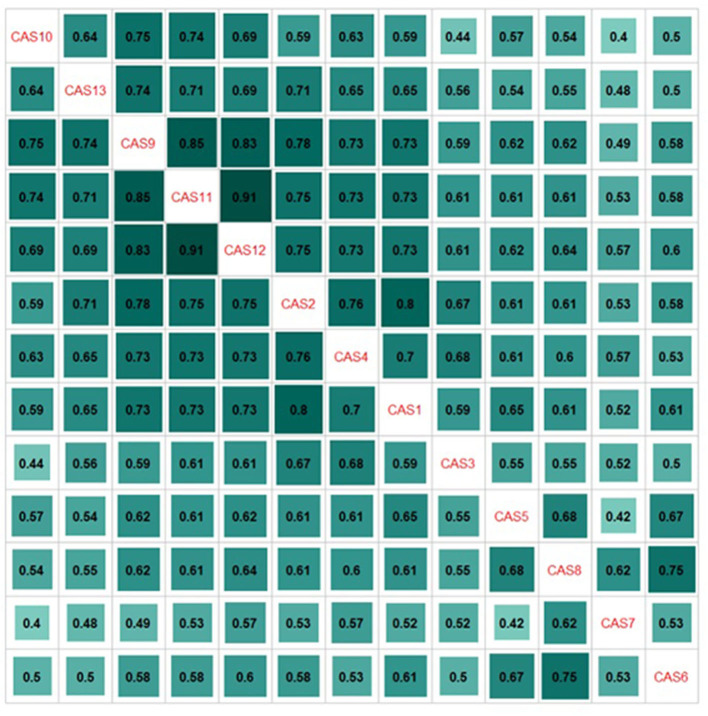
The Climate Anxiety Scale (CAS) is a 13-item questionnaire for assessing climate anxiety (CA) as a psychological response to climate change. The CAS consists of two subscales, namely, cognitive impairment and functional impairment. This study aimed to validate the Polish version of the CAS. The sample included 603 respondents (344 females, 247 males, and 12 non-binary), aged 18-70 years ( = 25.32, = 9.59). Based on the exploratory factor analysis results, we proposed a 3-factor solution (i.e., intrusive symptoms, reflections on CA, and functional impairment), which seems to be theoretically more consistent with the content of the CAS statements. The confirmatory factor analysis showed that the original 2-factor solution and the 3-factor one had a satisfactory and a good fit to the data, respectively, as well as both were invariant across different gender, age, and educational level categories. Despite the fact that the 3-factor solution had the best-fit indices, we recommended to examine the CAS structure in different samples and use the overall CAS score in cross-cultural research. Cognitive and functional impairment subscales were positively correlated with personal experience of climate change, behavioral engagement, environmental identity, and environmental motives, but they were negatively correlated with climate change denial and sense of safety. The CAS subscales were correlated with depressive symptoms, but contrary to expectations, they were not associated with anxiety symptoms and any cognitive coping strategies. The Polish version of the CAS has satisfactory psychometric properties. Overall, we reported low CA levels in the Polish sample. Women and younger people experienced higher CA.
气候焦虑量表(CAS)是一份包含13个条目的问卷,用于评估作为对气候变化的心理反应的气候焦虑(CA)。CAS由两个子量表组成,即认知损害和功能损害。本研究旨在验证CAS的波兰语版本。样本包括603名受访者(344名女性、247名男性和12名非二元性别者),年龄在18至70岁之间(均值 = 25.32,标准差 = 9.59)。基于探索性因素分析结果,我们提出了一个三因素解决方案(即侵入性症状、对气候焦虑的思考和功能损害),这在理论上似乎与CAS陈述的内容更一致。验证性因素分析表明,最初的两因素解决方案和三因素解决方案分别对数据具有令人满意和良好的拟合度,并且在不同性别、年龄和教育水平类别中都是不变的。尽管三因素解决方案具有最佳的拟合指数,但我们建议在不同样本中检验CAS的结构,并在跨文化研究中使用CAS的总体得分。认知和功能损害子量表与气候变化的个人经历、行为参与、环境认同和环境动机呈正相关,但与气候变化否认和安全感呈负相关。CAS子量表与抑郁症状相关,但与预期相反,它们与焦虑症状和任何认知应对策略均无关联。CAS的波兰语版本具有令人满意的心理测量特性。总体而言,我们报告波兰样本中的气候焦虑水平较低。女性和年轻人经历的气候焦虑较高。