Hu Doudou, Zhang Wei, Xiang Jiajia, Li Dongdong, Chen Yong, Yuan Pengcheng, Shao Shiqun, Zhou Zhuxian, Shen Youqing, Tang Jianbin
Zhejiang Key Laboratory of Smart BioMaterials and Center for Bionanoengineering, College of Chemical and Biological Engineering, Zhejiang University, Hangzhou, 310027, China.
Key Laboratory of Biomass Chemical Engineering of the Ministry of Education, College of Chemical and Biological Engineering, Zhejiang University, Hangzhou, 310027, China.
Mater Today Bio. 2022 May 11;14:100284. doi: 10.1016/j.mtbio.2022.100284. eCollection 2022 Mar.
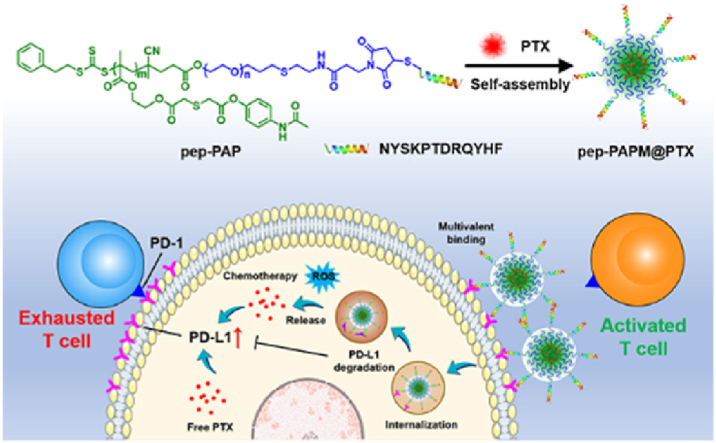
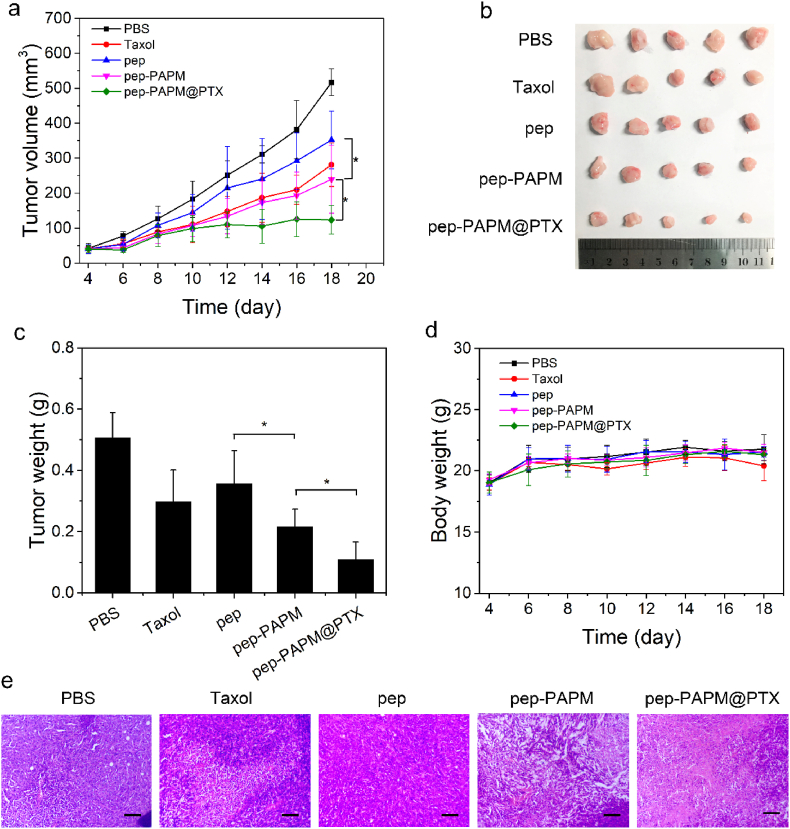
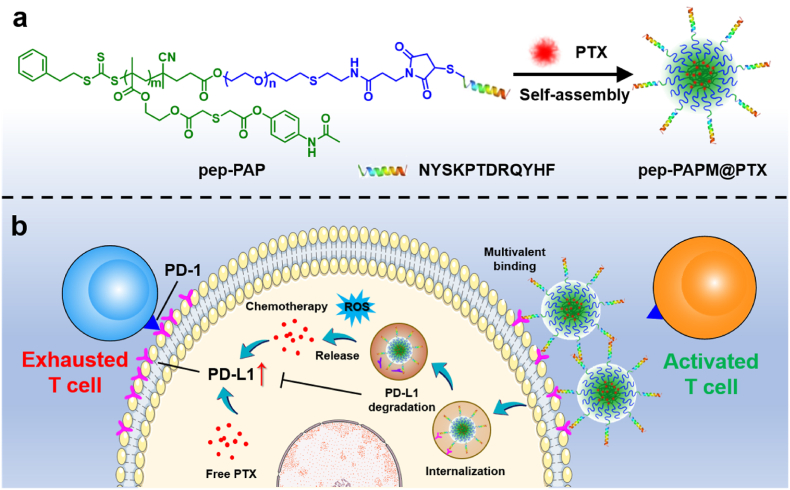
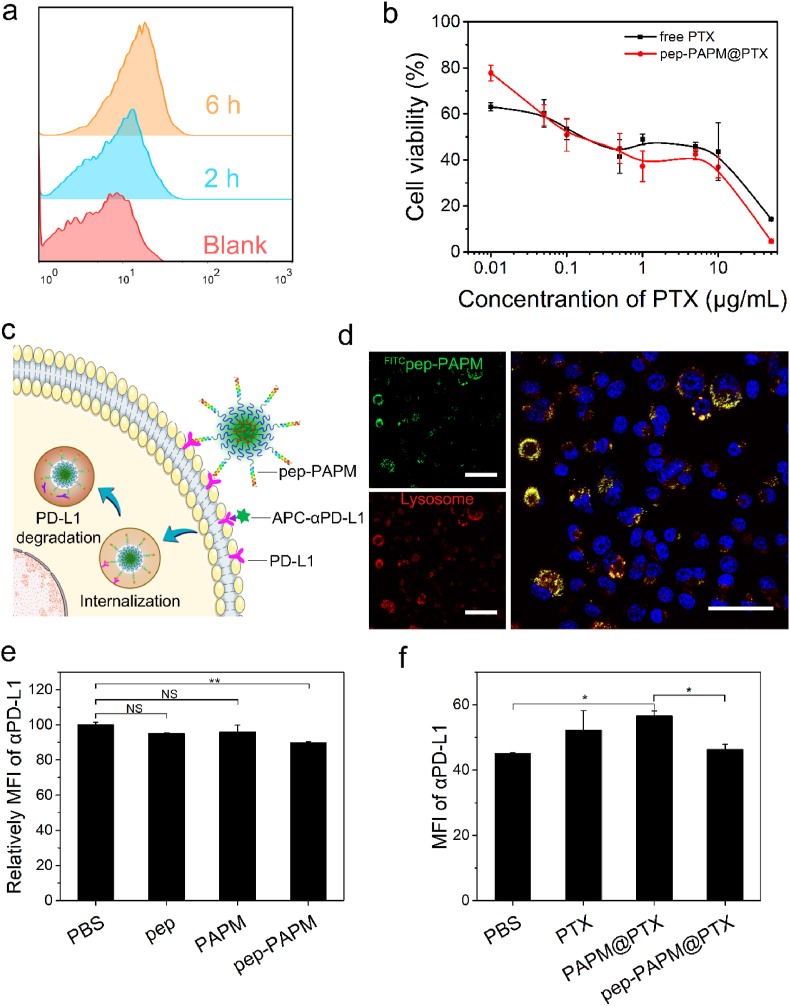
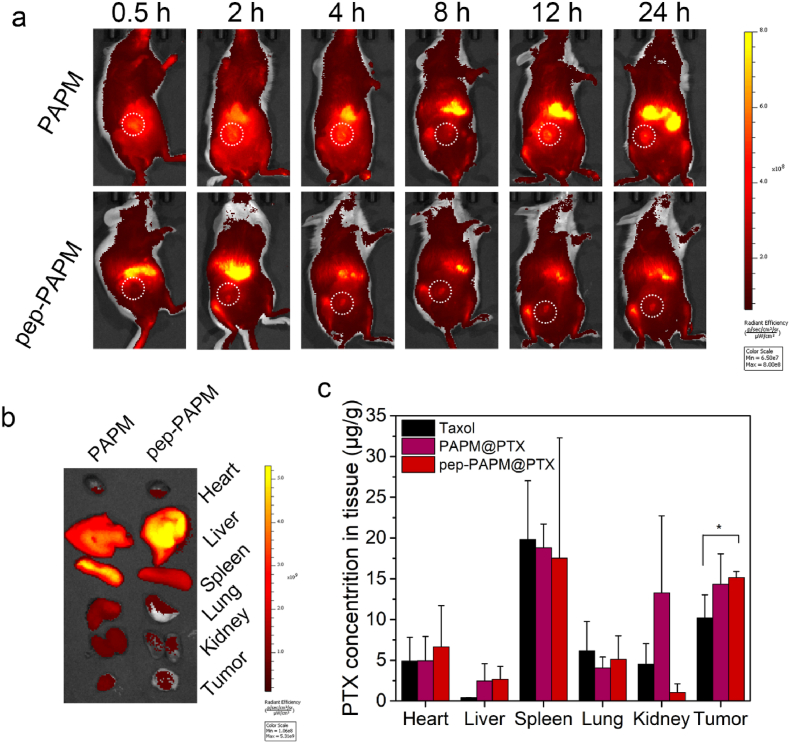
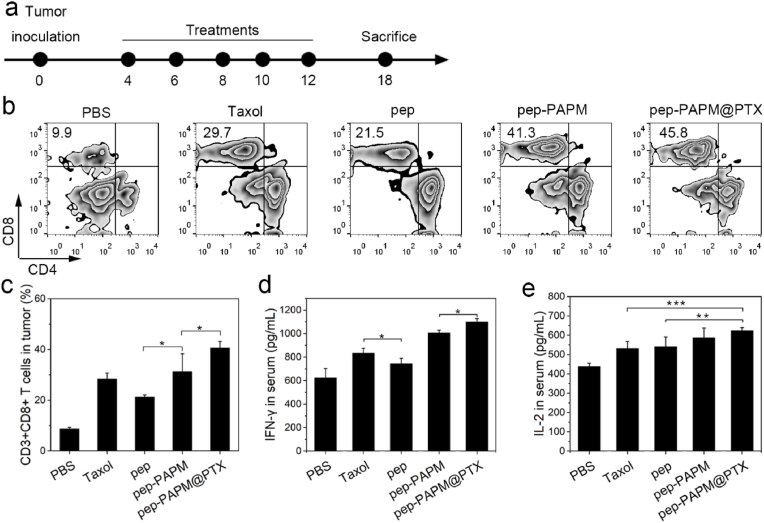
Immune checkpoint blockade (ICB) therapies that target programmed cell death-1 (PD-1)/programmed cell death-ligand 1 (PD-L1) pathway are currently used for the treatment of various cancer types. However, low response rates of ICB remain the major issue and limit their applications in clinic. Here, we developed a ROS-responsive synergistic delivery system (pep-PAPM@PTX) by integrating physically-encapsulated paclitaxel (PTX) and surface-modified anti-PD-L1 peptide (pep) for combined chemotherapy and ICB therapy. Pep-PAPM@PTX could bind the cell surface PD-L1 and drive its recycling to lysosomal degradation, thus reverting PTX-induced PD-L1 upregulation and downregulating PD-L1 expression. As a result, pep-PAPM@PTX significantly promoted T cell infiltration and increased tumor immunoactivating factors, synergizing PTX chemotherapy to achieve enhanced anticancer potency in a triple-negative breast cancer (TNBC) model.
靶向程序性细胞死亡蛋白1(PD-1)/程序性细胞死亡配体1(PD-L1)通路的免疫检查点阻断(ICB)疗法目前用于治疗多种癌症类型。然而,ICB的低反应率仍然是主要问题,并限制了它们在临床上的应用。在此,我们通过整合物理包裹的紫杉醇(PTX)和表面修饰的抗PD-L1肽(pep),开发了一种ROS响应性协同递送系统(pep-PAPM@PTX),用于联合化疗和ICB治疗。Pep-PAPM@PTX可以结合细胞表面的PD-L1并驱动其循环至溶酶体降解,从而逆转PTX诱导的PD-L1上调并下调PD-L1表达。结果,pep-PAPM@PTX显著促进T细胞浸润并增加肿瘤免疫激活因子,协同PTX化疗在三阴性乳腺癌(TNBC)模型中实现增强的抗癌效力。