School of Pharmacy, National Defense Medical Center, No. 161, Sec. 6, Minquan E. Rd., Neihu Dist., Taipei City 11490, Taiwan, Republic of China.
Pharmaceutical Plant of Controlled Drugs, Food and Drug Administration, No. 287, Datong Rd., Sanxia Dist., New Taipei City 23742, Taiwan, Republic of China.
J Food Drug Anal. 2022 Mar 15;30(1):150-162. doi: 10.38212/2224-6614.3400.
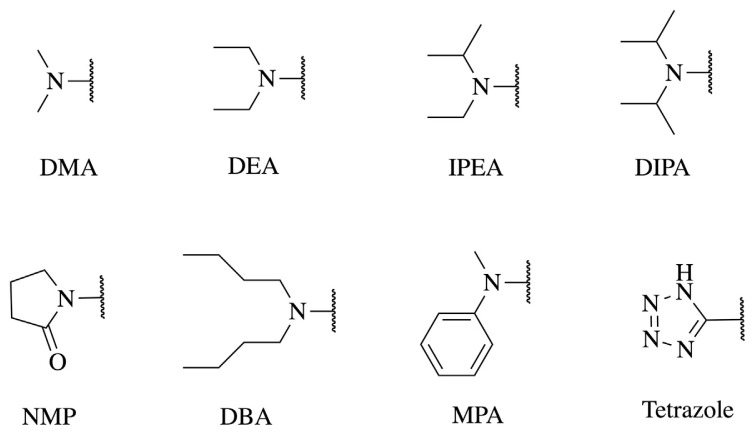
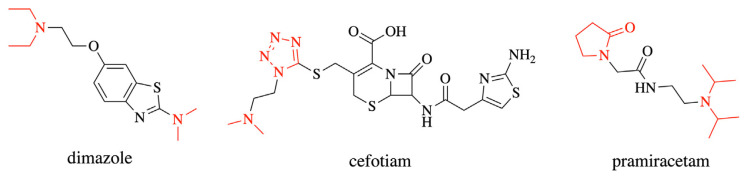
Drug substances are at risk of contamination with N-nitrosamines (NAs), well-known carcinogenic agents, during synthesis processes and/or long-term storage. Therefore, in this study, we developed an efficient data-based screening approach to systemically assess marketed products and investigated its scalability for benefiting both regulatory agencies and pharmaceutical industries. A substructure-based screening method employing DataWarrior, an open-source software, was established to evaluate the risks of NA impurities in drug substances. Eight NA substructures containing susceptible amino sources for N-nitrosation have been identified as screening targets: dimethylamine (DMA), diethylamine, isopropylethylamine, diisopropylamine, N-methyl-2-pyrrolidone, dibutylamine, methylphenylamine, and tetrazoles. Our method detected 192 drug substances with a theoretical possibility of NA impurity, 141 of which had not been reported previously. In addition, the DMA moiety was significantly dominant among the eight NA substructures. The results were validated using data from the literature, and a high detection sensitivity of 0.944 was demonstrated. Furthermore, our approach has the advantage of scalability, owing to which 31 additional drugs with suspected NA-contaminated substructures were identified using the substructures of 1-methyl-4-piperazine in rifampin and 1-cyclopentyl-4-piperazine in rifapentine. In conclusion, the reported substructure-based approach provides an effective and scalable method for the screening and investigation of NA impurities in various pharmaceuticals and might be used as an ancillary technique in the field of pharmaceutical quality control for risk assessments of potential NA impurities.
药物在合成过程中和/或长期储存过程中存在被 N-亚硝胺(NAs)污染的风险,NAs 是众所周知的致癌物质。因此,在本研究中,我们开发了一种有效的基于数据的筛选方法,系统地评估市售产品,并研究其可扩展性,以造福监管机构和制药行业。采用开源软件 DataWarrior 建立了基于亚结构的筛选方法,用于评估药物中 NA 杂质的风险。确定了 8 个含有易发生 N-亚硝化的敏感氨基源的 NA 亚结构作为筛选目标:二甲胺(DMA)、二乙胺、异丙基乙基胺、二异丙基胺、N-甲基-2-吡咯烷酮、二丁基胺、甲基苯胺和四唑。我们的方法检测到 192 种具有 NA 杂质理论可能性的药物,其中 141 种以前没有报道过。此外,DMA 部分在 8 个 NA 亚结构中明显占主导地位。使用文献中的数据验证了结果,显示出 0.944 的高检测灵敏度。此外,由于该方法具有可扩展性,因此还可以使用利福平中的 1-甲基-4-哌嗪和利福喷汀中的 1-环戊基-4-哌嗪的亚结构,确定了 31 种具有可疑 NA 污染亚结构的其他药物。总之,报告的基于亚结构的方法为筛选和调查各种药物中的 NA 杂质提供了一种有效且可扩展的方法,并且可能作为药物质量控制领域中潜在 NA 杂质风险评估的辅助技术。