University of Puerto Rico Comprehensive Cancer Center, San Juan, PR, USA.
VA Caribbean Healthcare System, San Juan, PR, USA.
J Racial Ethn Health Disparities. 2023 Jun;10(3):1423-1431. doi: 10.1007/s40615-022-01328-0. Epub 2022 Jun 1.
Tumor molecular profiling techniques, such as next-generation sequencing (NGS) to identify somatic genetic alterations, allow physicians to have a better understanding of the affected carcinogenic pathways and guide targeted therapy. The objective of our study was to characterize common somatic alterations and carcinogenic pathways among Puerto Rican Hispanics with solid tumors.
We conducted a single-institution, retrospective study to characterize molecular tumor profiles using a 592-gene NGS platform. Actionable mutations with current or developing therapies targeting affected genes/pathways were highlighted.
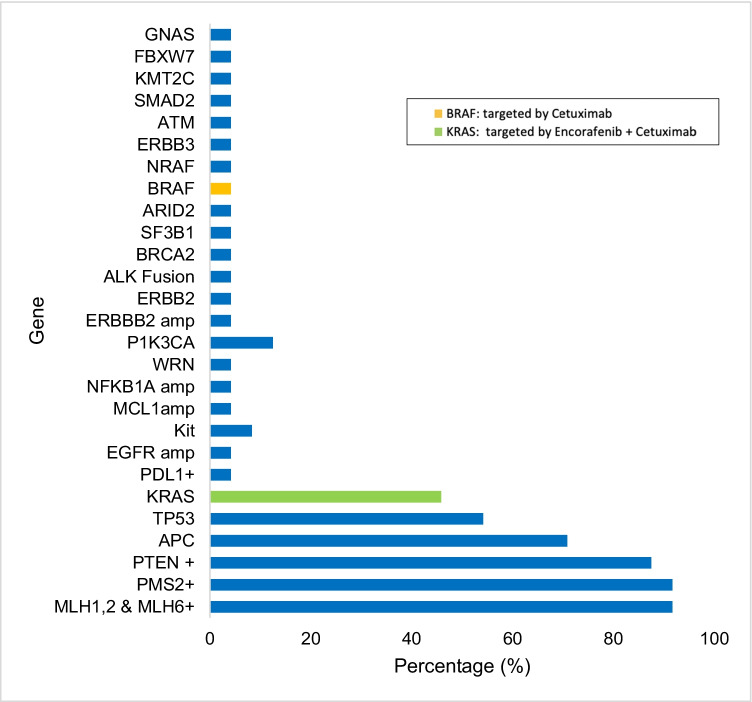
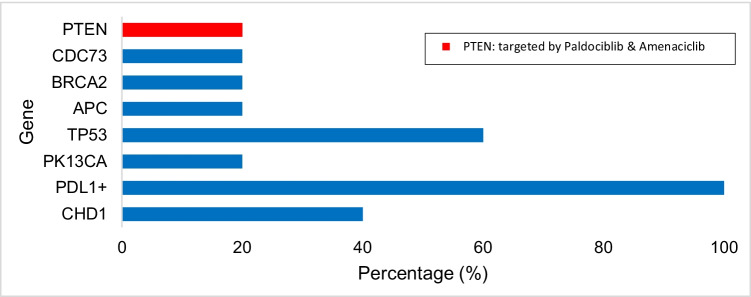
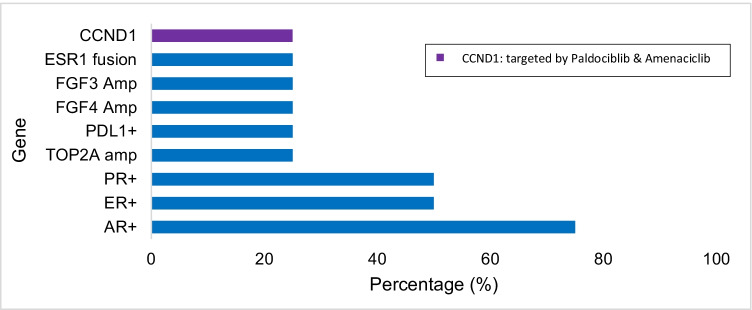
Tumors from 50 Hispanic patients were evaluated using CARIS Life Science© NGS testing. The median age of our study population was 55 (range 21-84); 54% (n = 27) were males. The primary tumor sites were colorectal (n = 24), gastric (n = 5), breast (n = 4), and lung (n = 3). The most common genetic mutations identified were in TP53 (44%), APC (38%), and KRAS (32%); followed by alterations in EGFR (4%), HER2 (6%), and homologous recombinant deficiency genes (BRCA2, 6%). Genetic alterations were found in multiple signaling pathways particularly in the cell cycle control pathway, MAPK and Wnt/β-Catenin signaling pathways. Targetable biomarkers were identified in 27/50 (54.0%) of tumors.
Molecular profiling techniques, such as next-generation sequencing, have substantially expanded access to alterations in the cancer genome. Our findings demonstrated important actionable mutations in most of the tumors evaluated and support the integration of somatic mutation profiling in the evaluation of Hispanic cancer patients with advanced cancer to help guide therapeutic options.
肿瘤分子分析技术,如下一代测序(NGS)以识别体细胞遗传改变,使医生能够更好地了解受影响的致癌途径,并指导靶向治疗。我们的研究目的是描述波多黎各西班牙裔实体瘤患者常见的体细胞改变和致癌途径。
我们进行了一项单机构、回顾性研究,使用 592 个基因的 NGS 平台来描述分子肿瘤特征。突出显示了针对受影响基因/途径的当前或正在开发的治疗方法的可操作突变。
使用 CARIS Life Science© NGS 测试评估了 50 名西班牙裔患者的肿瘤。我们研究人群的中位年龄为 55 岁(范围 21-84 岁);54%(n=27)为男性。主要肿瘤部位为结直肠(n=24)、胃(n=5)、乳腺(n=4)和肺(n=3)。确定的最常见基因突变是 TP53(44%)、APC(38%)和 KRAS(32%);其次是 EGFR(4%)、HER2(6%)和同源重组缺陷基因(BRCA2,6%)的改变。遗传改变发生在多个信号通路中,特别是细胞周期控制通路、MAPK 和 Wnt/β-Catenin 信号通路。在 50 个肿瘤中的 27/50(54.0%)中鉴定出了可靶向的生物标志物。
下一代测序等分子分析技术极大地扩大了对癌症基因组中改变的获取。我们的研究结果表明,在评估的大多数肿瘤中存在重要的可操作突变,支持在评估晚期癌症的西班牙裔癌症患者中整合体细胞突变分析,以帮助指导治疗选择。