Mehrara Babak J, Park Hyeung Ju, Kataru Raghu P, Bromberg Jacqueline, Coriddi Michelle, Baik Jung Eun, Shin Jinyeon, Li Claire, Cavalli Michele R, Encarnacion Elizabeth M, Lee Meghan, Van Zee Kimberly J, Riedel Elyn, Dayan Joseph H
Plastic and Reconstructive Surgery Service, Department of Surgery, Memorial Sloan Kettering Cancer Center, New York, NY 10065, USA.
Breast Medicine Service, Department of Medicine, Memorial Sloan Kettering Cancer Center, New York, NY 10065, USA.
Biology (Basel). 2021 Sep 18;10(9):934. doi: 10.3390/biology10090934.
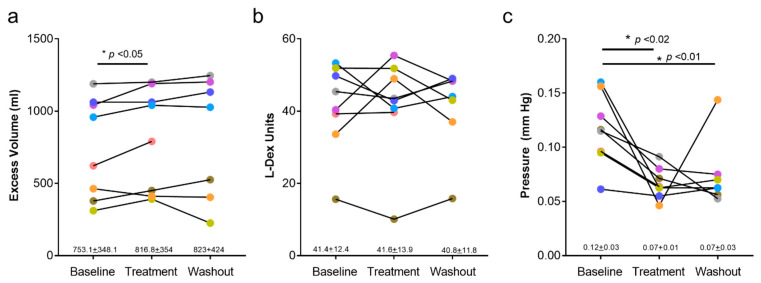
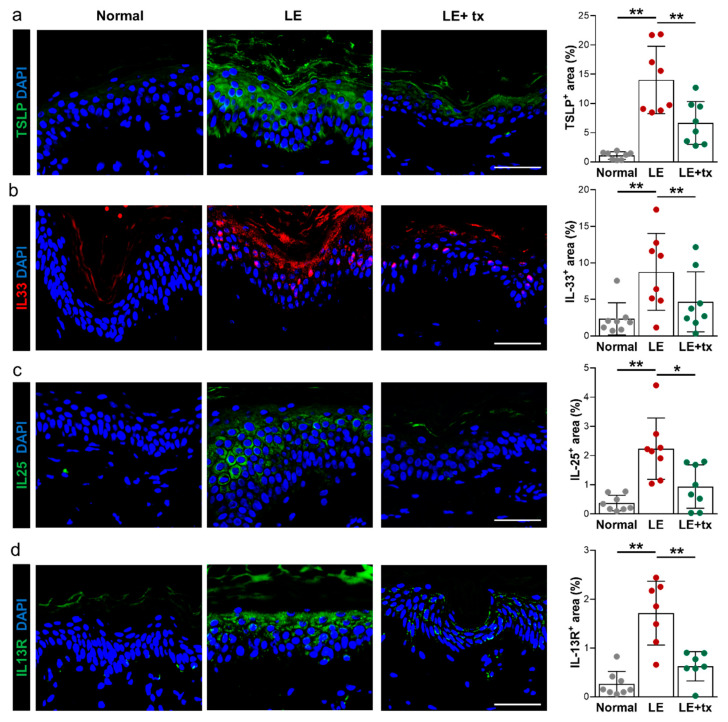
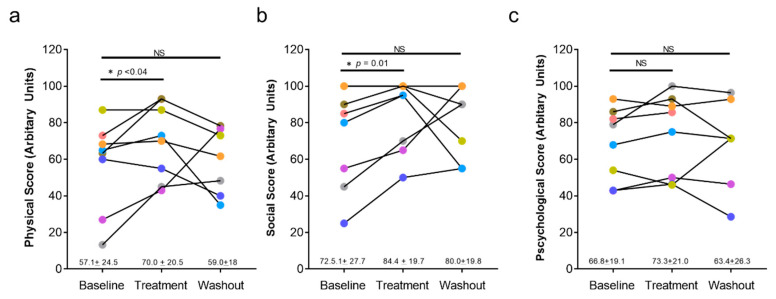
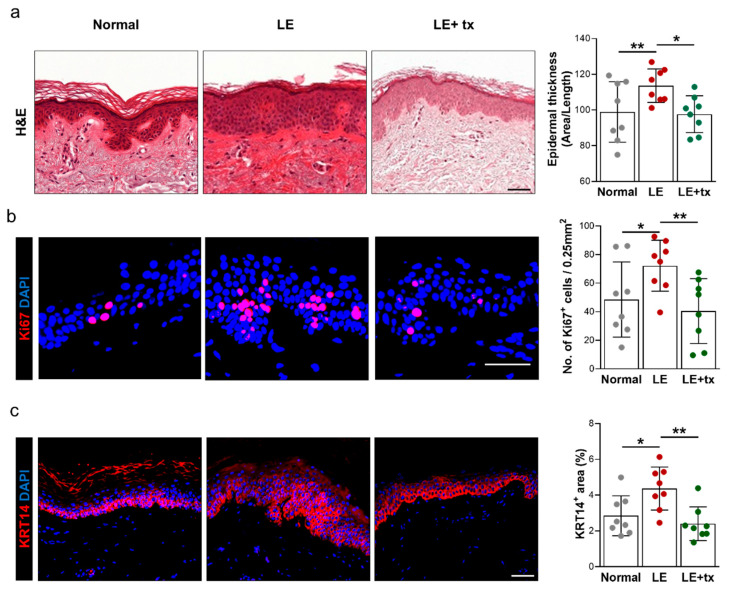
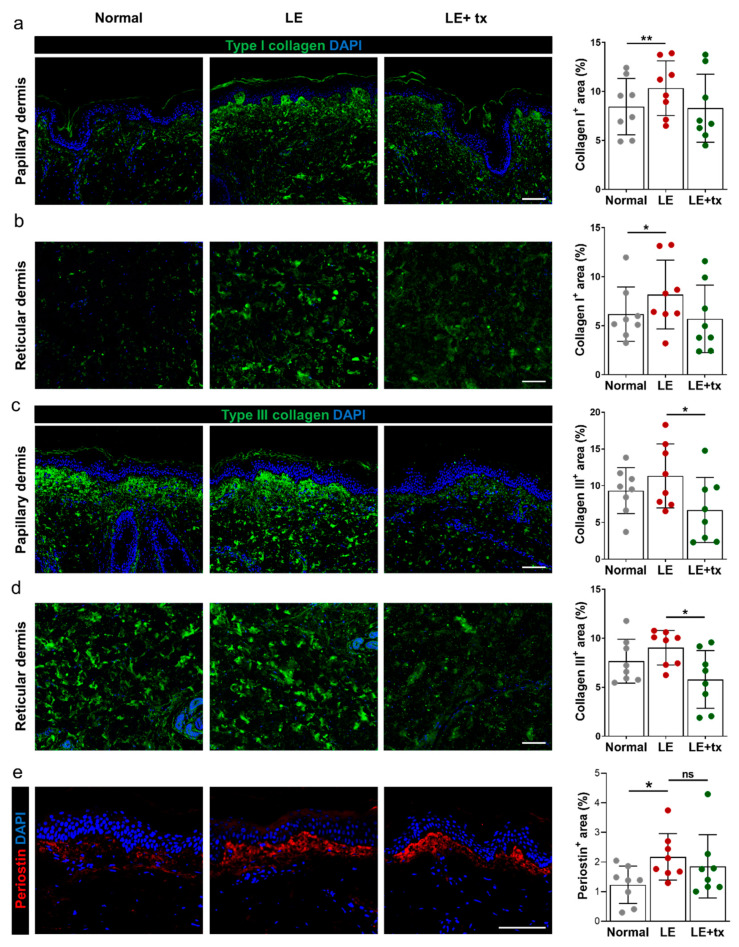
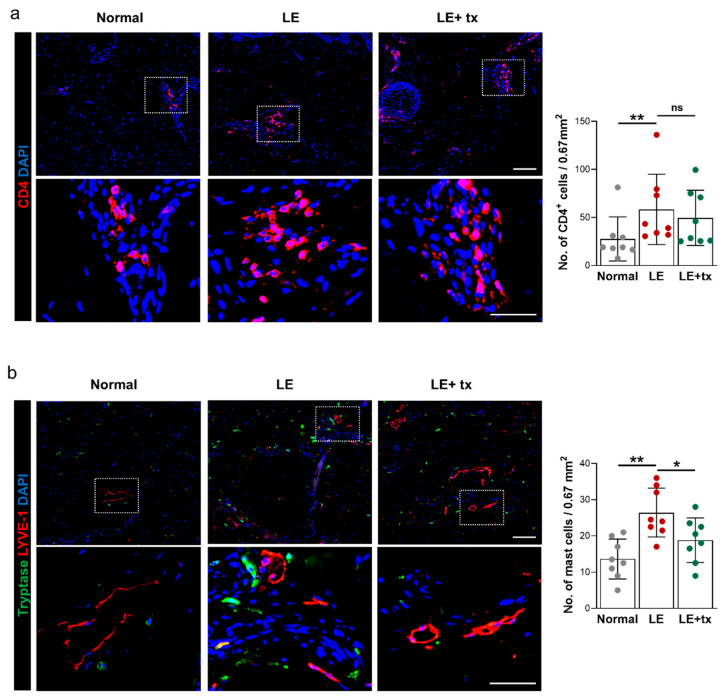
Recent studies suggest that Th2 cells play a key role in the pathology of secondary lymphedema by elaborating cytokines such as IL4 and IL13. The aim of this study was to test the efficacy of QBX258, a monoclonal IL4/IL13 neutralizing antibody, in women with breast cancer-related lymphedema (BCRL). We enrolled nine women with unilateral stage I/II BCRL and treated them once monthly with intravenous infusions of QBX258 for 4 months. We measured limb volumes, bioimpedance, and skin tonometry, and analyzed the quality of life (QOL) using a validated lymphedema questionnaire (Upper Limb Lymphedema 27, ULL-27) before treatment, immediately after treatment, and 4 months following treatment withdrawal. We also obtained 5 mm skin biopsies from the normal and lymphedematous limbs before and after treatment. Treatment was well-tolerated; however, one patient with a history of cellulitis developed cellulitis during the trial and was excluded from further analysis. We found no differences in limb volumes or bioimpedance measurements after drug treatment. However, QBX258 treatment improved skin stiffness ( < 0.001) and improved QOL measurements (Physical < 0.05, Social = 0.01). These improvements returned to baseline after treatment withdrawal. Histologically, treatment decreased epidermal thickness, the number of proliferating keratinocytes, type III collagen deposition, infiltration of mast cells, and the expression of Th2-inducing cytokines in the lymphedematous skin. Our limited study suggests that immunotherapy against Th2 cytokines may improve skin changes and QOL of women with BCRL. This treatment appears to be less effective for decreasing limb volumes; however, additional studies are needed.
最近的研究表明,Th2细胞通过分泌白细胞介素4(IL4)和白细胞介素13等细胞因子,在继发性淋巴水肿的病理过程中起关键作用。本研究的目的是测试单克隆IL4/IL13中和抗体QBX258对乳腺癌相关淋巴水肿(BCRL)女性患者的疗效。我们招募了9名单侧I/II期BCRL女性患者,每月静脉输注QBX258一次,共治疗4个月。我们测量了肢体体积、生物电阻抗和皮肤张力测量,并在治疗前、治疗后即刻以及停药后4个月,使用经过验证的淋巴水肿问卷(上肢淋巴水肿27,ULL-27)分析生活质量(QOL)。我们还在治疗前后从正常和淋巴水肿肢体获取了5毫米的皮肤活检样本。治疗耐受性良好;然而,一名有蜂窝织炎病史的患者在试验期间发生了蜂窝织炎,被排除在进一步分析之外。我们发现药物治疗后肢体体积或生物电阻抗测量没有差异。然而,QBX258治疗改善了皮肤硬度(<0.001),并改善了QOL测量结果(身体方面<0.05,社会方面=0.01)。停药后这些改善恢复到基线水平。组织学上,治疗减少了淋巴水肿皮肤的表皮厚度、增殖角质形成细胞数量、III型胶原沉积、肥大细胞浸润以及Th2诱导细胞因子的表达。我们有限的研究表明,针对Th2细胞因子的免疫疗法可能改善BCRL女性患者的皮肤变化和生活质量。这种治疗在减少肢体体积方面似乎效果较差;然而,还需要进一步的研究。