River Ecosystems Laboratory, Centre for Alpine and Polar Environmental Research (ALPOLE), École Polytechnique Fédérale de Lausanne, EPFL, Lausanne, Switzerland.
Luxembourg Centre for Systems Biomedicine, University of Luxembourg, Campus Belval, 7, avenue des Hauts-Fourneaux, L-4362, Esch-sur-Alzette, Luxembourg.
Nat Commun. 2022 Jun 2;13(1):3087. doi: 10.1038/s41467-022-30816-4.
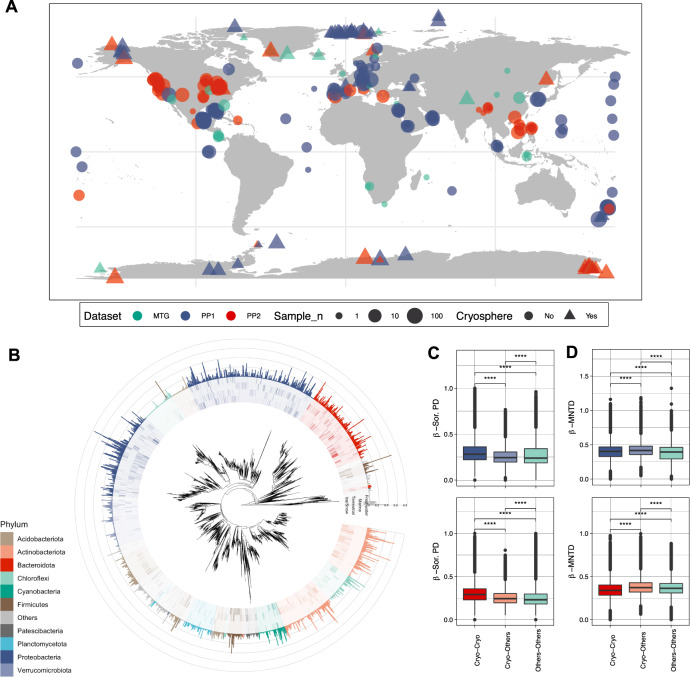
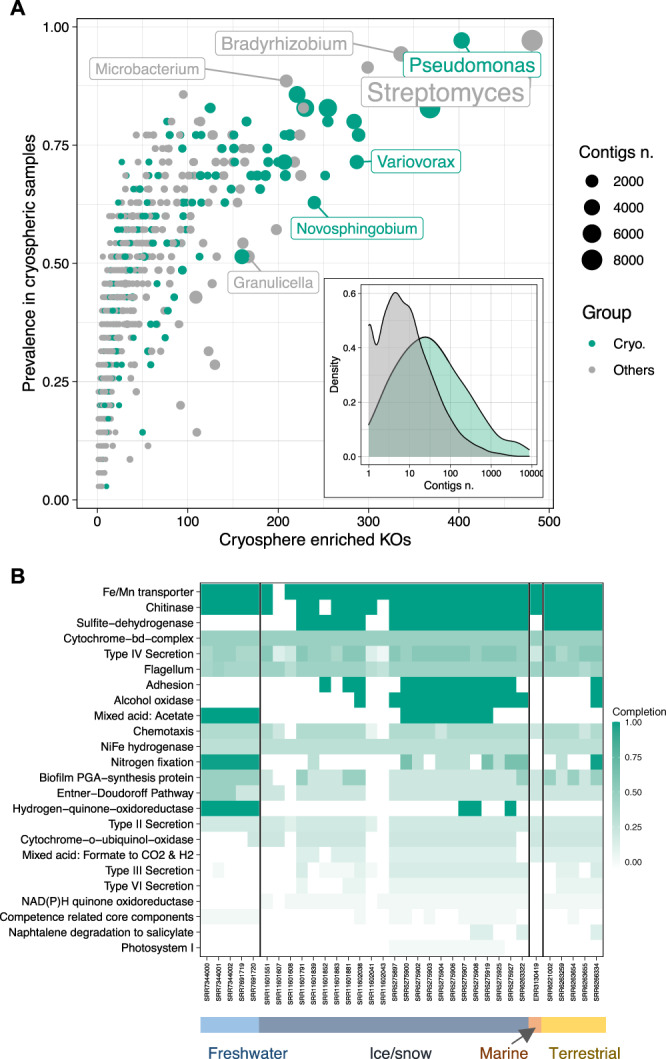
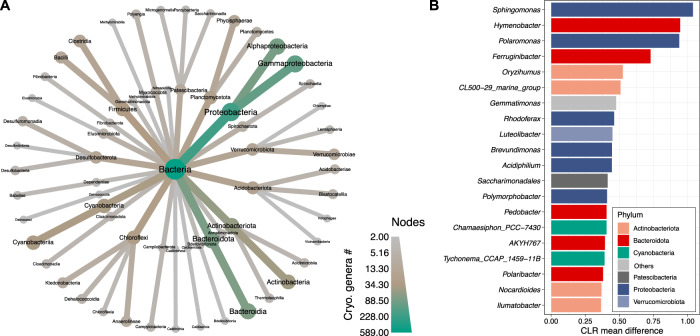
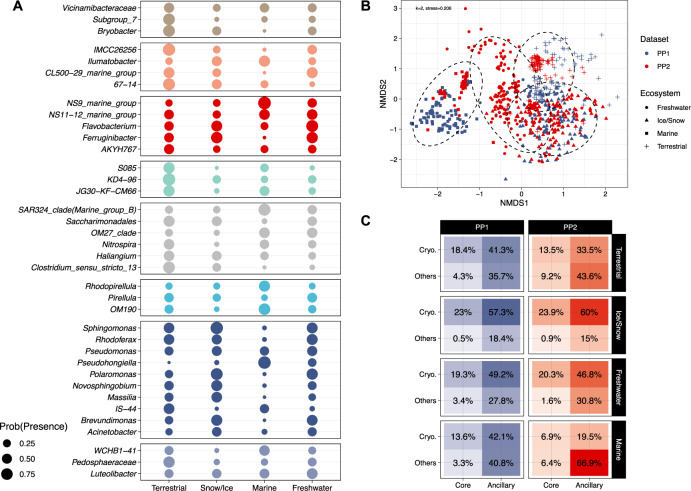
The melting of the cryosphere is among the most conspicuous consequences of climate change, with impacts on microbial life and related biogeochemistry. However, we are missing a systematic understanding of microbiome structure and function across cryospheric ecosystems. Here, we present a global inventory of the microbiome from snow, ice, permafrost soils, and both coastal and freshwater ecosystems under glacier influence. Combining phylogenetic and taxonomic approaches, we find that these cryospheric ecosystems, despite their particularities, share a microbiome with representatives across the bacterial tree of life and apparent signatures of early and constrained radiation. In addition, we use metagenomic analyses to define the genetic repertoire of cryospheric bacteria. Our work provides a reference resource for future studies on climate change microbiology.
冰冻圈的融化是气候变化最显著的后果之一,对微生物生命和相关生物地球化学产生影响。然而,我们对冰冻圈生态系统中的微生物组结构和功能还缺乏系统的认识。在这里,我们展示了来自雪、冰、永久冻土土壤以及受冰川影响的沿海和淡水生态系统的全球微生物组目录。通过结合系统发育和分类学方法,我们发现尽管这些冰冻圈生态系统具有特殊性,但它们与生命之树中的细菌代表以及早期和受限制的辐射的明显特征共享微生物组。此外,我们还使用宏基因组分析来定义冰冻圈细菌的遗传组成。我们的工作为未来气候变化微生物学的研究提供了参考资源。