Yi Xinyao, Yan Wenhui, Guo Tingli, Liu Na, Wang Zhuanzhuan, Shang Jia, Wei Xiaotong, Cui Xin, Sun Yuzhuo, Ren Shuting, Chen Lina
Department of Pharmacology, School of Basic Medical Sciences, Health Science Center, Xi'an Jiaotong University, Xi'an, China.
Department of Phathology, School of Basic Medical Sciences, Health Science Center, Xi'an Jiaotong University, Xi'an, China.
Front Pharmacol. 2022 May 17;13:883057. doi: 10.3389/fphar.2022.883057. eCollection 2022.
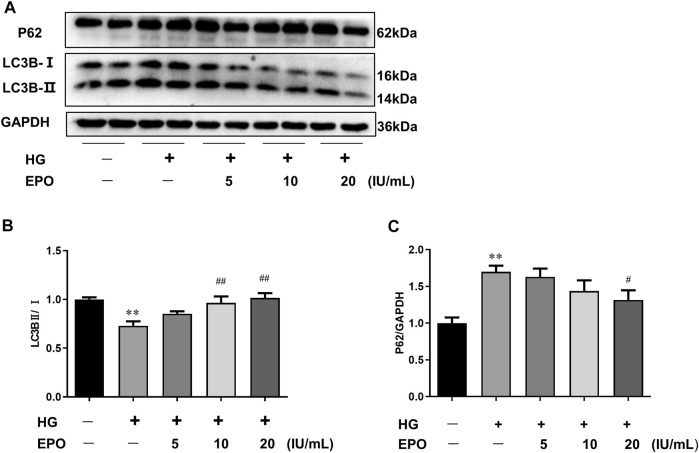
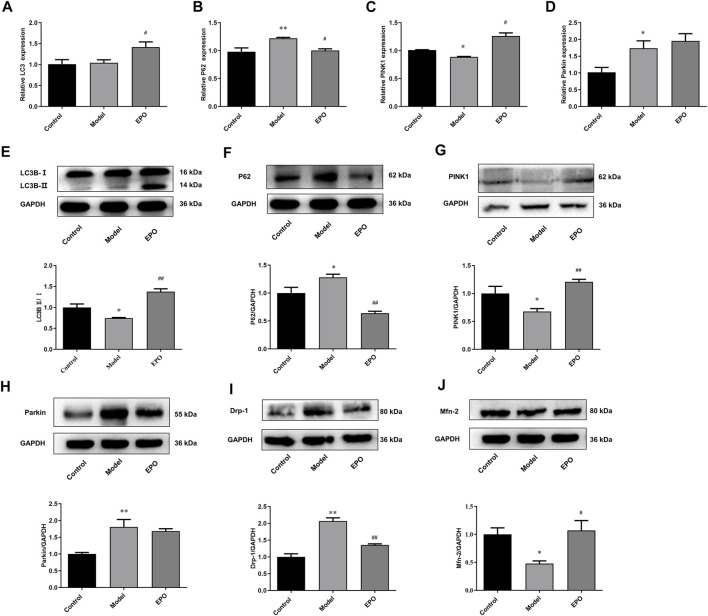
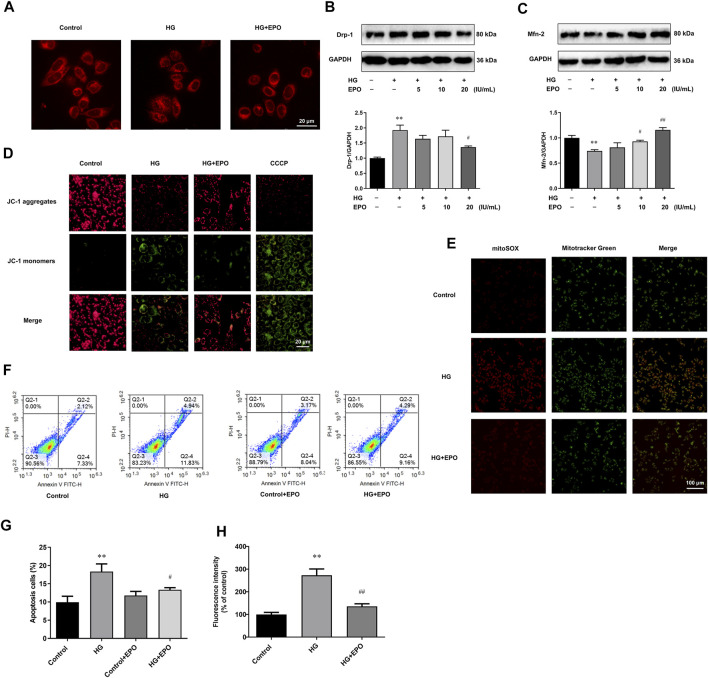
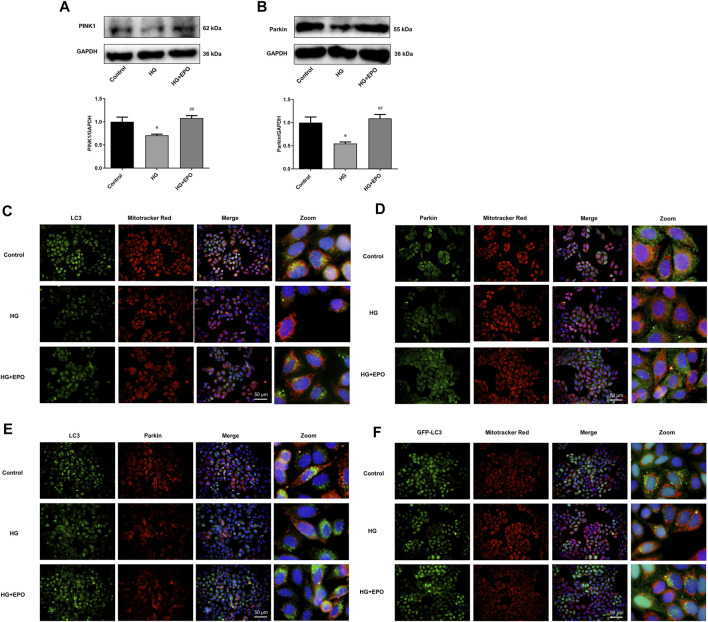
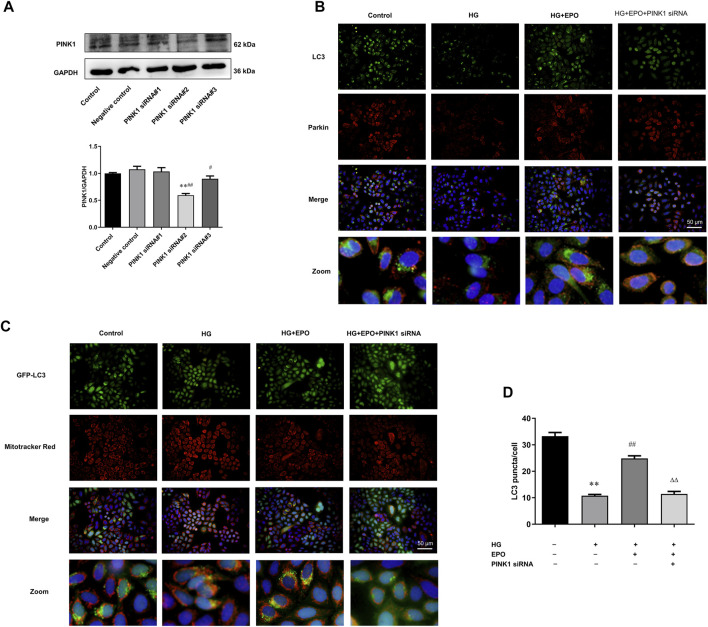
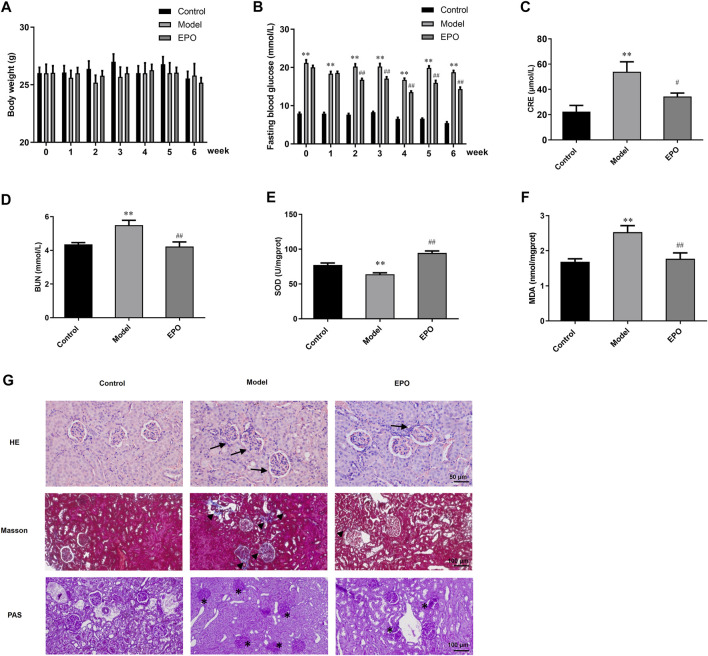
Diabetic nephropathy (DN), one of the most detrimental microvascular complications of diabetes, is the leading cause of end-stage renal disease. The pathogenesis of DN is complicated, including hemodynamic changes, inflammatory response, oxidative stress, among others. Recently, many studies have demonstrated that mitophagy, especially PINK1/Parkin-mediated mitophagy, plays an important role in the pathogenesis of DN. Erythropoietin (EPO), a glycoprotein hormone mainly secreted by the kidney, regulates the production of erythrocytes. This research intends to explore the beneficial effects of EPO on DN and investigate related mechanisms. In in experiments, we found that EPO promoted autophagic flux and alleviated mitochondrial dysfunction in terms of mitochondrial fragmentation, elevated mitochondrial ROS as well as the loss of mitochondrial potential, and lowered the apoptosis level in high-glucose-treated mesangial cells. Moreover, EPO increased protein expressions of PINK1 and Parkin, enhanced the co-localization of LC3 with mitochondria, Parkin with mitochondria as well as LC3 with Parkin, and increased the number of GFP-LC3 puncta, resulting in increased level of PINK1/Parkin-mediated mitophagy in mesangial cells. The knockdown of PINK1 abrogated the effect of EPO on mitophagy. In addition, experiments demonstrated that EPO attenuated renal injury, reduced oxidative stress, and promoted expressions of genes related to PINK1/Parkin-mediated mitophagy in the kidneys of DN mice. In summary, these results suggest that PINK1/Parkin-mediated mitophagy is involved in the development of DN and EPO mitigates DN by restoring PINK1/Parkin-mediated mitophagy.
糖尿病肾病(DN)是糖尿病最有害的微血管并发症之一,是终末期肾病的主要原因。DN的发病机制复杂,包括血流动力学变化、炎症反应、氧化应激等。最近,许多研究表明,线粒体自噬,尤其是PINK1/Parkin介导的线粒体自噬,在DN的发病机制中起重要作用。促红细胞生成素(EPO)是一种主要由肾脏分泌的糖蛋白激素,可调节红细胞的生成。本研究旨在探讨EPO对DN的有益作用并研究相关机制。在体外实验中,我们发现EPO促进自噬流,减轻线粒体功能障碍,表现为线粒体碎片化减少、线粒体活性氧升高以及线粒体膜电位丧失,同时降低高糖处理的系膜细胞中的细胞凋亡水平。此外,EPO增加PINK1和Parkin的蛋白表达,增强LC3与线粒体、Parkin与线粒体以及LC3与Parkin的共定位,并增加GFP-LC3斑点的数量,导致系膜细胞中PINK1/Parkin介导的线粒体自噬水平增加。敲低PINK1可消除EPO对线粒体自噬的影响。此外,体内实验表明,EPO减轻DN小鼠肾脏的损伤,降低氧化应激,并促进与PINK1/Parkin介导的线粒体自噬相关的基因表达。总之,这些结果表明,PINK1/Parkin介导的线粒体自噬参与DN的发展,EPO通过恢复PINK1/Parkin介导的线粒体自噬来减轻DN。