Department of Cardiology Ninth People's HospitalShanghai Jiao Tong University School of Medicine Shanghai China.
Shanghai Institute of Precision MedicineNinth People's HospitalShanghai Jiao Tong University School of Medicine Shanghai China.
J Am Heart Assoc. 2022 Jun 7;11(11):e024582. doi: 10.1161/JAHA.121.024582. Epub 2022 Jun 3.
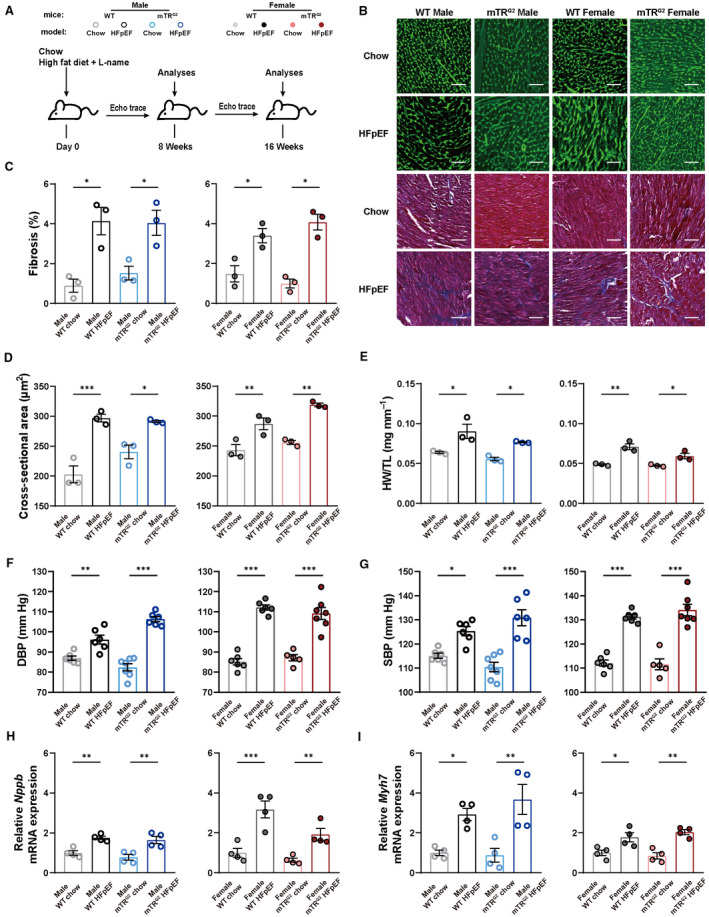
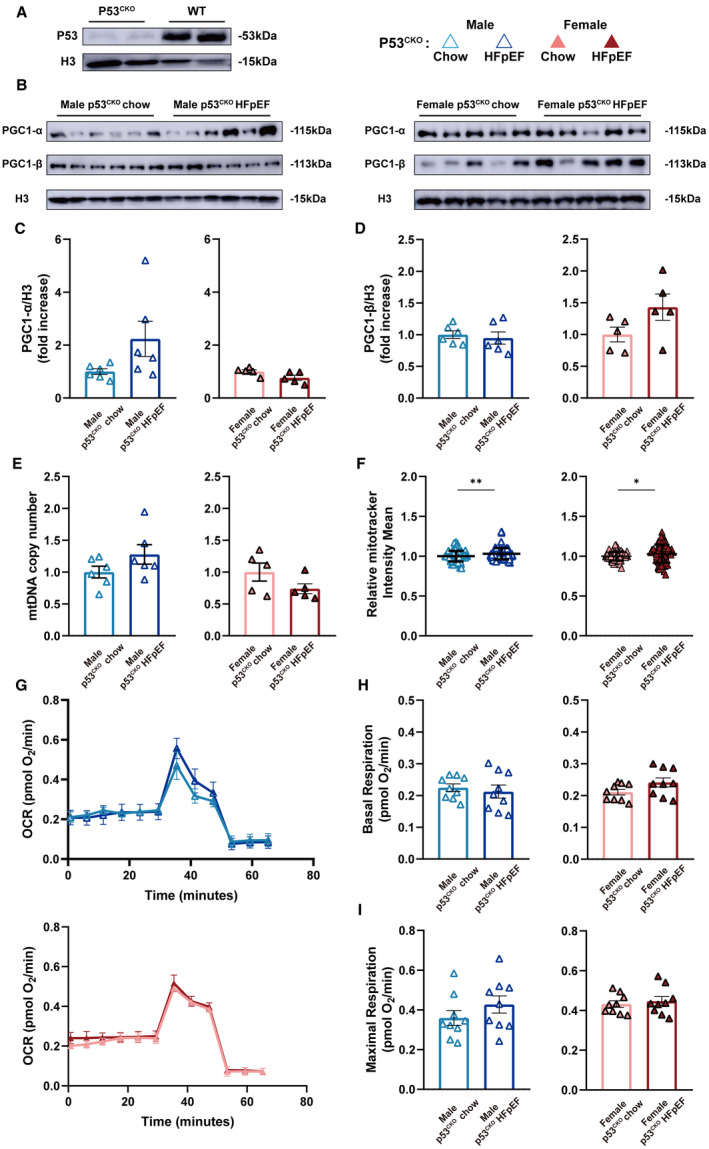
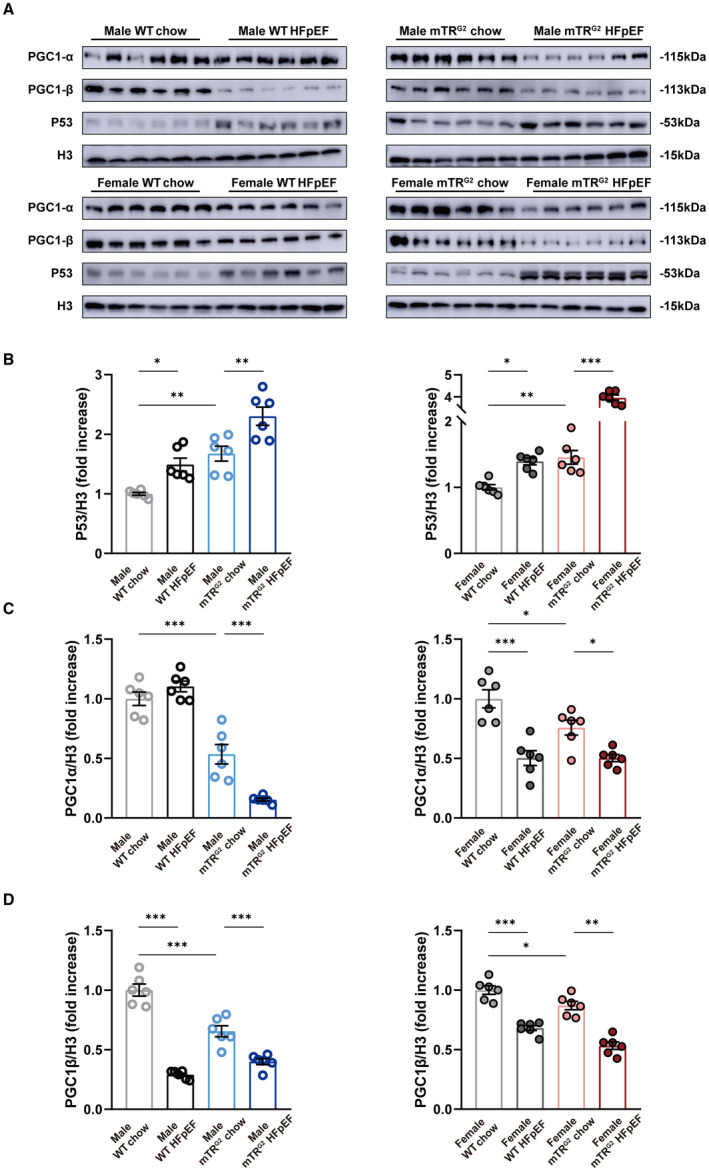
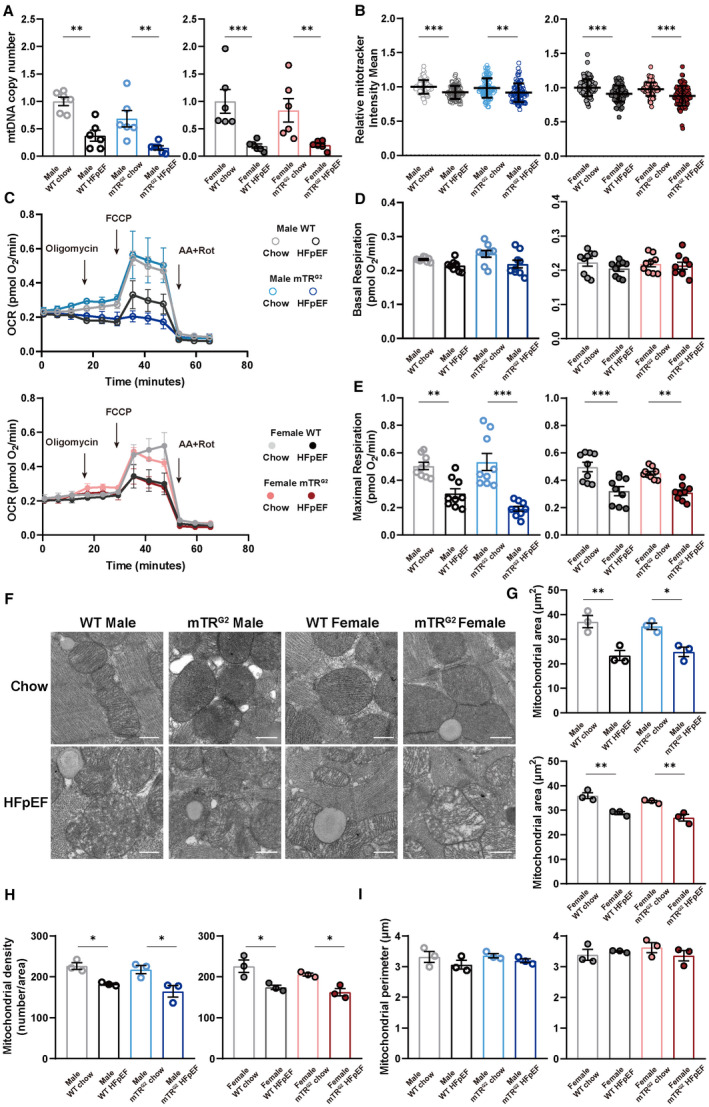
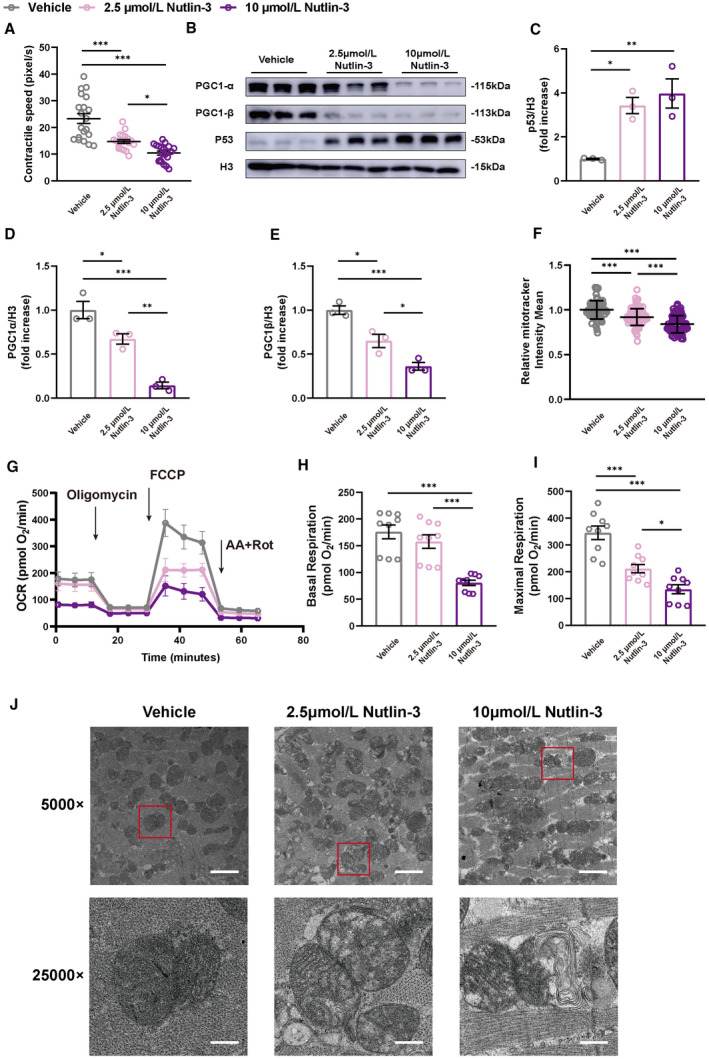
Background Heart failure with preserved ejection fraction (HFpEF) accounts for 50% of patients with heart failure. Clinically, HFpEF prevalence shows age and gender biases. Although the majority of patients with HFpEF are elderly, there is an emergence of young patients with HFpEF. A better understanding of the underlying pathogenic mechanism is urgently needed. Here, we aimed to determine the role of aging in the pathogenesis of HFpEF. Methods and Results HFpEF dietary regimen (high-fat diet + Nω-Nitro-L-arginine methyl ester hydrochloride) was used to induce HFpEF in wild type and telomerase RNA knockout mice (second-generation and third-generation telomerase RNA component knockout), an aging murine model. First, both male and female animals develop HFpEF equally. Second, cardiac wall thickening preceded diastolic dysfunction in all HFpEF animals. Third, accelerated HFpEF onset was observed in second-generation telomerase RNA component knockout (at 6 weeks) and third-generation telomerase RNA component knockout (at 4 weeks) compared with wild type (8 weeks). Fourth, we demonstrate that mitochondrial respiration transitioned from compensatory state (normal basal yet loss of maximal respiratory capacity) to dysfunction (loss of both basal and maximal respiratory capacity) in a p53 dosage dependent manner. Last, using myocardial-specific p53 knockout animals, we demonstrate that loss of p53 activation delays the development of HFpEF. Conclusions Here we demonstrate that p53 activation plays a role in the pathogenesis of HFpEF. We show that short telomere animals exhibit a basal level of p53 activation, mitochondria upregulate mtDNA encoded genes as a mean to compensate for blocked mitochondrial biogenesis, and loss of myocardial p53 delays HFpEF onset in high fat diet + Nω-Nitro-L-arginine methyl ester hydrochloride challenged murine model.
射血分数保留的心力衰竭(HFpEF)占心力衰竭患者的 50%。临床上,HFpEF 的患病率存在年龄和性别偏见。尽管大多数 HFpEF 患者为老年人,但也有年轻的 HFpEF 患者出现。因此,迫切需要更好地了解潜在的发病机制。在这里,我们旨在确定衰老在 HFpEF 发病机制中的作用。
使用 HFpEF 饮食方案(高脂肪饮食+Nω-硝基-L-精氨酸甲酯盐酸盐)在野生型和端粒酶 RNA 敲除小鼠(第二代和第三代端粒酶 RNA 成分敲除)中诱导 HFpEF,这是一种衰老的小鼠模型。首先,雄性和雌性动物同样会发生 HFpEF。其次,所有 HFpEF 动物的心肌壁增厚均先于舒张功能障碍。第三,与野生型相比,第二代端粒酶 RNA 成分敲除(6 周)和第三代端粒酶 RNA 成分敲除(4 周)观察到 HFpEF 发作加速。第四,我们证明线粒体呼吸从代偿状态(正常基础但丧失最大呼吸能力)向功能障碍(基础和最大呼吸能力均丧失)转变,这是一种依赖于 p53 剂量的方式。最后,使用心肌特异性 p53 敲除动物,我们证明 p53 激活的丧失会延迟 HFpEF 的发展。
在这里,我们证明 p53 激活在 HFpEF 的发病机制中起作用。我们表明,短端粒动物表现出基础水平的 p53 激活,线粒体上调 mtDNA 编码基因作为补偿受阻的线粒体生物发生的一种手段,并且心肌 p53 的缺失会延迟高脂肪饮食+Nω-硝基-L-精氨酸甲酯盐酸盐挑战的小鼠模型中 HFpEF 的发作。