Department of Microbiology, Tumor and Cell Biology, Karolinska Institutet, Stockholm, Sweden.
Institute of Environmental Medicine and Centre for Allergy Research, Karolinska Institutet, Stockholm, Sweden.
Allergy. 2022 Oct;77(10):2987-3001. doi: 10.1111/all.15399. Epub 2022 Jun 20.
Allergy to dogs affects around 10% of the population in developed countries. Immune therapy of allergic patients with dog allergen extracts has shown limited therapeutic benefit.
We established a mouse model of dog allergy by repeatedly administering dog dander and epithelium extracts via the intranasal route. We also assessed the efficacy of a recombinant multimeric protein containing Can f 1, f 2, f 4 and f 6 in preventing inflammatory responses to dog extracts.
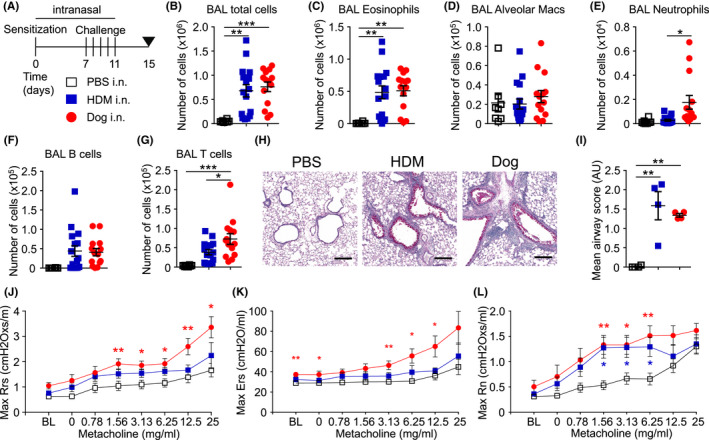
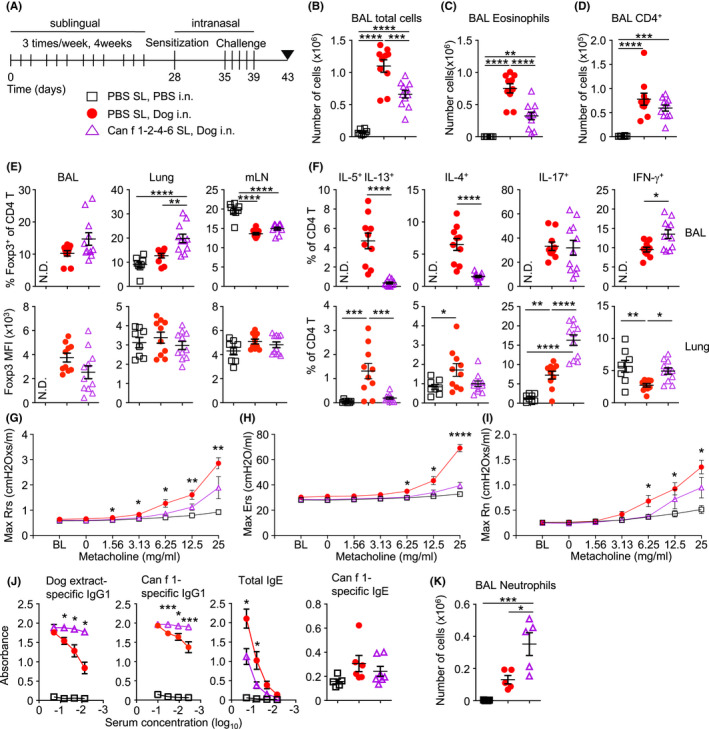
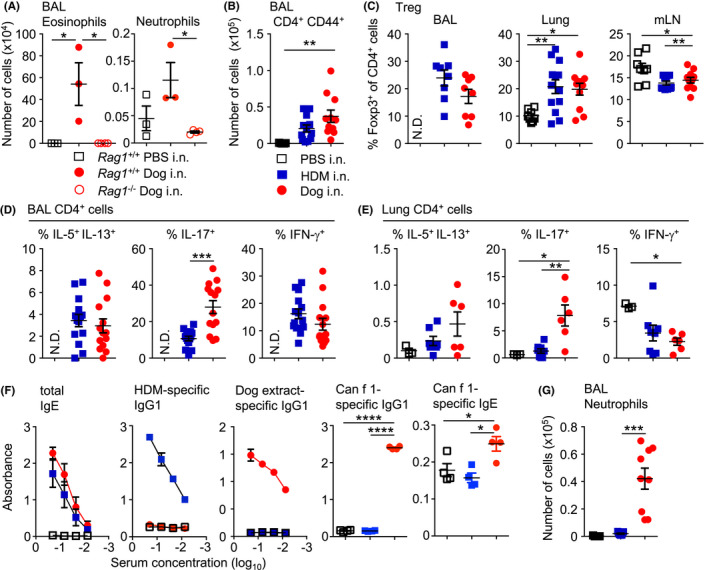
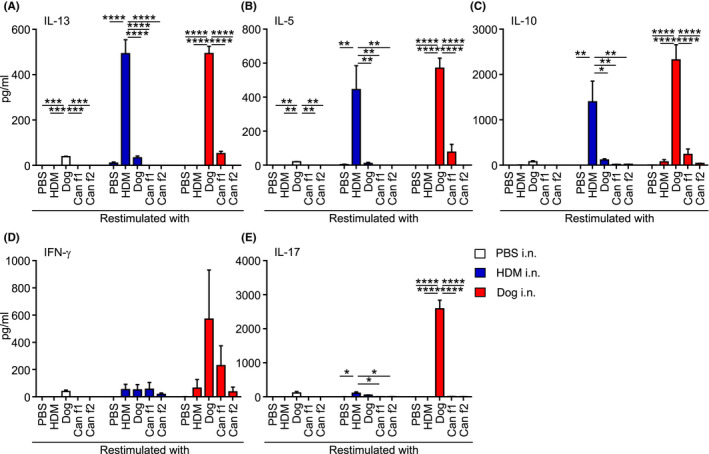
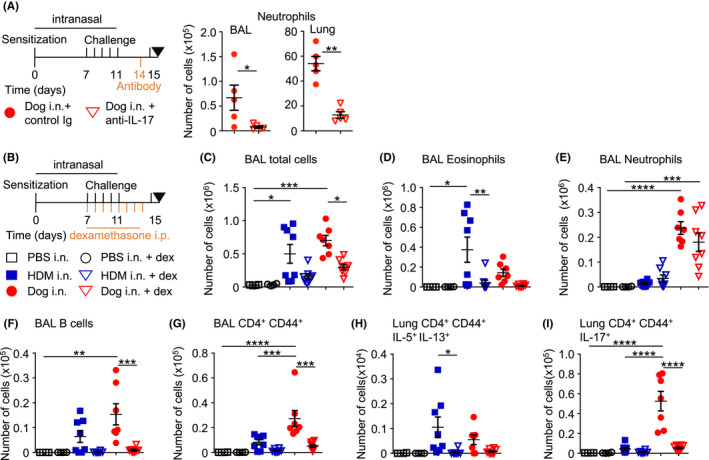
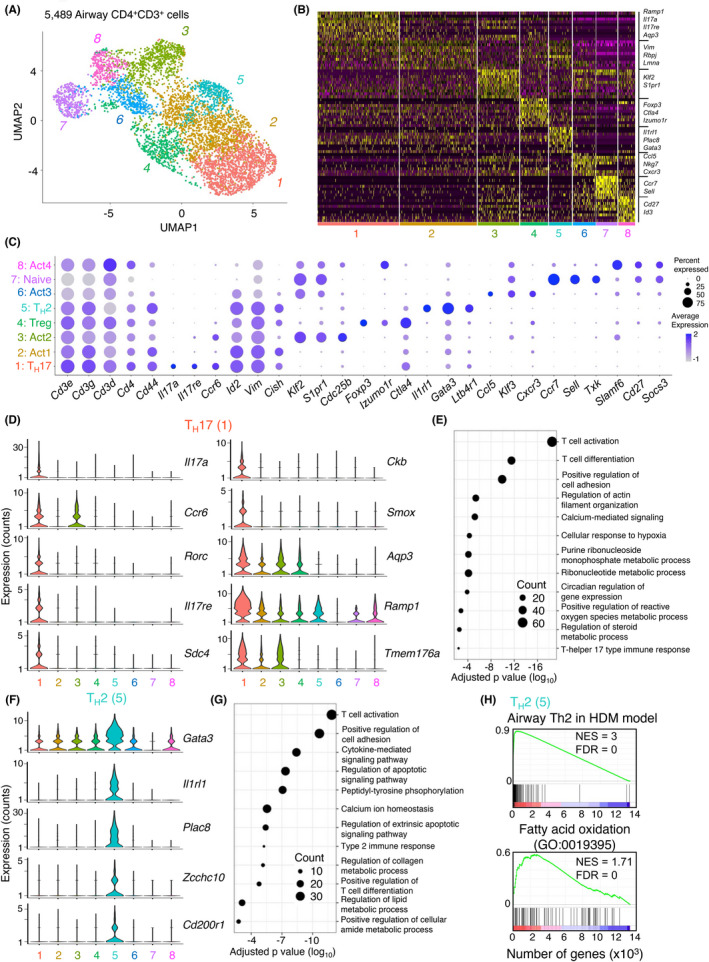
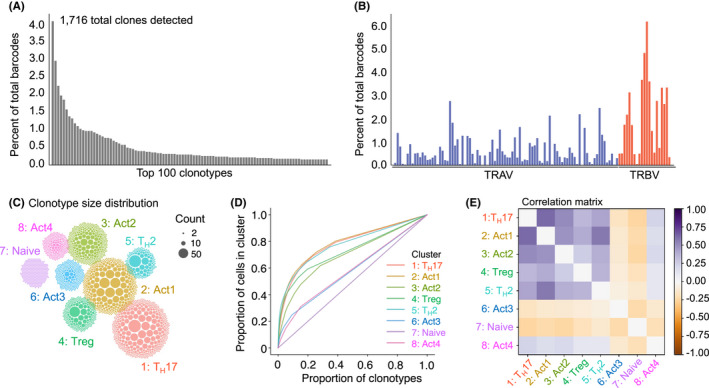
Repeated inhalation of dog extracts induced infiltration of the airways by T 2 cells, eosinophils and goblet cells, reminiscent of the house dust mite (HDM) model of asthma. Dog extracts also induced robust airway hyperresponsiveness and promoted T 17 cell responses, which was associated with a high neutrophilic infiltration of the airways. scRNA-Seq analysis of T helper cells in the airways pinpointed a unique gene signature for T 17 cells. Analysis of T-cell receptors depicted a high frequency of clones that were shared between T 17, T 2 and suppressive Treg cells, indicative of a common differentiation trajectory for these subsets. Importantly, sublingual administration of multimeric Can f 1-2-4-6 protein prior to sensitization reduced airway hyperresponsiveness and type 2-mediated inflammation in this model.
Dog allergen extracts induce robust T 2 and T 17 cell-mediated responses in mice. Recombinant Can f 1-2-4-6 can induce tolerance to complex dog allergen extracts.
在发达国家,约有 10%的人口对狗过敏。免疫疗法用狗过敏原提取物治疗过敏患者显示出有限的治疗效果。
我们通过鼻腔内途径反复给予狗皮屑和上皮提取物,建立了狗过敏的小鼠模型。我们还评估了含有 Can f 1、f 2、f 4 和 f 6 的重组多聚体蛋白预防狗提取物引起的炎症反应的疗效。
重复吸入狗提取物诱导 T 2 细胞、嗜酸性粒细胞和杯状细胞浸润气道,类似于屋尘螨(HDM)哮喘模型。狗提取物还诱导了强烈的气道高反应性,并促进了 T 17 细胞反应,这与气道中的中性粒细胞浸润有关。气道中的辅助性 T 细胞的 scRNA-Seq 分析确定了 T 17 细胞的独特基因特征。T 细胞受体分析描绘了 T 17、T 2 和抑制性 Treg 细胞之间共享的克隆的高频率,表明这些亚群具有共同的分化轨迹。重要的是,在致敏前舌下给予多聚体 Can f 1-2-4-6 蛋白可降低该模型中的气道高反应性和 2 型介导的炎症。
狗过敏原提取物在小鼠中诱导强烈的 T 2 和 T 17 细胞介导的反应。重组 Can f 1-2-4-6 可诱导对复杂狗过敏原提取物的耐受。