Kjörk Emma K, Sunnerhagen Katharina S, Lundgren-Nilsson Åsa, Andersson Anders K, Carlsson Gunnel
Department of Clinical Neuroscience, Institute of Neuroscience and Physiology, Sahlgrenska Academy, University of Gothenburg, Gothenburg, Sweden.
Sahlgrenska University Hospital, Gothenburg, Sweden.
JMIR Hum Factors. 2022 Jun 3;9(2):e35478. doi: 10.2196/35478.
In patient care, demand is growing for digital health tools to enable remote services and enhance patient involvement. People with chronic conditions often have multiple health problems, and long-term follow-up is recommended to meet their needs and enable access to appropriate support. A digital tool for previsit preparation could enhance time efficiency and guide the conversation during the visit toward the patient's priorities.
This study aims to develop a digital previsit tool and explore potential end user's perceptions, using a participatory approach with stroke as a case example.
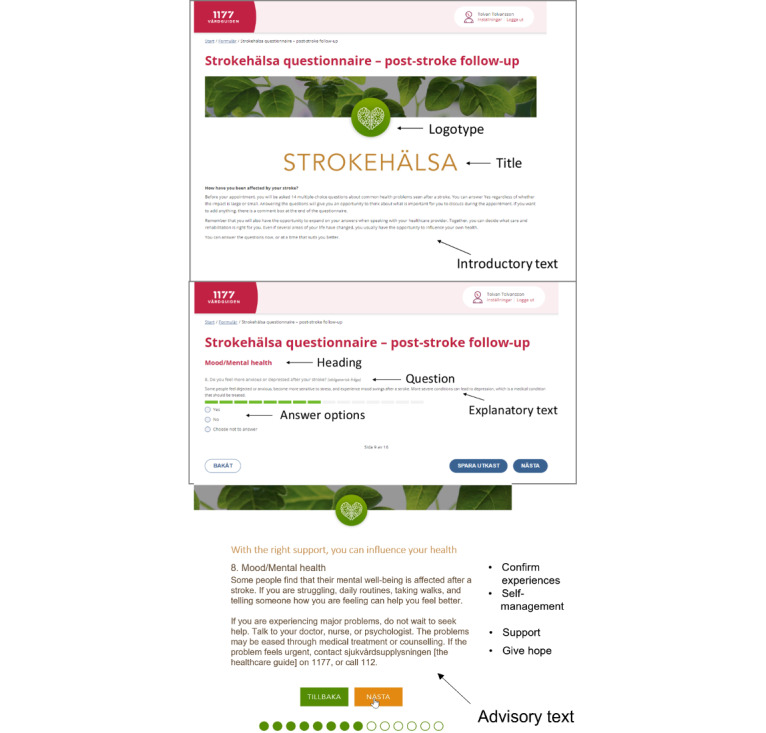
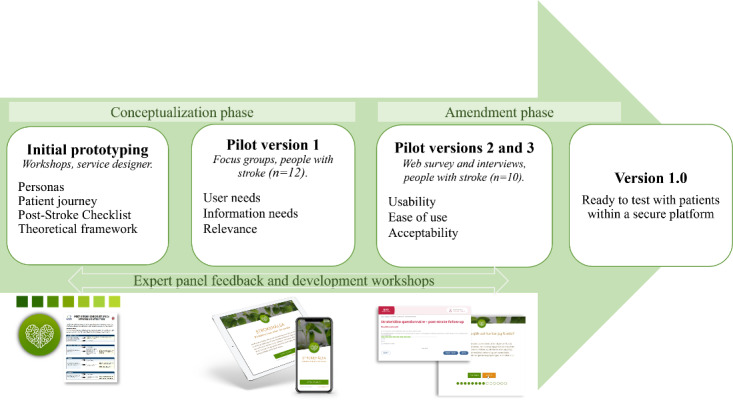
The digital tool was developed and prototyped according to service design principles, informed by qualitative participant data and feedback from an expert panel. All features were processed in workshops with a team that included a patient partner. The resulting tool presented questions about health problems and health information. Study participants were people with stroke recruited from an outpatient clinic and patient organizations in Sweden. Development and data collection were conducted in parallel. For conceptualization, the initial prototype was based on the Post-Stroke Checklist and research. Needs and relevance were explored in focus groups, and we used a web survey and individual interviews to explore perceived utility, ease of use, and acceptance. Data were thematically analyzed following the Framework Method.
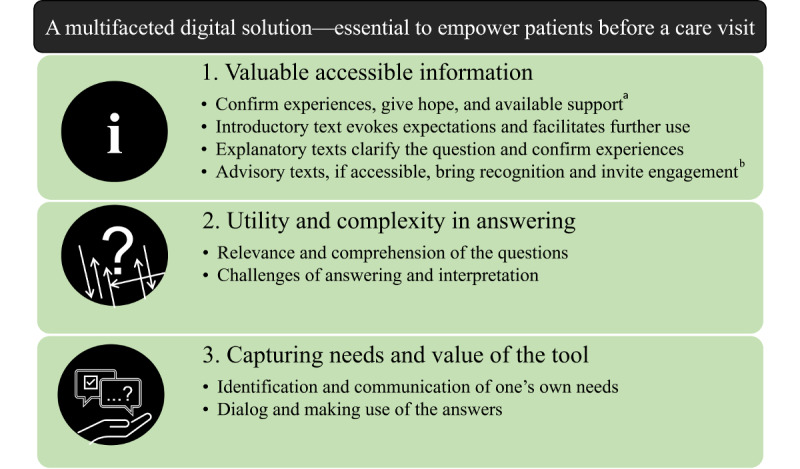
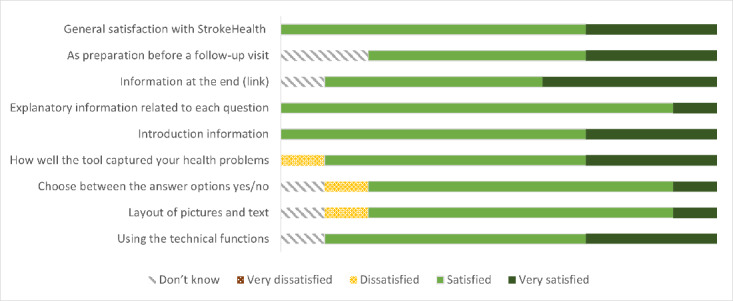
The development process included 22 participants (9 women) with a median age of 59 (range 42-83) years and a median of 51 (range 4-228) months since stroke. Participants were satisfied or very satisfied with using the tool and recommended its use in clinical practice. Three main themes were constructed based on focus group data (n=12) and interviews (n=10). First, valuable accessible information illuminated the need for information to confirm experiences, facilitate responses, and invite engagement in their care. Amendments to the information in turn reconfigured their expectations. Second, utility and complexity in answering confirmed that the questions were relevant and comprehensible. Some participants perceived the answer options as limiting and suggested additional space for free text. Third, capturing needs and value of the tool highlighted the tool's potential to identify health problems and the importance of encouraging further dialog. The resulting digital tool, Strokehälsa [Strokehealth] version 1.0, is now incorporated into a national health platform.
The participatory approach to tool development yielded a previsit digital tool that the study group perceived as useful. The holistic development process used here, which integrated health information, validated questions, and digital functionality, offers an example that could be applicable in the context of other long-term conditions. Beyond its potential to identify care needs, the tool offers information that confirms experiences and supports answering the questions in the tool. The tool is freely shared for adaptation in different contexts.
researchweb 236341; https://www.researchweb.org/is/vgr/project/236341.
在患者护理中,对数字健康工具的需求不断增长,以实现远程服务并提高患者参与度。患有慢性病的人通常有多种健康问题,建议进行长期随访以满足他们的需求并使其能够获得适当的支持。一种用于就诊前准备的数字工具可以提高时间效率,并在就诊期间引导对话围绕患者的优先事项展开。
本研究旨在以中风为例,采用参与式方法开发一种数字就诊前工具,并探索潜在最终用户的看法。
根据服务设计原则开发数字工具并制作原型,参考定性参与者数据和专家小组的反馈。所有功能都在一个包括患者合作伙伴的团队的研讨会上进行处理。最终的工具提出了有关健康问题和健康信息的问题。研究参与者是从瑞典的一家门诊诊所和患者组织招募的中风患者。开发和数据收集并行进行。为了进行概念化,初始原型基于中风后检查表和研究。在焦点小组中探索需求和相关性,我们使用网络调查和个人访谈来探索感知效用、易用性和接受度。按照框架方法对数据进行主题分析。
开发过程包括22名参与者(9名女性),中位年龄为59岁(范围42 - 83岁),中风后中位时间为51个月(范围4 - 228个月)。参与者对使用该工具感到满意或非常满意,并建议在临床实践中使用。基于焦点小组数据(n = 12)和访谈(n = 10)构建了三个主要主题。首先,有价值的可获取信息表明需要信息来确认经历、促进回答并邀请参与自身护理。对信息的修改反过来重新构建了他们的期望。其次,回答中的效用和复杂性证实了问题是相关且可理解的。一些参与者认为答案选项有限,并建议提供更多自由文本空间。第三,捕捉工具的需求和价值突出了该工具识别健康问题的潜力以及鼓励进一步对话的重要性。最终的数字工具“Strokehälsa [中风健康]”1.0版现已纳入国家健康平台。
工具开发的参与式方法产生了一种研究小组认为有用的就诊前数字工具。这里使用的整体开发过程,整合了健康信息、经过验证的问题和数字功能,提供了一个可应用于其他长期病症背景的示例。除了识别护理需求的潜力外,该工具还提供确认经历并支持回答工具中问题的信息。该工具可免费共享以供在不同背景下改编使用。
researchweb 236341;https://www.researchweb.org/is/vgr/project/236341。