Department of Clinical Biochemistry, Diagnostic Center, Copenhagen University Hospital-Rigshospitalet, Copenhagen, Denmark.
Novo Nordisk Foundation Center for Protein Research, Faculty of Health and Medical Sciences, University of Copenhagen, Copenhagen, Denmark.
Diabetes. 2022 Sep 1;71(9):1852-1861. doi: 10.2337/dbi22-0004.
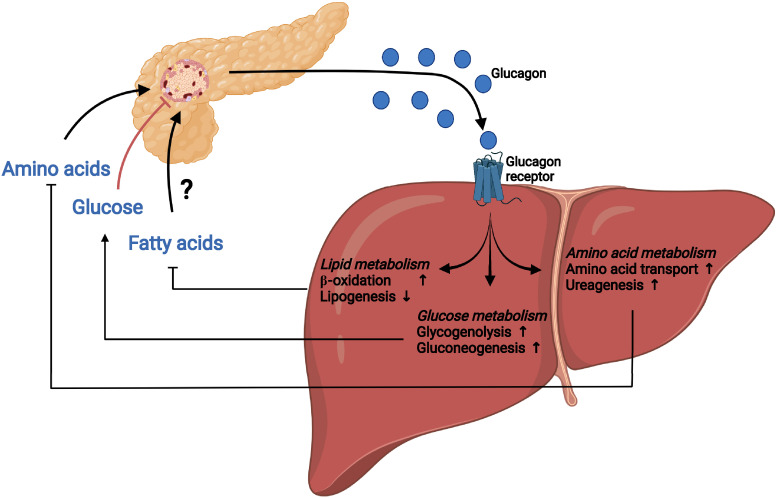
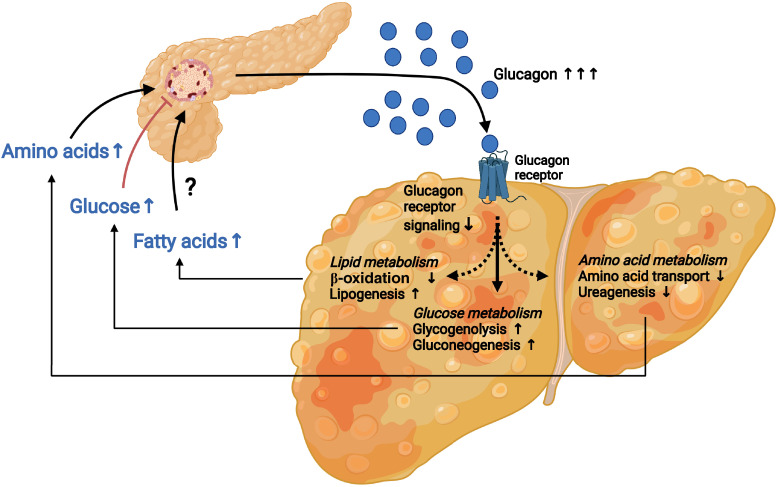
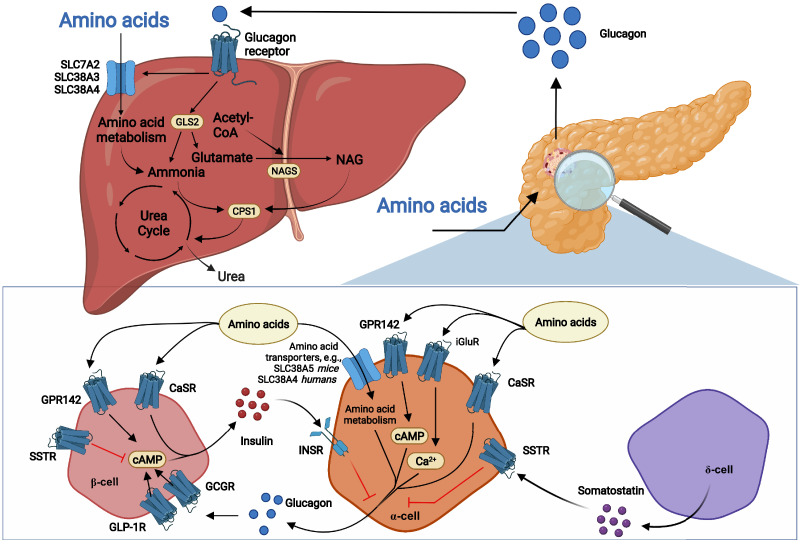
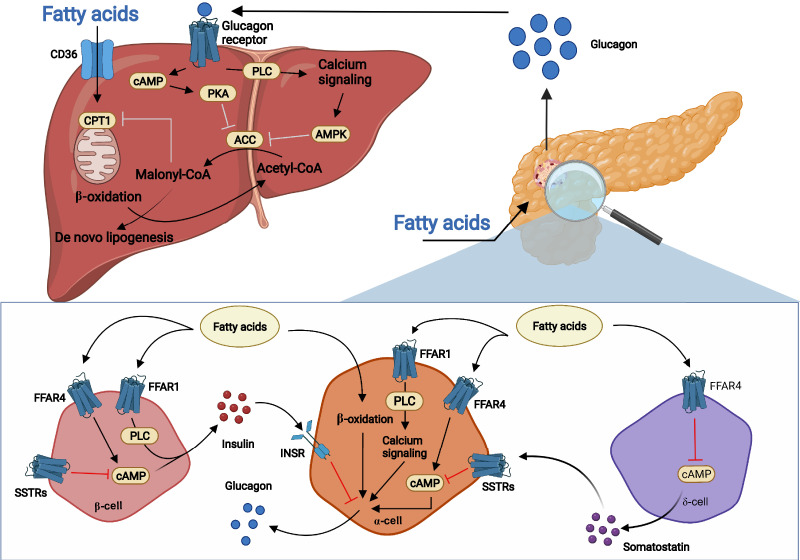
Glucagon and insulin are the main regulators of blood glucose. While the actions of insulin are extensively mapped, less is known about glucagon. Besides glucagon's role in glucose homeostasis, there are additional links between the pancreatic α-cells and the hepatocytes, often collectively referred to as the liver-α-cell axis, that may be of importance for health and disease. Thus, glucagon receptor antagonism (pharmacological or genetic), which disrupts the liver-α-cell axis, results not only in lower fasting glucose but also in reduced amino acid turnover and dyslipidemia. Here, we review the actions of glucagon on glucose homeostasis, amino acid catabolism, and lipid metabolism in the context of the liver-α-cell axis. The concept of glucagon resistance is also discussed, and we argue that the various elements of the liver-α-cell axis may be differentially affected in metabolic diseases such as diabetes, obesity, and nonalcoholic fatty liver disease (NAFLD). This conceptual rethinking of glucagon biology may explain why patients with type 2 diabetes have hyperglucagonemia and how NAFLD disrupts the liver-α-cell axis, compromising the normal glucagon-mediated enhancement of substrate-induced amino acid turnover and possibly fatty acid β-oxidation. In contrast to amino acid catabolism, glucagon-induced glucose production may not be affected by NAFLD, explaining the diabetogenic effect of NAFLD-associated hyperglucagonemia. Consideration of the liver-α-cell axis is essential to understanding the complex pathophysiology underlying diabetes and other metabolic diseases.
胰高血糖素和胰岛素是血糖的主要调节因子。虽然胰岛素的作用已被广泛研究,但对胰高血糖素的了解较少。除了胰高血糖素在葡萄糖稳态中的作用外,胰腺α细胞和肝细胞之间还有其他联系,通常统称为肝-α细胞轴,这可能对健康和疾病很重要。因此,破坏肝-α细胞轴的胰高血糖素受体拮抗剂(药理学或遗传学)不仅导致空腹血糖降低,还导致氨基酸周转率降低和血脂异常。在这里,我们在肝-α细胞轴的背景下回顾了胰高血糖素对葡萄糖稳态、氨基酸分解代谢和脂质代谢的作用。还讨论了胰高血糖素抵抗的概念,我们认为代谢疾病(如糖尿病、肥胖症和非酒精性脂肪性肝病 (NAFLD))中肝-α细胞轴的各个元素可能会受到不同的影响。这种对胰高血糖素生物学的重新思考可能解释了为什么 2 型糖尿病患者会出现高胰高血糖素血症,以及 NAFLD 如何破坏肝-α细胞轴,从而损害正常的胰高血糖素介导的底物诱导的氨基酸周转率增强和可能的脂肪酸β氧化。与氨基酸分解代谢不同,胰高血糖素诱导的葡萄糖生成可能不受 NAFLD 的影响,这解释了 NAFLD 相关高胰高血糖素血症的致糖尿病作用。考虑肝-α细胞轴对于理解糖尿病和其他代谢疾病的复杂病理生理学至关重要。