Faculty of Physics, Sofia University, 5 James Bourchier Blvd., 1164, Sofia, Bulgaria.
Faculty of Mathematics and Informatics, Sofia University, 5 James Bourchier Blvd., 1164, Sofia, Bulgaria.
BMC Ophthalmol. 2022 Jun 4;22(1):248. doi: 10.1186/s12886-022-02471-2.
The prevalence of myopia has increased in recent years, with changes being dynamic and uneven in different regions. The purpose of this study is to evaluate the prevalence of visual impairment caused by myopia in Bulgarian school children, associated risk factors, and health care coverage.
A cross-sectional study among 1401 children (mean age 10.38, standard deviation 2.70) is conducted in three locations in Bulgaria from 2016 to 2020. Refractive error is measured with an auto-refractor in the absence of cycloplegia, the visual acuity is assessed without refractive error correction. A paper-based preliminary questionnaire is used to collect data on previous eye examinations, prescribed optical vision correction, regularity of wearing corrective glasses and risk factors.
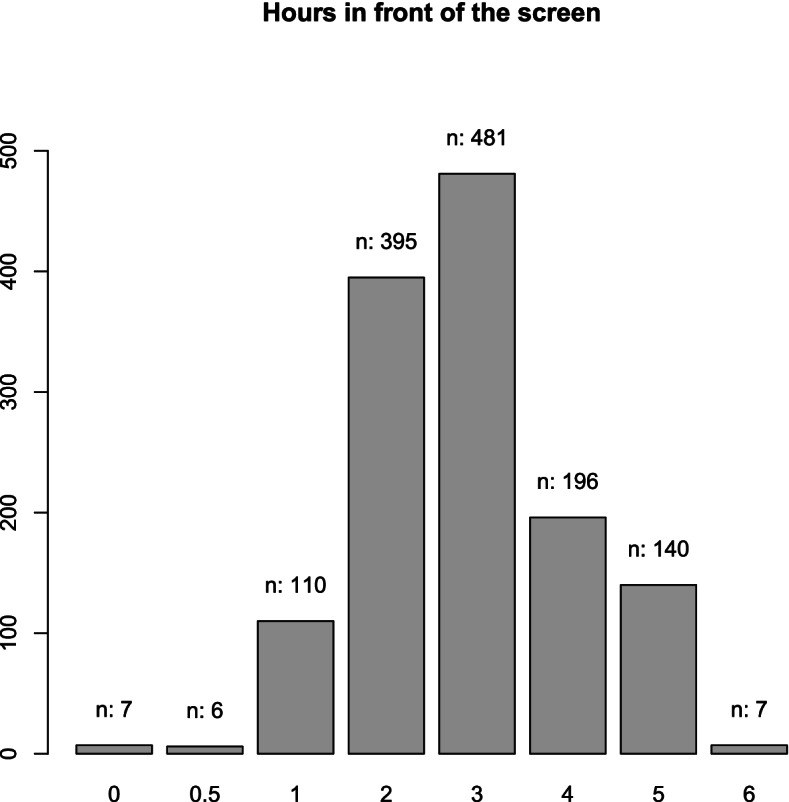
Children with myopic objective refraction ≤ -0.75 D and decimal visual acuity ≤ 0.8 on at least one of the eyes are 236 out of 1401 or 16.85%. The prevalence of myopia varies depending on age, geographical location, and school profile. The rate of myopic children in age group 6-10 is 14.2% compared to 19.9% in age group 11-15. The prevalence of myopic children in the urban populations is 31.4% (capital) and 19.9% (medium-sized town) respectively, and only 8.4% in the rural population. Our results show 53% increase of the prevalence of myopia in the age group 11-15 compared to a 2009 report. The analysis of data associated with health care coverage factors of all myopic pupils shows that 71.6% had a previous eye examination, 43.2% have prescription for corrective glasses, 27.5% wear their glasses regularly. Risk factors for higher odds of myopia are gender (female), age (adolescence), and parents with impaired vision. Residence in a small town and daily sport activities correspond to lower odds for myopia. The screen time (time in front of the screen calculated in hours per day) is self-reported and is not associated with increased odds of myopia when accounted for the other risk factors.
The prevalence of myopia in this study is higher compared to previous studies in Bulgaria. Additional studies would be helpful in planning adequate prevention and vision care.
近年来,近视的患病率有所增加,不同地区的变化呈现动态和不均衡的特点。本研究旨在评估保加利亚学童近视导致的视力损害的患病率、相关危险因素以及医疗保健的覆盖情况。
2016 年至 2020 年,在保加利亚的三个地点对 1401 名儿童(平均年龄 10.38 岁,标准差 2.70)进行了横断面研究。在无睫状肌麻痹的情况下使用自动折射仪测量屈光不正,在不矫正屈光不正的情况下评估视力。使用纸质初步问卷收集之前的眼部检查、规定的光学视力矫正、定期佩戴矫正眼镜以及危险因素的数据。
在 1401 名儿童中,有 236 名(占 16.85%)存在客观近视度≤-0.75 D 且双眼至少有一眼的十进制视力≤0.8。近视的患病率取决于年龄、地理位置和学校类型。6-10 岁年龄组的近视儿童比例为 14.2%,而 11-15 岁年龄组的比例为 19.9%。城市人口的近视儿童比例分别为 31.4%(首都)和 19.9%(中型城镇),而农村人口仅为 8.4%。我们的结果显示,与 2009 年的报告相比,11-15 岁年龄组的近视患病率增加了 53%。对所有近视学生的医疗保健覆盖因素相关数据进行分析后发现,71.6%的学生有过眼部检查,43.2%的学生有矫正眼镜处方,27.5%的学生定期佩戴眼镜。近视风险较高的因素是性别(女性)、年龄(青春期)和视力受损的父母。居住在小镇和日常运动与近视的几率较低有关。屏幕时间(每天在屏幕前的时间,以小时计算)是自我报告的,在考虑其他风险因素后,与近视几率增加无关。
与保加利亚之前的研究相比,本研究中的近视患病率较高。进一步的研究将有助于规划适当的预防和视力保健措施。