Department of Biochemistry and Molecular Biology, Tianjin Medical University Cancer Institute and Hospital, National Clinical Research Center of Cancer, Tianjin, China.
Department of Biochemistry and Molecular Biology, Tianjin Medical University Cancer Institute and Hospital, National Clinical Research Center of Cancer, Tianjin, China; Key Laboratory of Breast Cancer Prevention and Therapy of the Ministry of Education, Tianjin Medical University Cancer Institute and Hospital, National Clinical Research Center of Cancer, Tianjin, China.
J Biol Chem. 2022 Jul;298(7):102082. doi: 10.1016/j.jbc.2022.102082. Epub 2022 May 31.
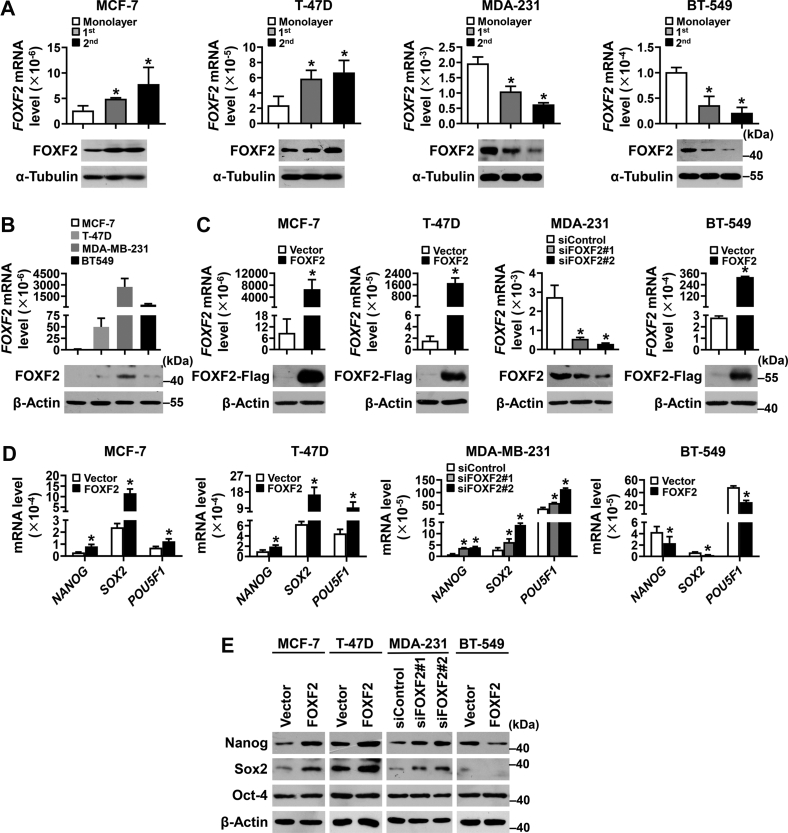
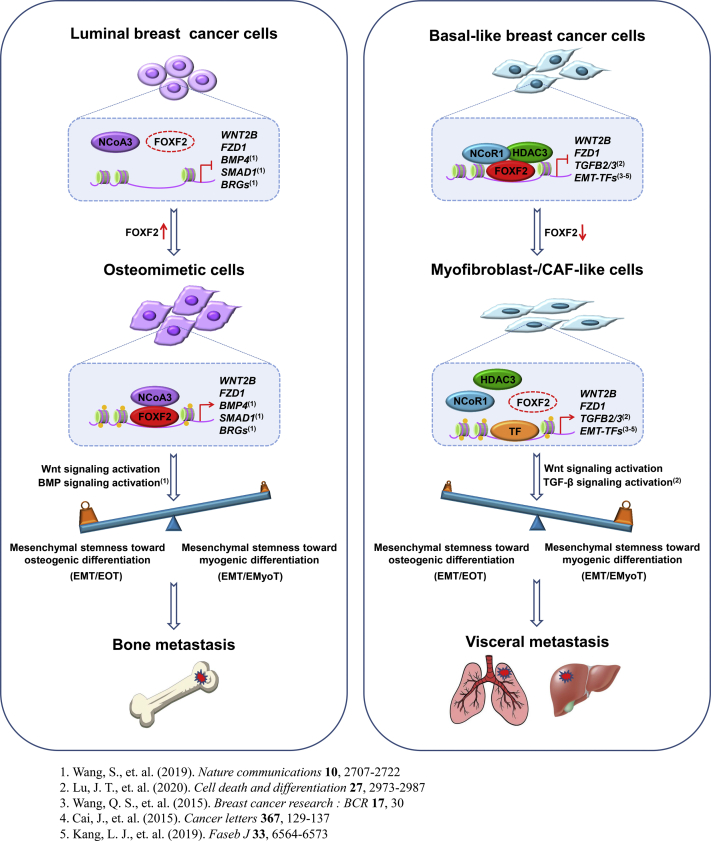
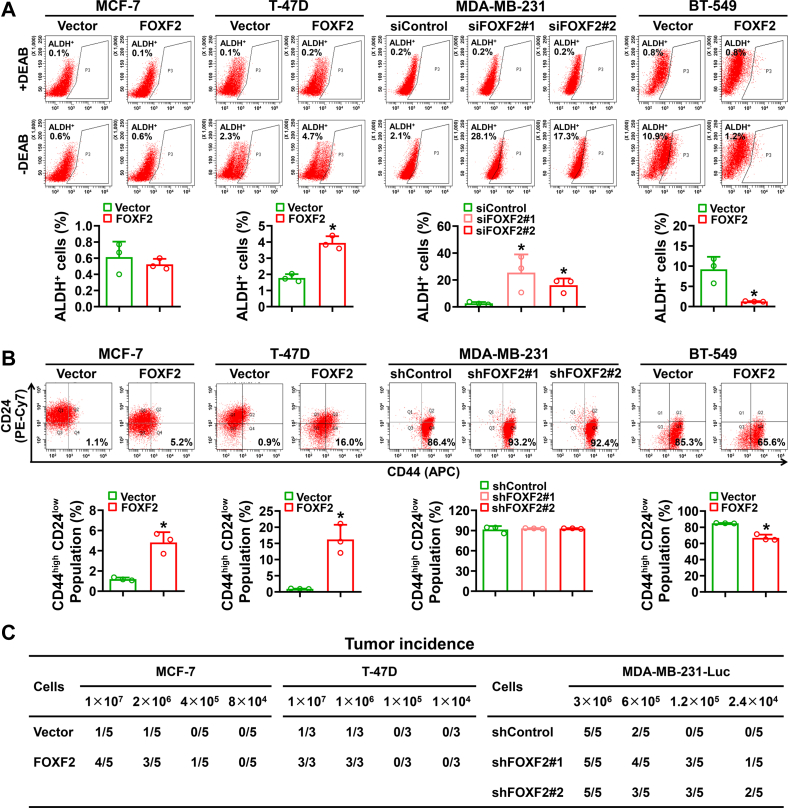
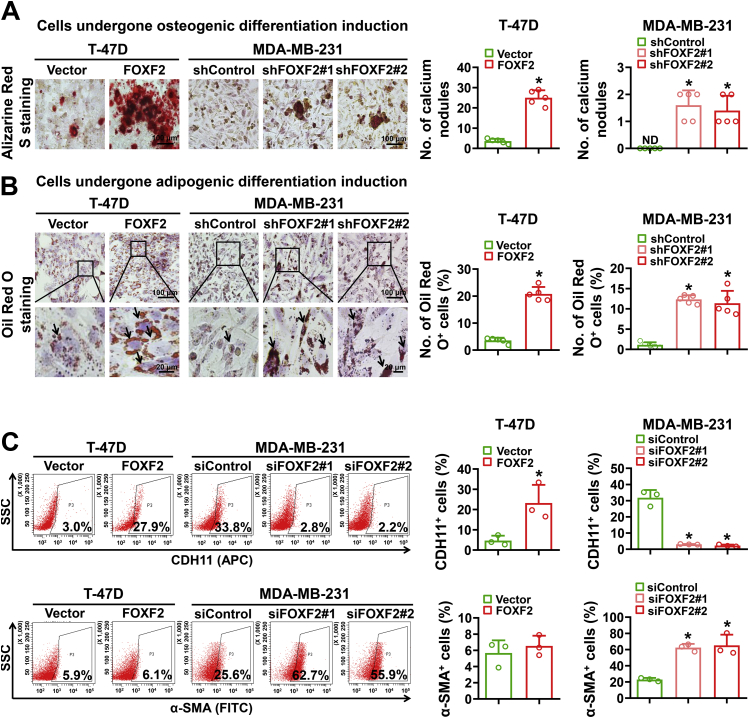
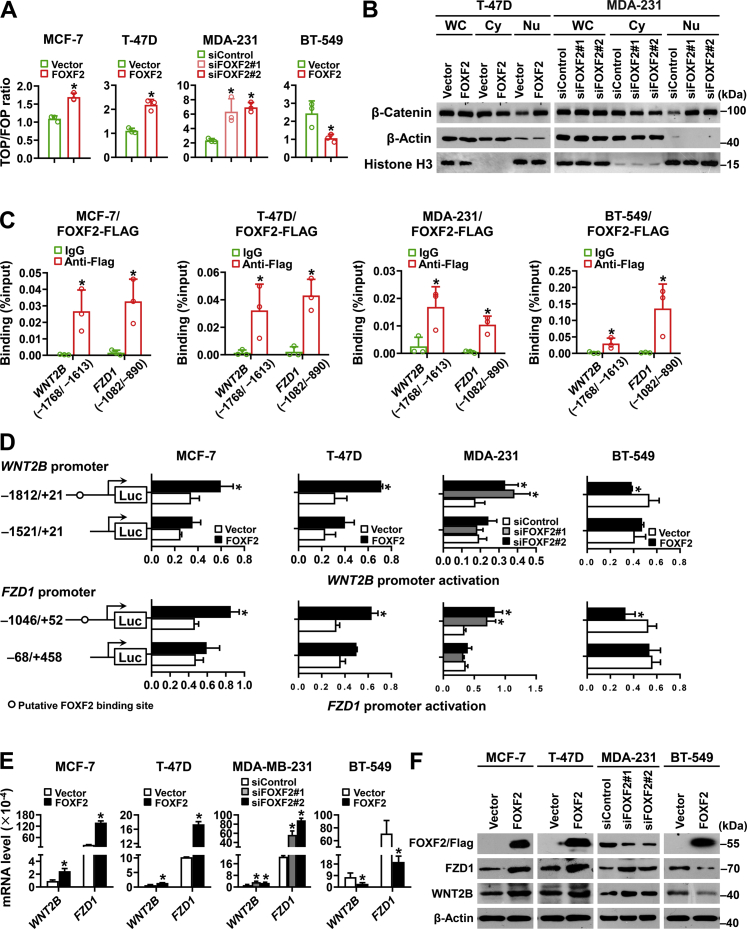
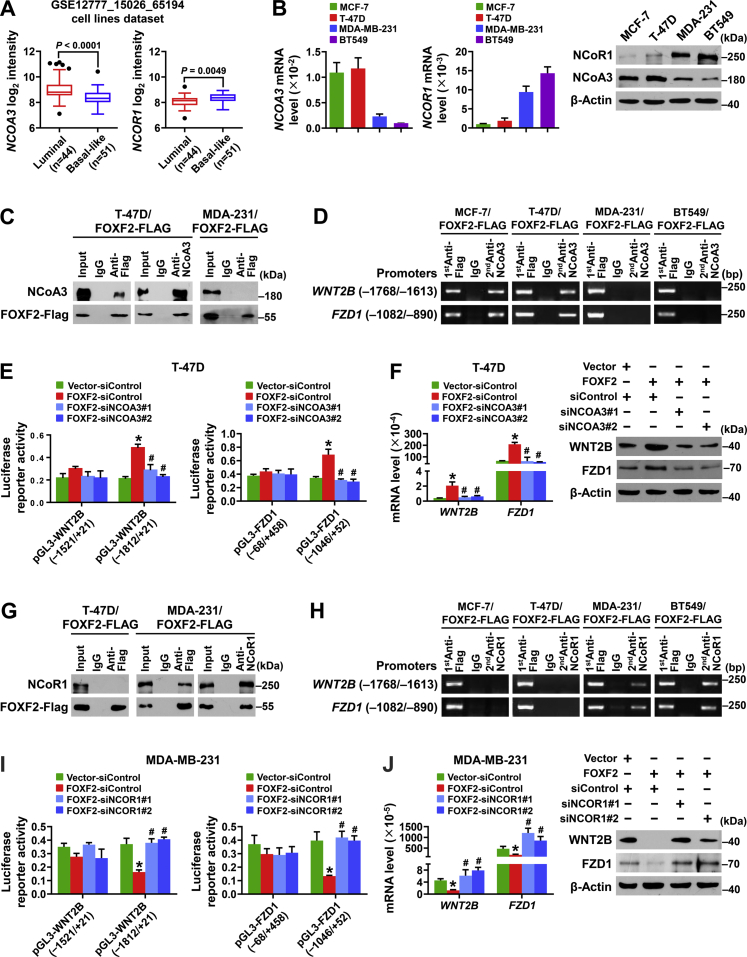
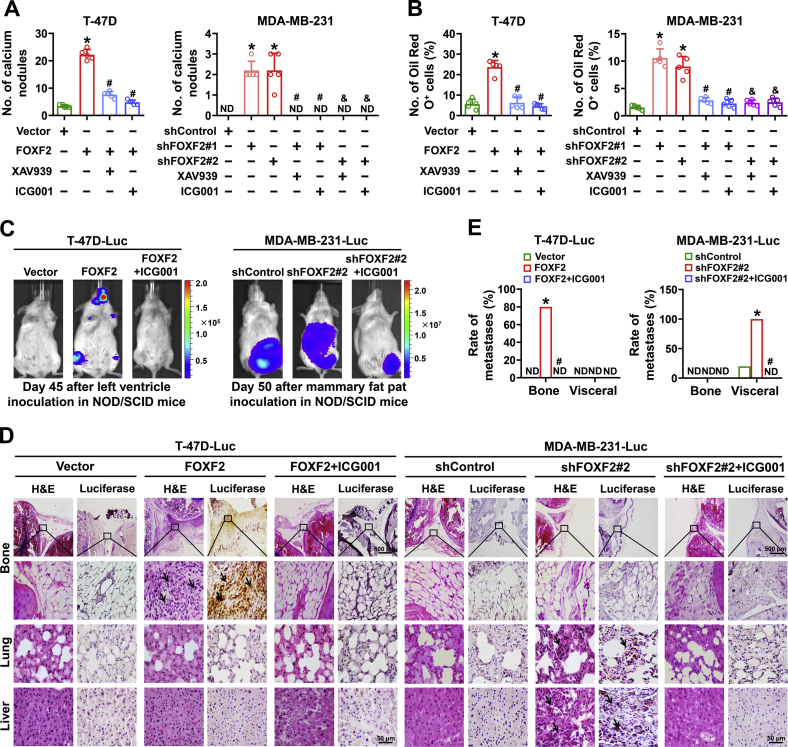
The stemness of cancer cells contributes to tumorigenesis, the heterogeneity of malignancies, cancer metastasis, and therapeutic resistance. However, the roles and regulatory mechanisms maintaining stemness among breast cancer subtypes remain elusive. Our previous studies have demonstrated that ectopic expression and dynamic alteration of the mesenchymal transcription factor forkhead box F2 (FOXF2) differentially regulates breast cancer progression and metastasis organotropism in a cell subtype-specific manner. Here, we reveal the underlying mechanism by which FOXF2 enhances stemness in luminal breast cancer cells but suppresses that in basal-like breast cancer (BLBC) cells. We show that luminal breast cancer and BLBC cells with FOXF2-regulated stemness exhibit partial mesenchymal stem cell properties that toward osteogenic differentiation and myogenic differentiation, respectively. Furthermore, we show that FOXF2 activates the Wnt signaling pathway in luminal breast cancer cells but represses this pathway in BLBC cells by recruiting nuclear receptor coactivator 3 (NCoA3) and nuclear receptor corepressor 1 (NCoR1) to the promoters of Wnt family member 2B (WNT2B) and frizzled class receptor 1 (FZD1) genes to activate and repress their transcription, respectively. We propose that targeting the Wnt signaling pathway is a promising strategy for the treatment of breast cancers with dysregulated expression of FOXF2.
癌细胞的干性导致了肿瘤的发生、恶性肿瘤的异质性、癌症转移和治疗抵抗。然而,乳腺癌亚型中维持干性的作用和调节机制仍不清楚。我们之前的研究表明,间充质转录因子叉头框 F2(FOXF2)的异位表达和动态改变以细胞亚型特异性的方式差异调节乳腺癌的进展和转移器官嗜性。在这里,我们揭示了 FOXF2 增强腔乳腺癌细胞干性而抑制基底样乳腺癌(BLBC)细胞干性的潜在机制。我们表明,FOXF2 调控的具有干性的腔乳腺癌和 BLBC 细胞表现出部分间充质干细胞特性,分别向成骨分化和肌生成分化。此外,我们表明,FOXF2 通过招募核受体共激活因子 3(NCoA3)和核受体共抑制因子 1(NCoR1)到 Wnt 家族成员 2B(WNT2B)和卷曲受体 1(FZD1)基因的启动子,分别激活和抑制它们的转录,从而在腔乳腺癌细胞中激活 Wnt 信号通路,但在 BLBC 细胞中抑制该通路。我们提出,靶向 Wnt 信号通路是治疗 FOXF2 表达失调的乳腺癌的一种有前途的策略。