Department of Neurology, Tongji Hospital, Tongji Medical College, Huazhong University of Science and Technology, No.1095 Jiefang Road, Wuhan, 430030, Hubei, China.
Cancer Center of Tongji Hospital, Tongji Medical College, Huazhong University of Science and Technology, No.1095 Jiefang Road, Wuhan, 430030, China.
Redox Biol. 2022 Aug;54:102354. doi: 10.1016/j.redox.2022.102354. Epub 2022 May 30.
Glutamate mediated excitotoxicity, such as oxidative stress, neuroinflammation, synaptic loss and neuronal death, is ubiquitous in Alzheimer's disease (AD). Our previous study found that 15 Hz repetitive transcranial magnetic stimulation (rTMS) could reduce cortical excitability. The purpose of this study was to explore the therapeutic effect of higher frequency rTMS on 3xTg-AD model mice and further explore the mechanisms of rTMS.
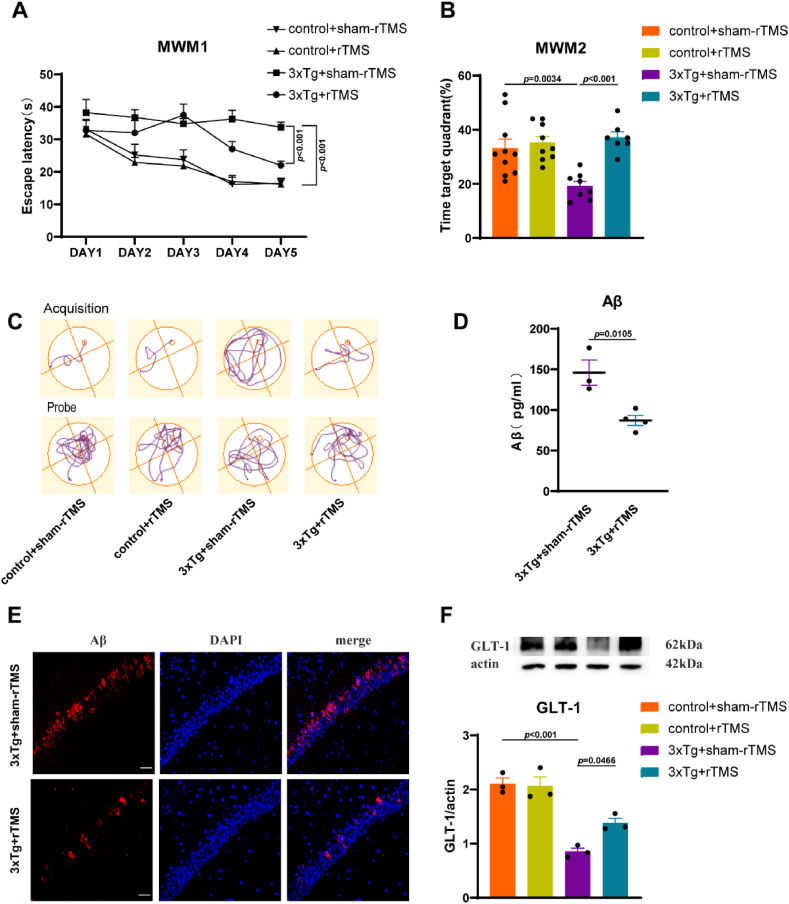
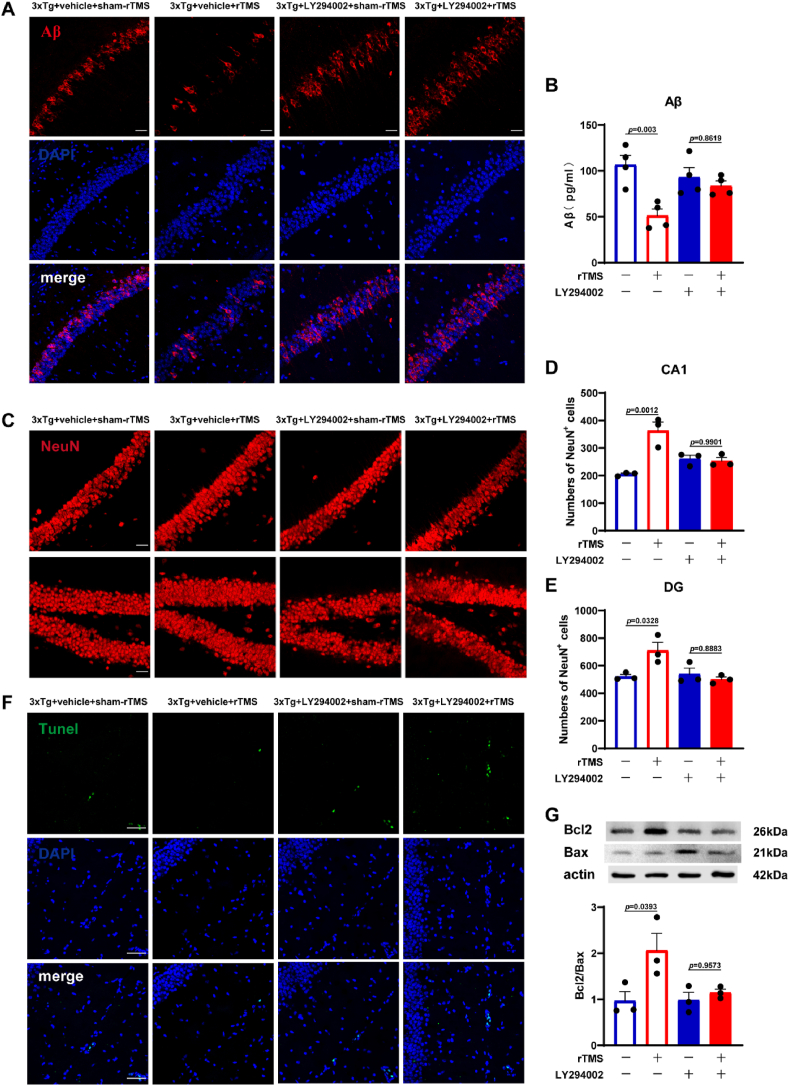
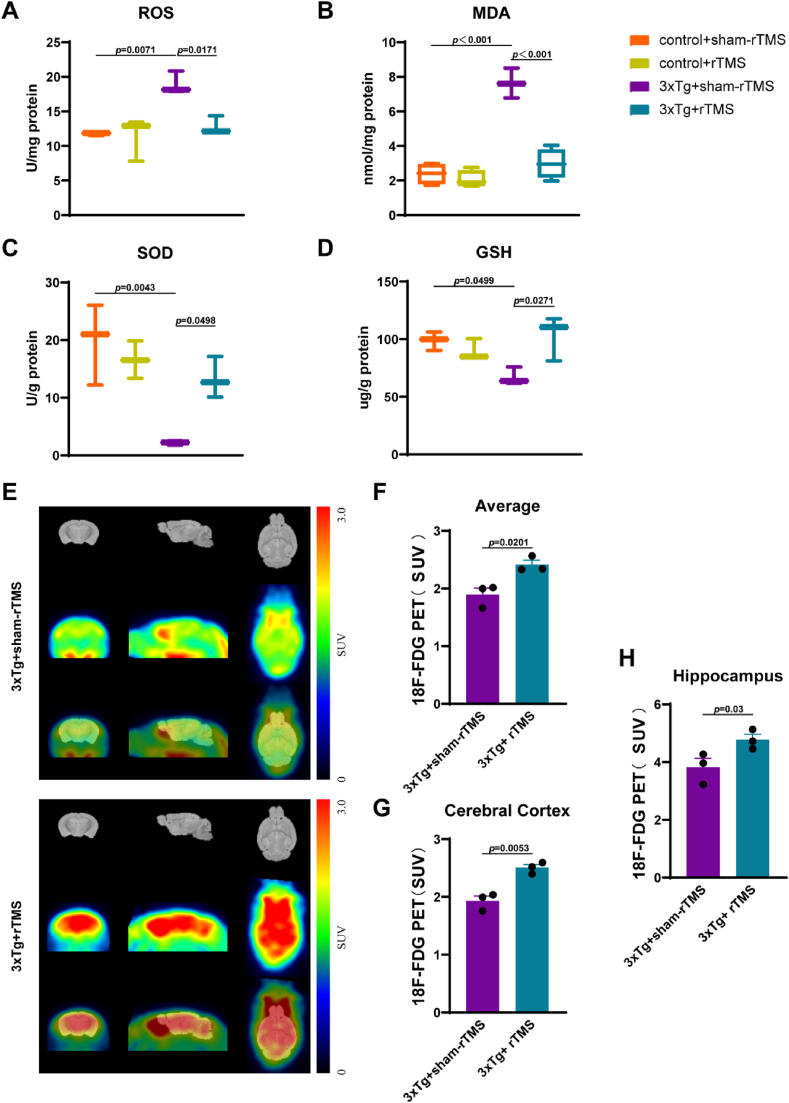
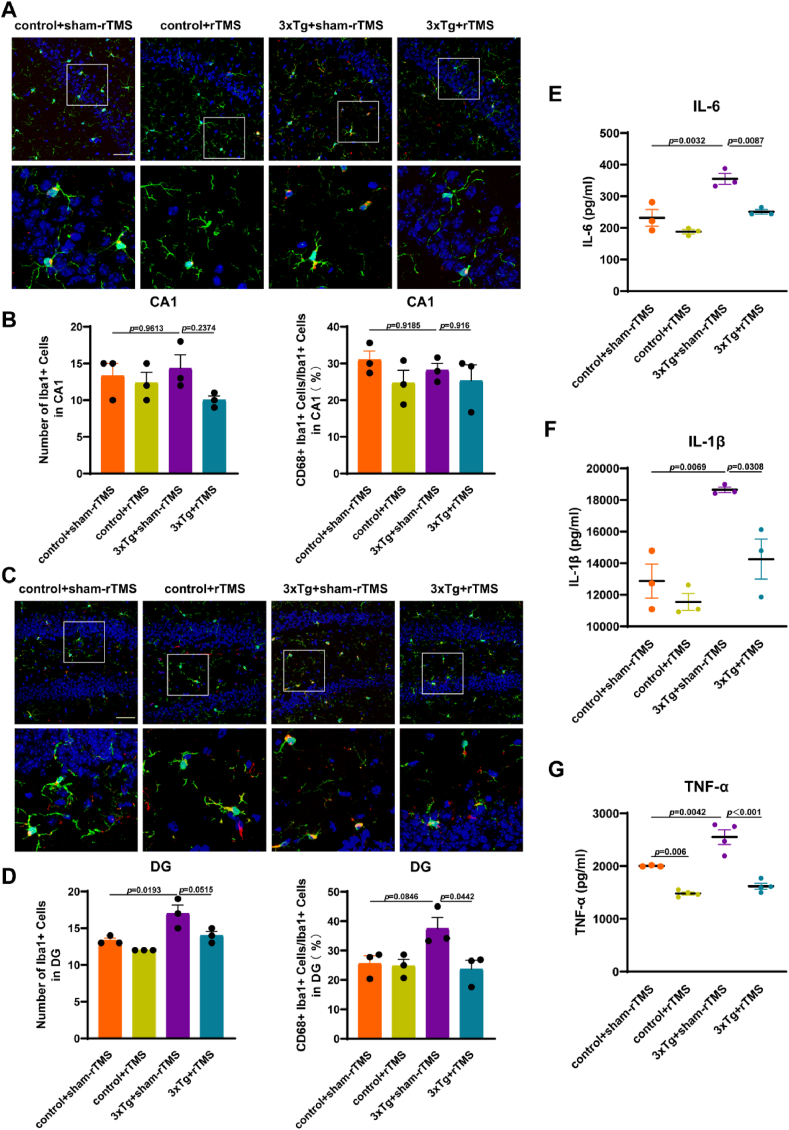
First, WT and 3xTg-AD model mice received 25 Hz rTMS treatment for 21 days. The Morris water maze test was used to evaluate the cognitive function. The levels of Aβ and neuroinflammation were assessed by ELISA and immunofluorescence. Oxidative stress was quantified by biochemical assay kits. Brain glucose metabolism was assessed by F-FDG PET. Apoptosis was assessed by western blot and TUNEL staining. Synaptic plasticity and PI3K/Akt/GLT-1 pathway related protein expression were assessed by western blot. Next, to explore the activity of PI3K/Akt in the therapeutic effect of rTMS, 3xTg-AD model mice were given LY294002 intervention and rTMS treatment for 21 days, the experimental method was the same as before.
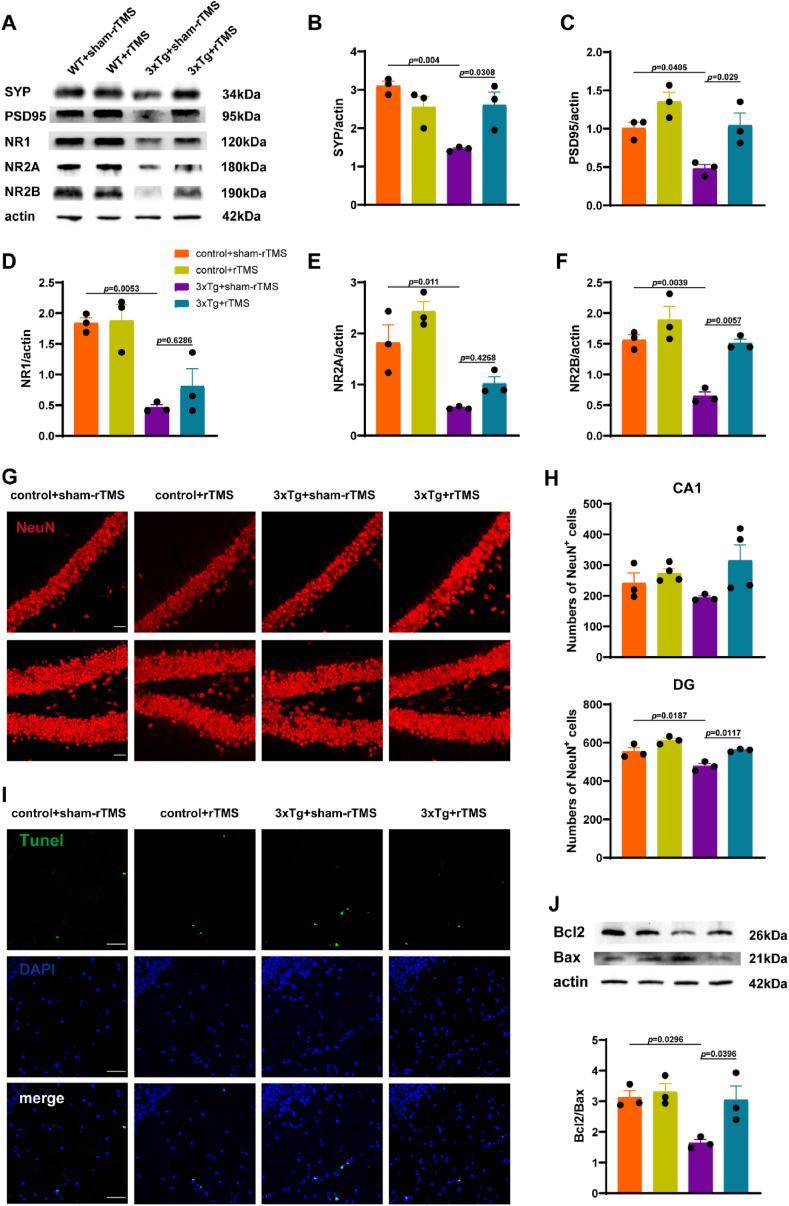
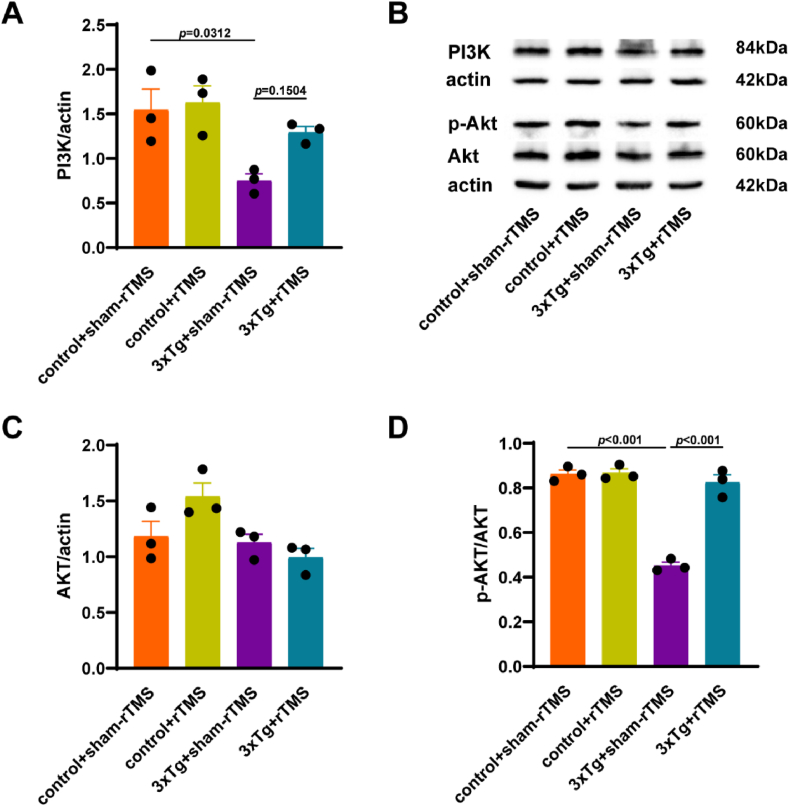
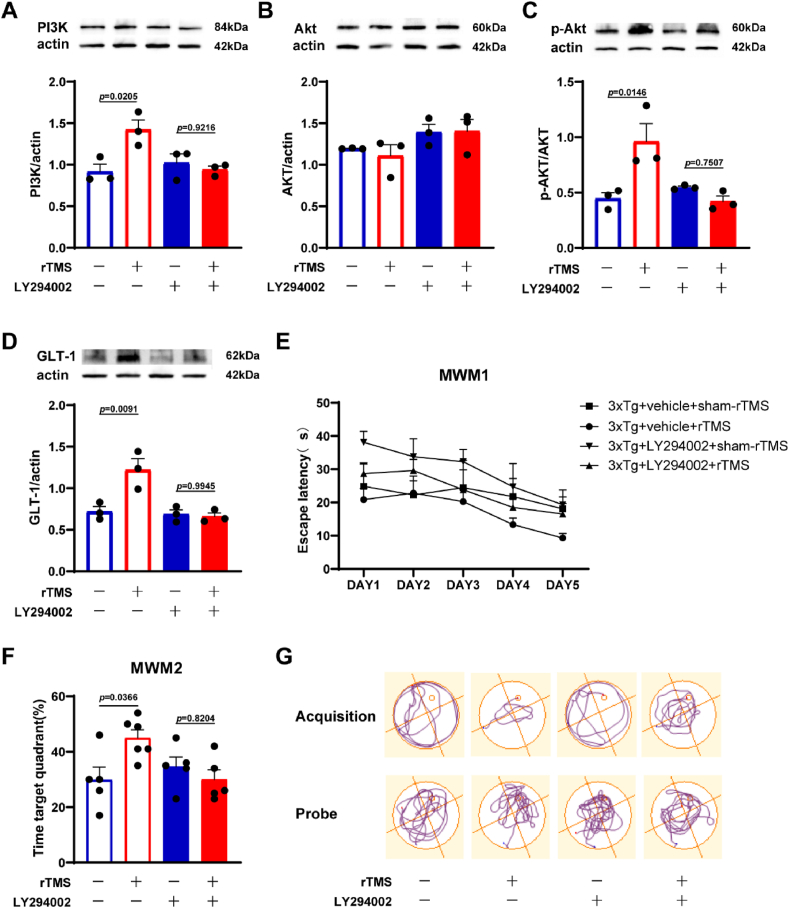
We found that 25 Hz rTMS could improve cognitive function of 3xTg-AD model mice, reduce hippocampal Aβ1-42 levels, ameliorate oxidative stress and improve glucose metabolism. rTMS alleviated neuroinflammatory response, enhanced synaptic plasticity and reduced neuronal loss and cell apoptosis, accompanied by activation of PI3K/Akt/GLT-1 pathway. After administration of PI3K/Akt inhibitor LY294002, 25 Hz rTMS could not improve the cognitive function and reduce neuron damage of 3xTg-AD model mice, nor could it upregulate the expression of GLT-1, indicating that its therapeutic and protective effects required the involvement of PI3K/Akt/GLT-1 pathway.
rTMS exerts protective role for AD through regulating multiple pathological processes. Meanwhile, this study revealed the key role of PI3K/Akt/GLT-1 pathway in the treatment of AD by rTMS, which might be a new target.
谷氨酸介导的兴奋毒性,如氧化应激、神经炎症、突触损失和神经元死亡,普遍存在于阿尔茨海默病(AD)中。我们之前的研究发现,15 Hz 重复经颅磁刺激(rTMS)可以降低皮质兴奋性。本研究旨在探讨高频 rTMS 对 3xTg-AD 模型小鼠的治疗作用,并进一步探讨 rTMS 的作用机制。
首先,WT 和 3xTg-AD 模型小鼠接受 25 Hz rTMS 治疗 21 天。采用 Morris 水迷宫试验评估认知功能。通过 ELISA 和免疫荧光法评估 Aβ和神经炎症水平。通过生化试剂盒定量氧化应激。通过 F-FDG PET 评估脑葡萄糖代谢。通过 Western blot 和 TUNEL 染色评估细胞凋亡。通过 Western blot 评估突触可塑性和 PI3K/Akt/GLT-1 通路相关蛋白表达。接下来,为了探讨 rTMS 治疗作用中 PI3K/Akt 的活性,3xTg-AD 模型小鼠给予 LY294002 干预和 rTMS 治疗 21 天,实验方法同前。
我们发现 25 Hz rTMS 可改善 3xTg-AD 模型小鼠的认知功能,降低海马 Aβ1-42 水平,改善氧化应激和葡萄糖代谢。rTMS 减轻神经炎症反应,增强突触可塑性,减少神经元丢失和细胞凋亡,并激活 PI3K/Akt/GLT-1 通路。给予 PI3K/Akt 抑制剂 LY294002 后,25 Hz rTMS 不能改善 3xTg-AD 模型小鼠的认知功能和减少神经元损伤,也不能上调 GLT-1 的表达,表明其治疗和保护作用需要涉及 PI3K/Akt/GLT-1 通路。
rTMS 通过调节多种病理过程发挥对 AD 的保护作用。同时,本研究揭示了 PI3K/Akt/GLT-1 通路在 rTMS 治疗 AD 中的关键作用,可能成为新的治疗靶点。