Tang Gang, Guan Haochen, Du Zhiyong, Yuan Weijie
Department of Nephrology, Shanghai General Hospital, Shanghai Jiao Tong University School of Medicine, Shanghai, China.
Department of Urology Surgery, Dingzhou People's Hospital of Hebei Province, Dingzhou, China.
Front Cell Dev Biol. 2022 May 19;10:816024. doi: 10.3389/fcell.2022.816024. eCollection 2022.
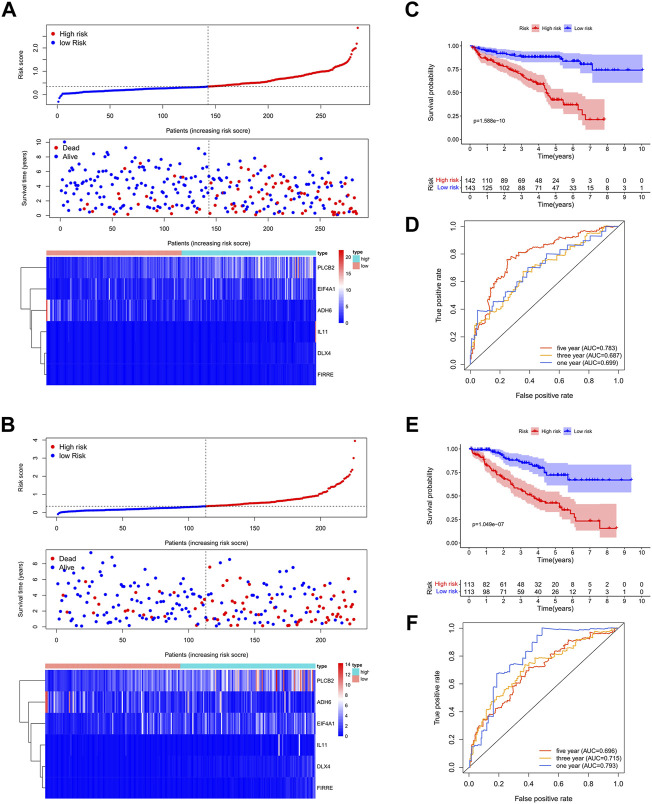
A wealth of experimental evidence has validated that butyrate is capable of inhibiting tumorigenesis, while the potential role of butyrate metabolism in the tumor immune microenvironment (TIME) has been rarely explored. This study aims to explore the potential of butyrate-metabolism-related genes as prognostic biomarkers and their correlations with immune infiltrates in clear cell renal cell carcinoma (ccRCC) patients. Based on The Cancer Genome Atlas dataset (TCGA; = 539), a total of 22 differentially expressed genes (DEGs) related with butyrate metabolism in ccRCC and normal samples were identified. Among them, a prognostic signature involving six butyrate-metabolism-related genes was created (Bu-Meta-GPS) in the training set ( = 271) and validation set ( = 268), and risk scores were calculated based on them. ccRCC patients with high-risk scores exhibited an unfavorable prognosis, high immunoscore, upregulated immuno-oncological targets (, , , and ), and distinct immune-cell infiltration than those with low-risk scores. High-risk ccRCC patients without radiotherapy had a better survival rate than radiotherapy-treated patients. The negative regulation of cytokine production and cytokine-mediated signaling pathways was remarkably enriched in ccRCC patients with high-risk scores. A nomogram was then formulated to assess the overall survival (OS) of ccRCC patients. In summary, we illuminated the key role of butyrate metabolism in ccRCC TIME. The developed Bu-Meta-GPS was a sensitive predictive biomarker for the prognosis of ccRCC, which also provided new perspectives in improving immunotherapeutic efficacy.
大量实验证据证实丁酸盐能够抑制肿瘤发生,而丁酸盐代谢在肿瘤免疫微环境(TIME)中的潜在作用却鲜有研究。本研究旨在探讨丁酸盐代谢相关基因作为透明细胞肾细胞癌(ccRCC)患者预后生物标志物的潜力及其与免疫浸润的相关性。基于癌症基因组图谱数据集(TCGA;n = 539),共鉴定出22个在ccRCC和正常样本中与丁酸盐代谢相关的差异表达基因(DEG)。其中,在训练集(n = 271)和验证集(n = 268)中创建了一个包含6个丁酸盐代谢相关基因的预后特征(Bu-Meta-GPS),并据此计算风险评分。高风险评分的ccRCC患者预后不良、免疫评分高、免疫肿瘤靶点(PD-L1、CTLA-4、LAG-3和TIGIT)上调,且与低风险评分患者相比免疫细胞浸润明显不同。未接受放疗的高风险ccRCC患者的生存率高于接受放疗的患者。细胞因子产生和细胞因子介导的信号通路的负调控在高风险评分的ccRCC患者中显著富集。然后制定了一个列线图来评估ccRCC患者的总生存期(OS)。总之,我们阐明了丁酸盐代谢在ccRCC TIME中的关键作用。所开发的Bu-Meta-GPS是ccRCC预后的敏感预测生物标志物,也为提高免疫治疗疗效提供了新的视角。