Department of Nephrology, The Key Laboratory for The Prevention and Treatment of Chronic Kidney Disease of Chongqing, Xinqiao Hospital, Army Medical University (Third Military Medical University), Chongqing, 400037, China.
State Key Laboratory of Trauma, Burns and Combined Injury, Institute of Combined Injury of PLA, Chongqing Engineering Research Center for Nanomedicine, College of Preventive Medicine, Army Medical University (Third Military Medical University), Chongqing, 400038, China.
Theranostics. 2022 May 9;12(8):3882-3895. doi: 10.7150/thno.70830. eCollection 2022.
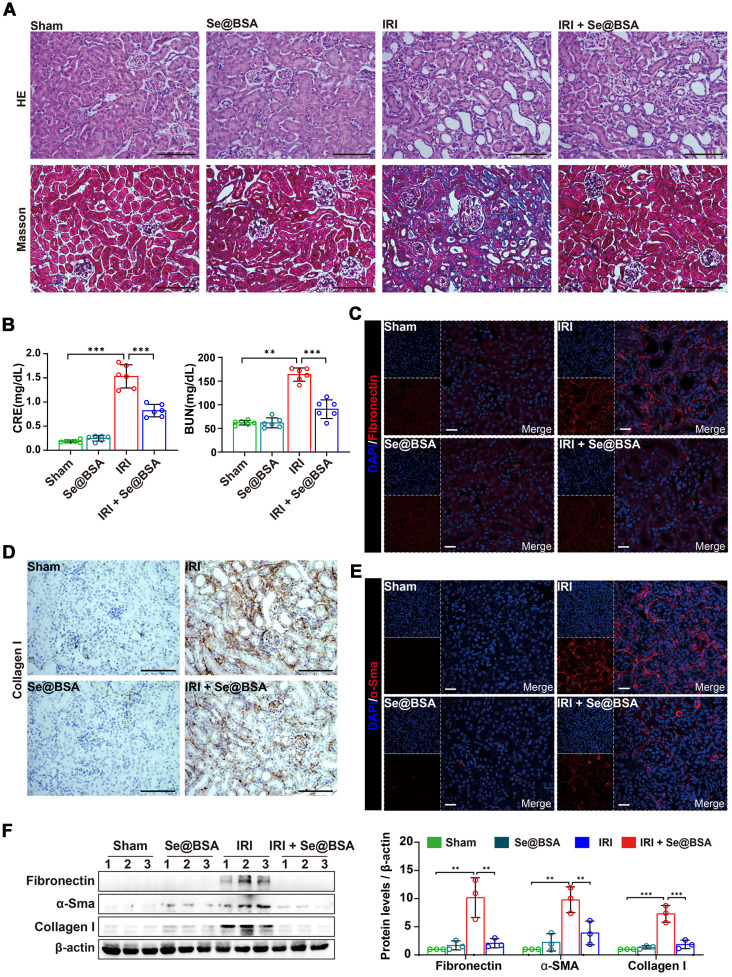
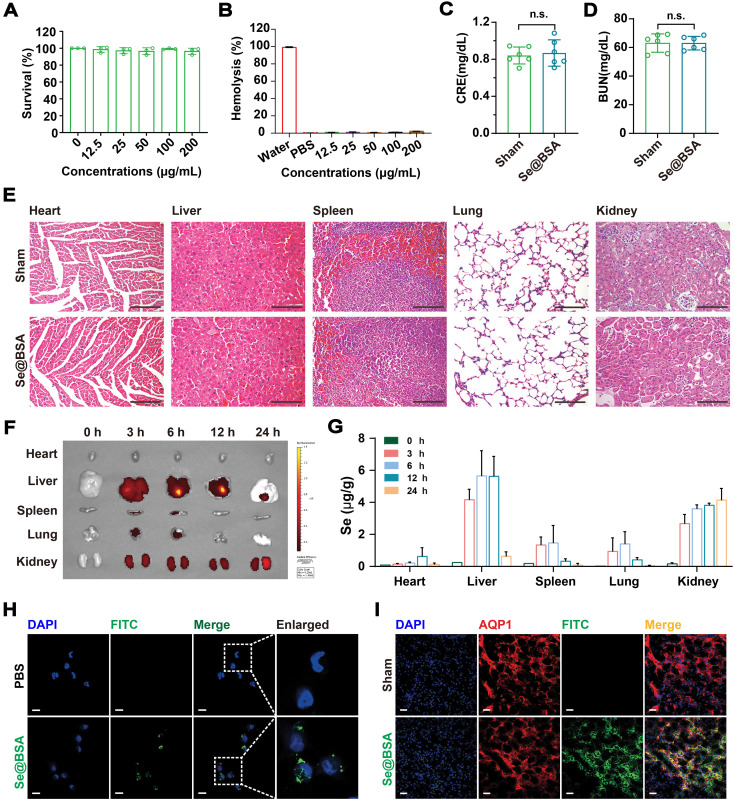
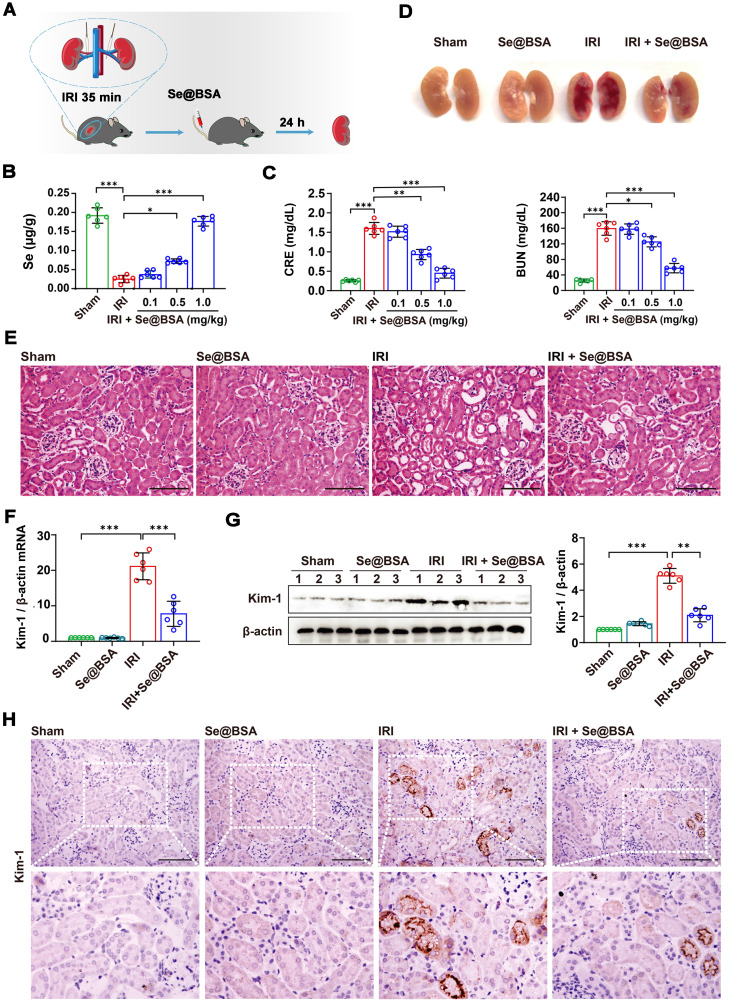
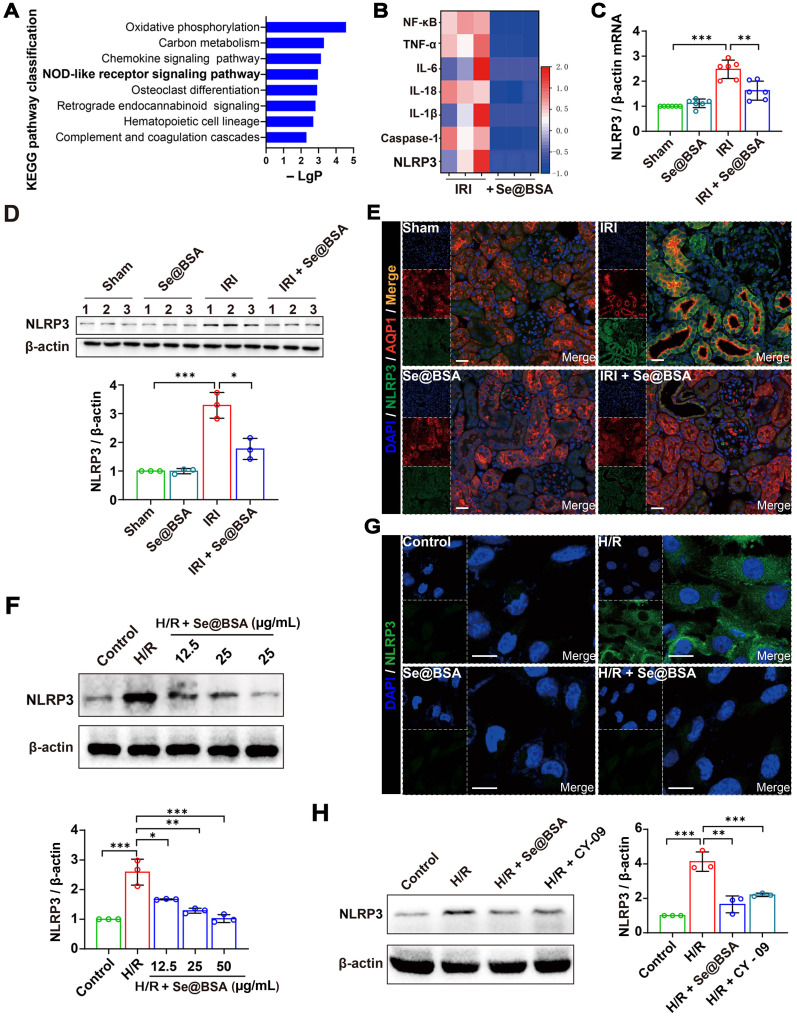
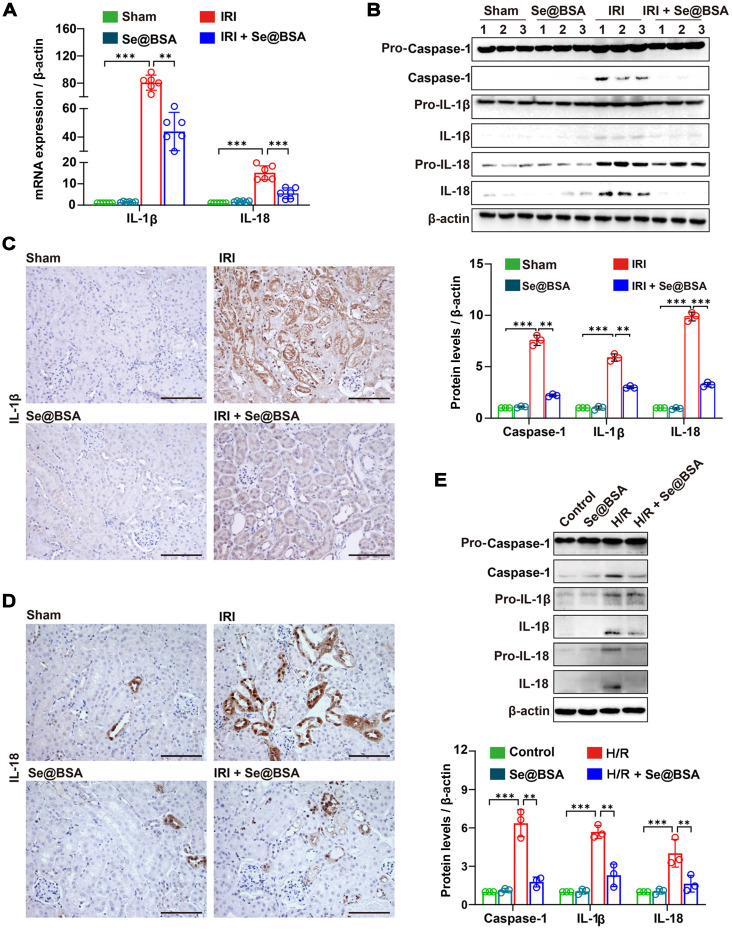
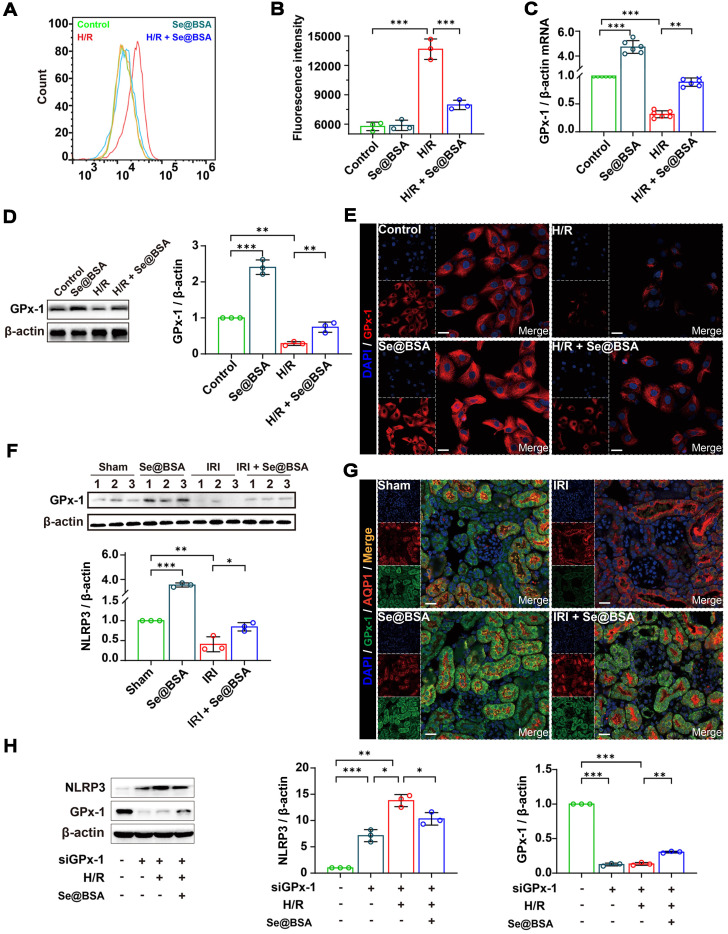
Acute kidney injury (AKI) is a common critical illness in the clinic and currently lacks effective treatment options. Ischemia reperfusion injury (IRI) is a major pathogenic factor for AKI. Due to the deficiency of selenium (Se) in AKI patients, we intended to treat IRI-induced AKI using a Se rebalancing strategy in the present study. Sodium selenate, ascorbic acid, and bovine serum albumin (BSA) were employed to prepare nanomaterials termed Se@BSA nanoparticles (NPs) using a simple method. Experiments with human renal tubular epithelial HK-2 cells exposed to hypoxia/reoxygenation (H/R) and IRI-AKI mice were used to evaluate the therapeutic efficiency of Se@BSA NPs. Transcriptome sequencing, further molecular biology experiments, and pathologic analysis were performed to investigate the underlying mechanisms. Se@BSA NPs accumulated in mouse kidneys and could be endocytosed by renal tubular epithelial cells after intravenous administration. studies showed that Se@BSA NP treatment markedly increased the levels of glutathione peroxidase (GPx)-1 and suppressed NLRP3 inflammasome activation in H/R cells, which resulted in reductions in the proteolytic cleavage of pro-Caspase-1 into active Caspase-1 and the maturation of inflammatory factors. Mouse experiments confirmed these findings and demonstrated an inspiring mitigative effect of Se@BSA NPs on IRI-induced AKI. Owing to modulation of the GPx-1/NLRP3/Caspase-1 pathway, Se@BSA NPs dramatically inhibited fibrosis formation after AKI. This study provides an effective therapeutic option by applying easy-to-produce Se-containing nanomaterials to remedy Se imbalance and impede inflammatory responses in the kidney, which is a promising candidate for AKI treatment.
急性肾损伤(AKI)是临床常见的危重症,目前缺乏有效的治疗手段。缺血再灌注损伤(IRI)是 AKI 的主要致病因素。由于 AKI 患者硒(Se)缺乏,本研究拟采用 Se 再平衡策略治疗 IRI 诱导的 AKI。采用简单方法,用硒酸钠、抗坏血酸和牛血清白蛋白(BSA)制备纳米材料,称为 Se@BSA 纳米颗粒(NPs)。用缺氧/复氧(H/R)处理的人肾小管上皮细胞 HK-2 细胞实验和 IRI-AKI 小鼠实验评估 Se@BSA NPs 的治疗效果。进行转录组测序、进一步的分子生物学实验和病理分析以研究其潜在机制。Se@BSA NPs 在小鼠肾脏中积累,静脉注射后可被肾小管上皮细胞内吞。研究表明,Se@BSA NP 治疗可显著增加谷胱甘肽过氧化物酶(GPx)-1 的水平,并抑制 H/R 细胞中 NLRP3 炎性小体的激活,从而减少前胱天蛋白酶-1的蛋白水解切割为活性 Caspase-1 和炎性因子的成熟。小鼠实验证实了这些发现,并表明 Se@BSA NPs 对 IRI 诱导的 AKI 具有令人鼓舞的缓解作用。由于对 GPx-1/NLRP3/Caspase-1 通路的调节,Se@BSA NPs 可显著抑制 AKI 后纤维化的形成。本研究提供了一种有效的治疗选择,即应用易于制备的含 Se 纳米材料来纠正 Se 失衡并抑制肾脏中的炎症反应,这是 AKI 治疗的有前途的候选药物。