Department of Pharmaceutical Chemistry, Vaccine Analytics and Formulation Center, University of Kansas, Lawrence, KS, USA.
Division of Infectious Diseases, Wadsworth Center, New York State Department of Health, Albany, NY, USA.
Hum Vaccin Immunother. 2022 Nov 30;18(5):2079346. doi: 10.1080/21645515.2022.2079346. Epub 2022 Jun 6.
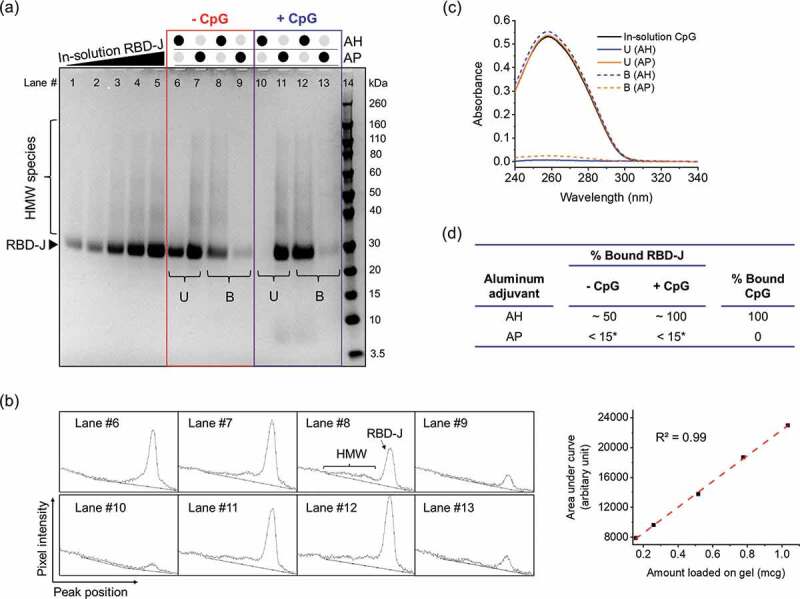
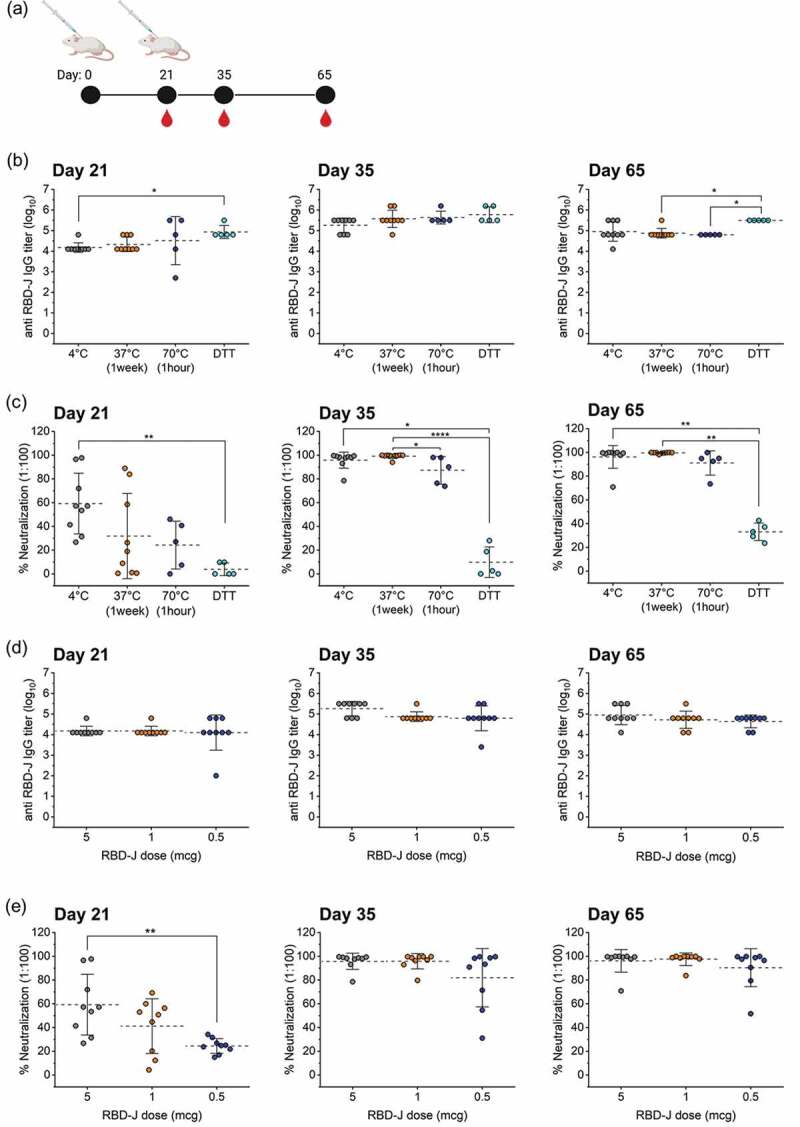
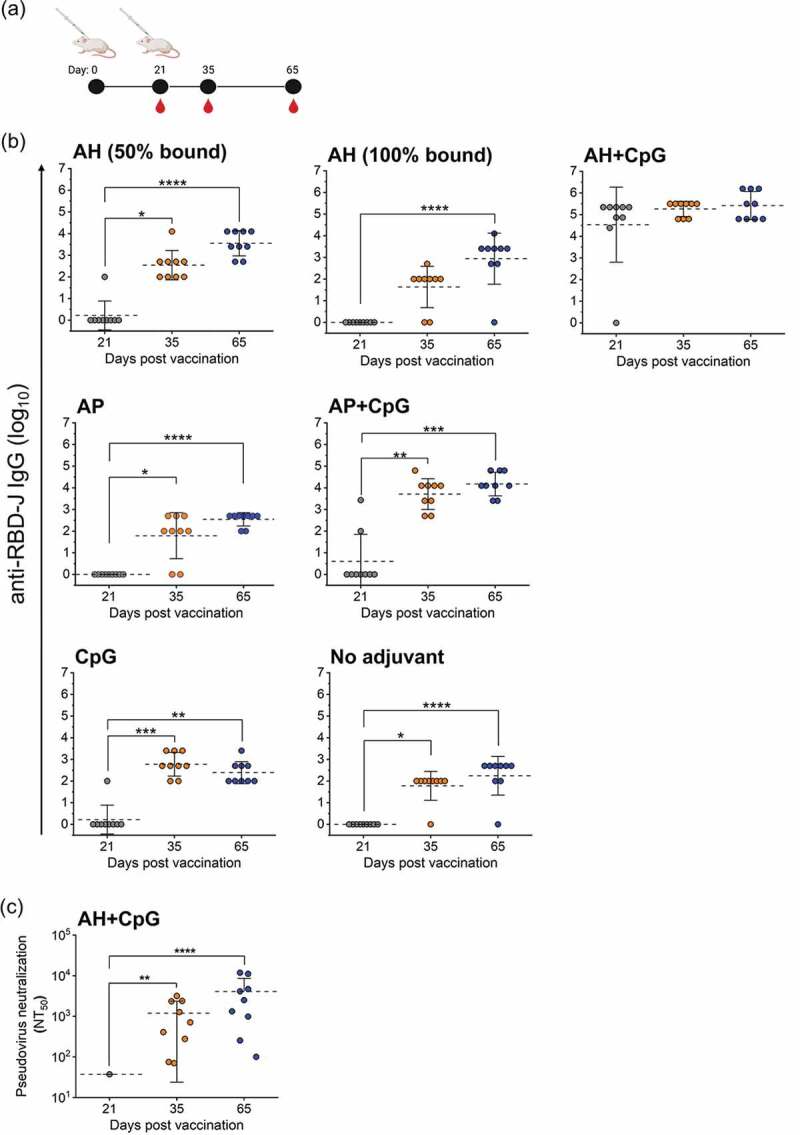
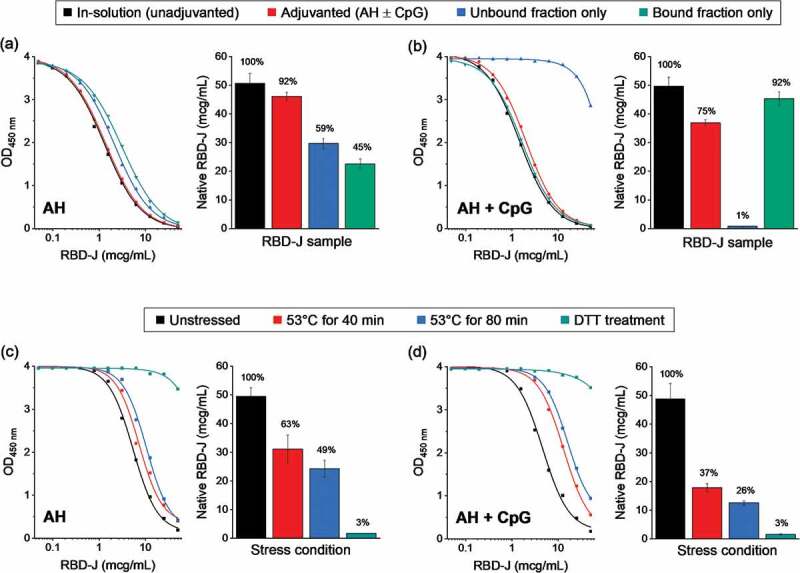
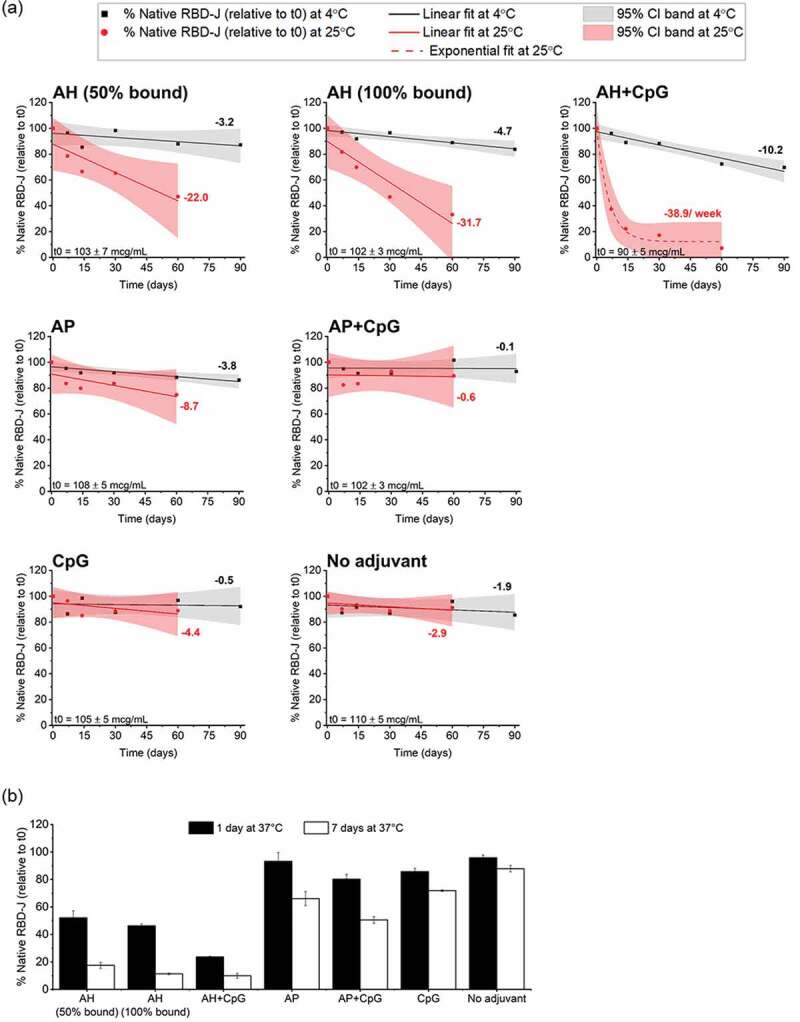
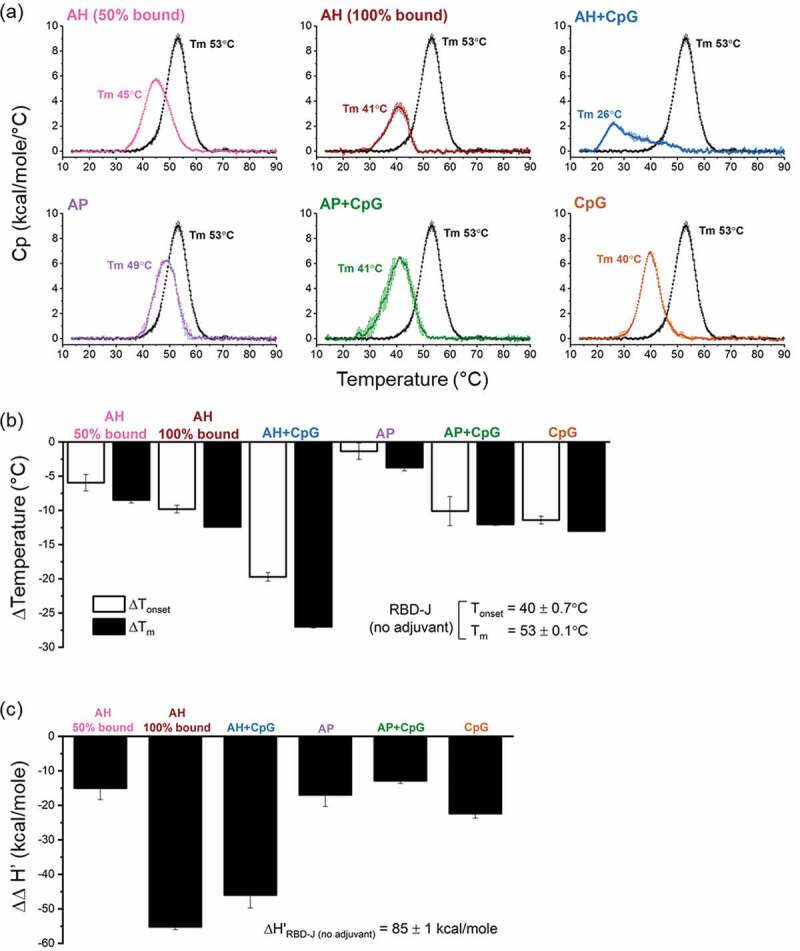
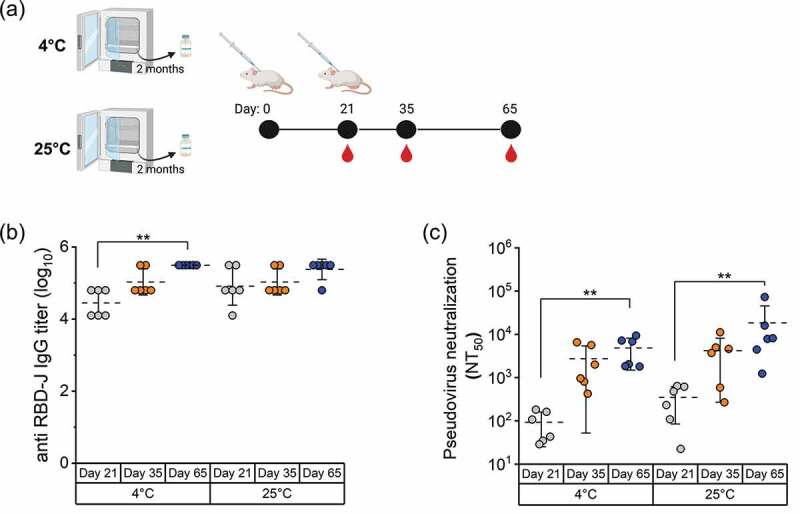
Low-cost, refrigerator-stable COVID-19 vaccines will facilitate global access and improve vaccine coverage in low- and middle-income countries. To this end, subunit-based approaches targeting the receptor-binding domain (RBD) of SARS-CoV-2 Spike protein remain attractive. Antibodies against RBD neutralize SARS-CoV-2 by blocking viral attachment to the host cell receptor, ACE2. Here, a yeast-produced recombinant RBD antigen (RBD-L452K-F490W or RBD-J) was formulated with various combinations of aluminum-salt (Alhydrogel®, AH; AdjuPhos®, AP) and CpG 1018 adjuvants. We assessed the effect of antigen-adjuvant interactions on the stability and mouse immunogenicity of various RBD-J preparations. While RBD-J was 50% adsorbed to AH and <15% to AP, addition of CpG resulted in complete AH binding, yet no improvement in AP adsorption. ACE2 competition ELISA analyses of formulated RBD-J stored at varying temperatures (4, 25, 37°C) revealed that RBD-J was destabilized by AH, an effect exacerbated by CpG. DSC studies demonstrated that aluminum-salt and CpG adjuvants decrease the conformational stability of RBD-J and suggest a direct CpG-RBD-J interaction. Although AH+CpG-adjuvanted RBD-J was the least stable , the formulation was most potent at eliciting SARS-CoV-2 pseudovirus neutralizing antibodies in mice. In contrast, RBD-J formulated with AP+CpG showed minimal antigen-adjuvant interactions, a better stability profile, but suboptimal immune responses. Interestingly, the loss of potency associated with heat-stressed RBD-J formulated with AH+CpG after one dose was abrogated by a booster. Our findings highlight the importance of elucidating the key interrelationships between antigen-adjuvant interactions, storage stability, and performance to enable successful formulation development of stable and efficacious subunit vaccines.
低成本、冰箱稳定的 COVID-19 疫苗将促进全球获取,并提高低收入和中等收入国家的疫苗覆盖率。为此,针对 SARS-CoV-2 刺突蛋白受体结合域(RBD)的亚单位方法仍然具有吸引力。针对 RBD 的抗体通过阻止病毒与宿主细胞受体 ACE2 的附着来中和 SARS-CoV-2。在这里,酵母产生的重组 RBD 抗原(RBD-L452K-F490W 或 RBD-J)与各种铝盐(Alhydrogel®,AH;AdjuPhos®,AP)和 CpG 1018 佐剂组合进行了配制。我们评估了抗原-佐剂相互作用对各种 RBD-J 制剂的稳定性和小鼠免疫原性的影响。虽然 RBD-J 有 50%被 AH 吸附,<15%被 AP 吸附,但 CpG 的添加导致完全的 AH 结合,但 AP 吸附没有改善。在不同温度(4、25、37°C)下储存的配方 RBD-J 的 ACE2 竞争 ELISA 分析表明,RBD-J 被 AH 不稳定,CpG 的作用加剧。DSC 研究表明,铝盐和 CpG 佐剂降低了 RBD-J 的构象稳定性,并表明 CpG 与 RBD-J 之间存在直接相互作用。尽管 AH+CpG 佐剂的 RBD-J 最不稳定,但该配方在小鼠中引发 SARS-CoV-2 假病毒中和抗体的能力最强。相比之下,与 AP+CpG 配制的 RBD-J 显示出最小的抗原-佐剂相互作用、更好的稳定性,但免疫反应不佳。有趣的是,在一剂后,用 AH+CpG 配制的热应激 RBD-J 的效力丧失在加强剂后被消除。我们的研究结果强调了阐明抗原-佐剂相互作用、储存稳定性和性能之间的关键相互关系的重要性,以实现稳定有效的亚单位疫苗的成功配方开发。