Department of Government, University of Texas, Austin, TX 78712.
Graduate School of Business, Stanford University, Stanford, CA 94305.
Proc Natl Acad Sci U S A. 2022 Jun 14;119(24):e2120284119. doi: 10.1073/pnas.2120284119. Epub 2022 Jun 6.
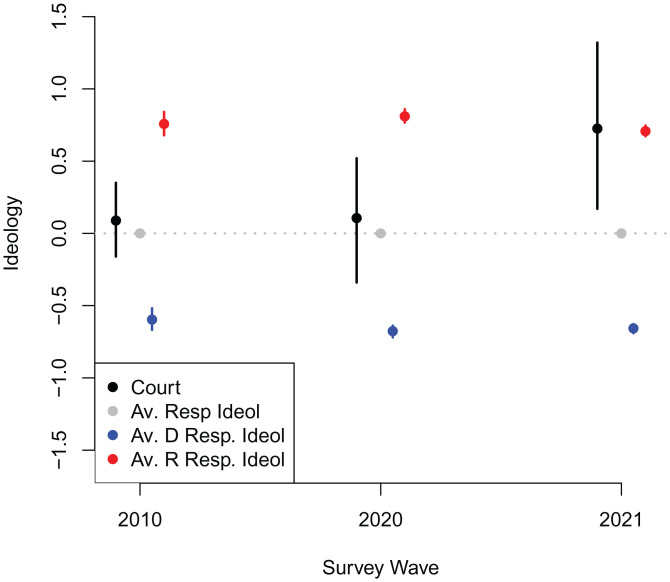
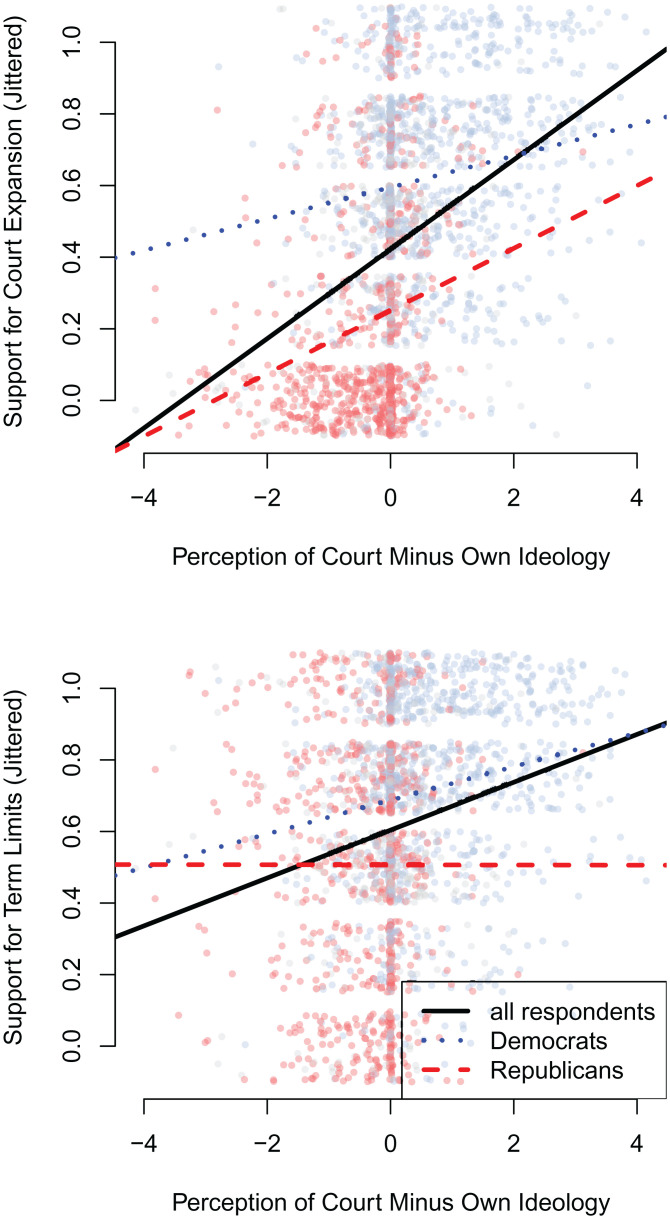
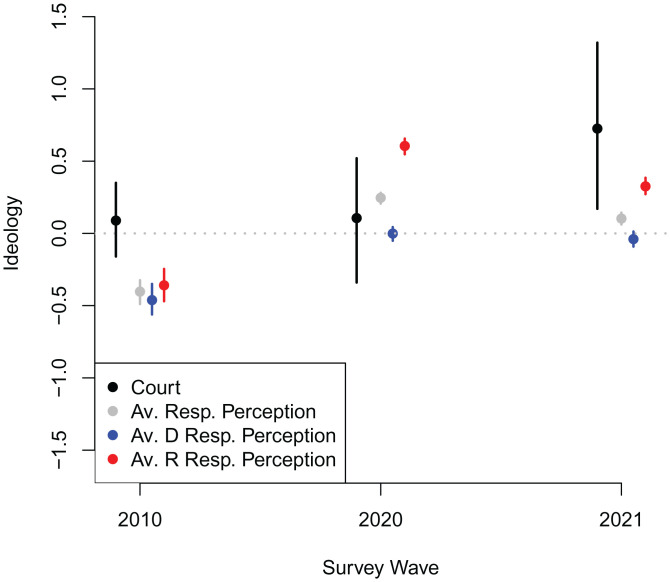
Has the US Supreme Court become more conservative than the public? We introduce results of three surveys conducted over the course of a decade that ask respondents about their opinions on the policy issues before the court. Using these data, we show that the gap between the court and the public has grown since 2020, with the court moving from being quite close to the average American to a position that is more conservative than the majority of Americans. Second, in contrast to findings showing consistency in the public’s approval of or deference to the court, we find that the public’s expectations of the court vary significantly over time and in tandem with changes in the court’s composition and recent rulings. Even so, many members of the public currently underestimate the court’s conservative leaning. Third, we find that respondents’ perceptions of the court’s ideology relative to their own are associated with support for institutional changes but with important differences between Democrats and Republicans. The fact that so many people currently underestimate how conservative the court is implies that support for proposed changes to the court may be weaker than it would be if people knew with greater accuracy the court’s conservative nature.
美国最高法院比公众更保守吗?我们介绍了在过去十年中进行的三项调查的结果,这些调查询问了受访者对法院面前的政策问题的看法。利用这些数据,我们表明,自 2020 年以来,法院与公众之间的差距已经扩大,法院的立场从与普通美国人相当接近转变为比大多数美国人更保守的立场。其次,与表明公众对法院的支持或尊重具有一致性的发现相反,我们发现,公众对法院的期望随着时间的推移而变化,并与法院的组成和最近的裁决变化同步。即便如此,许多公众目前低估了法院的保守倾向。第三,我们发现,受访者对法院相对于自身意识形态的看法与对制度变革的支持有关,但民主党政客和共和党政客之间存在重要差异。目前有如此多人低估了法院的保守程度,这意味着对法院改革的支持可能比人们更准确地了解法院的保守性质时要弱。