Laboratory for Applied Radiobiology, Dept. Radiation Oncology, University Hospital Zurich, University of Zurich, Zurich, Switzerland.
Laboratory for Applied Radiobiology, Dept. Radiation Oncology, University Hospital Zurich, University of Zurich, Zurich, Switzerland; Dept. Immunology, University Hospital Zurich, University of Zurich, Zurich, Switzerland.
Neoplasia. 2022 Sep;31:100812. doi: 10.1016/j.neo.2022.100812. Epub 2022 Jun 3.
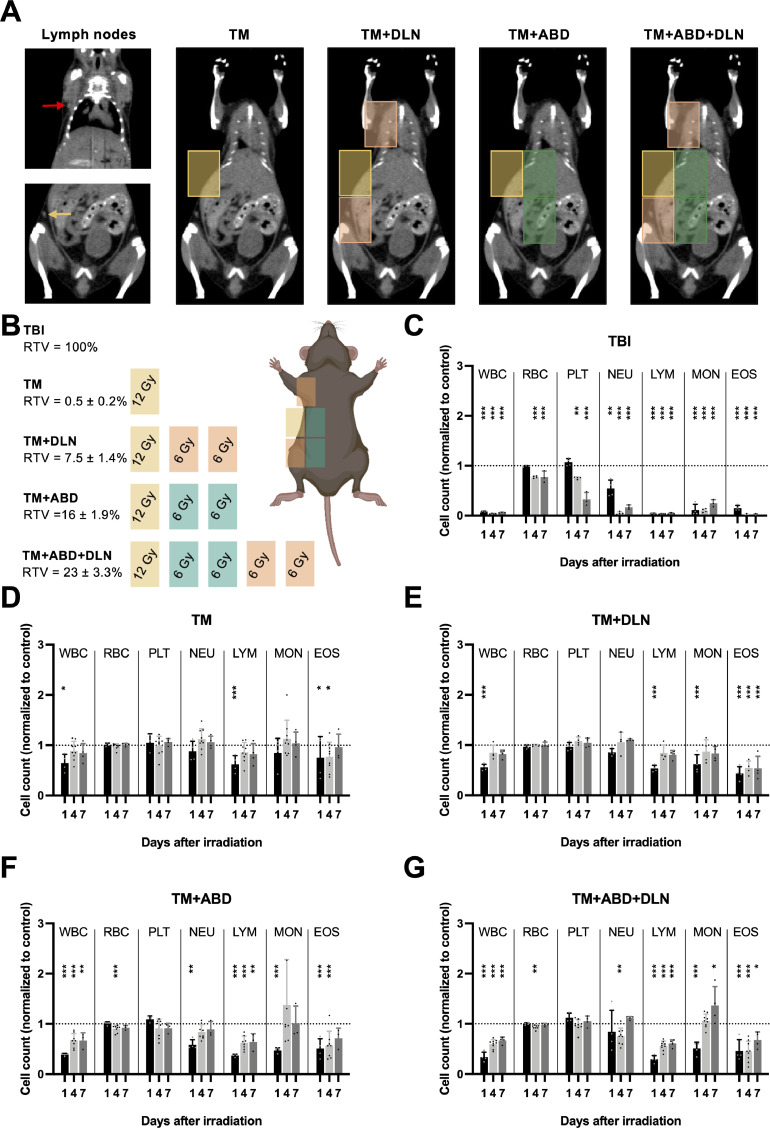
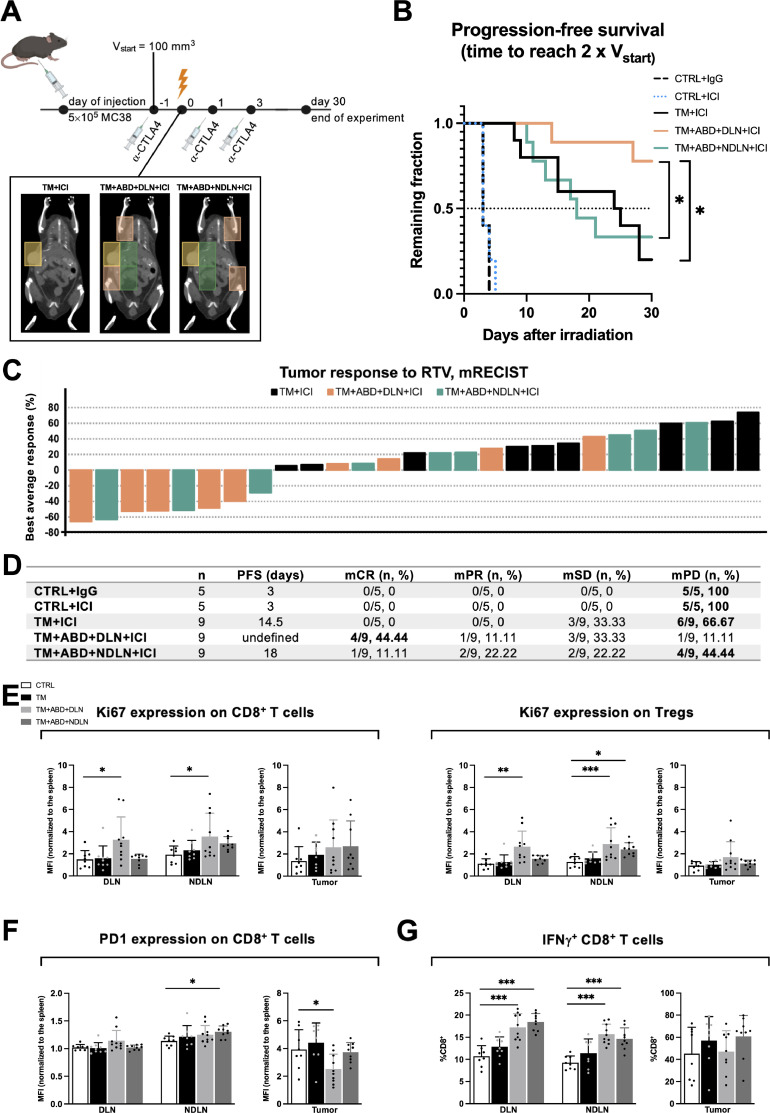
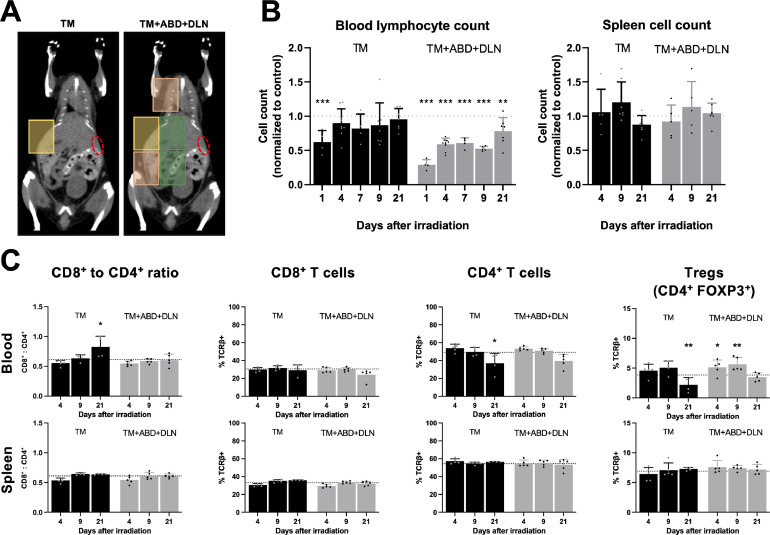
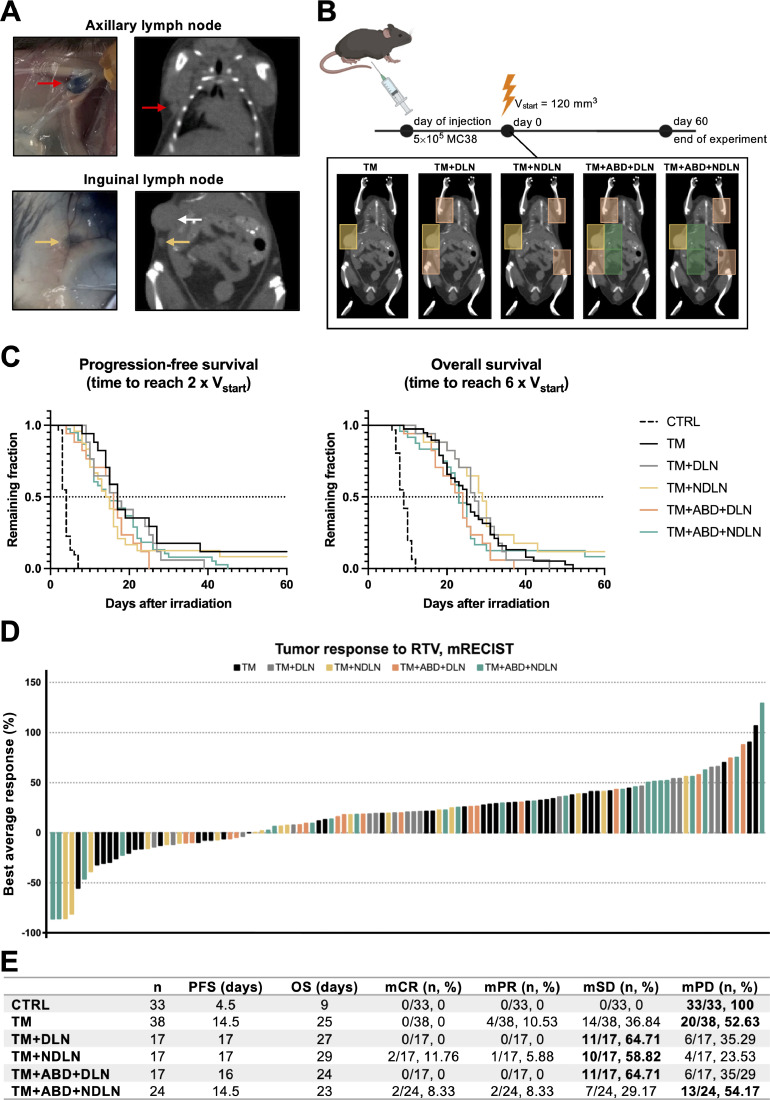
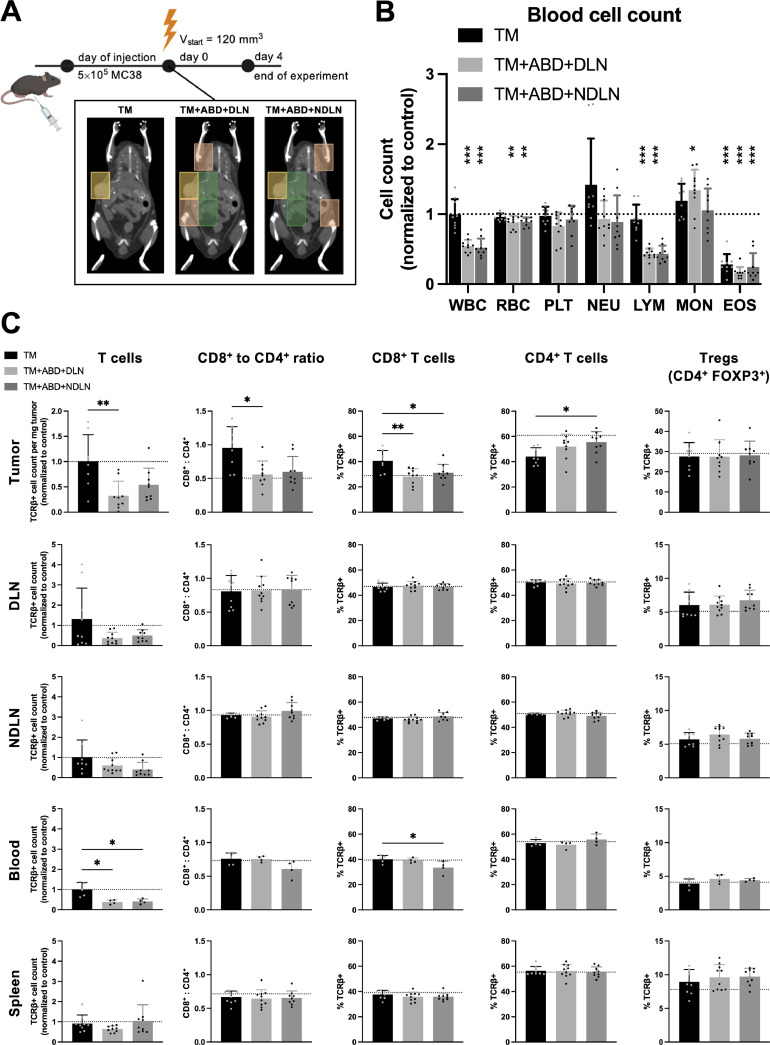
Radiation-induced lymphopenia is a common occurrence in radiation oncology and an established negative prognostic factor, however the mechanisms underlying the relationship between lymphopenia and inferior survival remain elusive. The relevance of lymphocyte co-irradiation as critical normal tissue component at risk is an emerging topic of high clinical relevance, even more so in the context of potentially synergistic radiotherapy-immunotherapy combinations. The impact of the radiotherapy treatment volume on the lymphocytes of healthy and tumor-bearing mice was investigated in a novel mouse model of radiation-induced lymphopenia. Using an image-guided small-animal radiotherapy treatment platform, translationally relevant tumor-oriented volumes of irradiation with an anatomically defined increasing amount of normal tissue were irradiated, with a focus on the circulating blood and lymph nodes. In healthy mice, the influence of irradiation with increasing radiotherapy treatment volumes was quantified on the level of circulating blood cells and in the spleen. A significant decrease in the lymphocytes was observed in response to irradiation, including the minimally irradiated putative tumor area. The extent of lymphopenia correlated with the increasing volumes of irradiation. In tumor-bearing mice, differential radiotherapy treatment volumes did not influence the overall therapeutic response to radiotherapy alone. Intriguingly, an improved treatment efficacy in mice treated with draining-lymph node co-irradiation was observed in combination with an immune checkpoint inhibitor. Taken together, our study reveals compelling data on the importance of radiotherapy treatment volume in the context of lymphocytes as critical components of normal tissue co-irradiation and highlights emerging challenges at the interface of radiotherapy and immunotherapy.
辐射诱导的淋巴细胞减少症是放射肿瘤学中的常见现象,也是一个既定的负预后因素,但淋巴细胞减少症与生存不良之间的关系的机制仍不清楚。淋巴细胞共同辐射作为危险的关键正常组织成分的相关性是一个具有高度临床相关性的新兴话题,特别是在潜在协同的放疗-免疫治疗组合的背景下。在辐射诱导的淋巴细胞减少症的新型小鼠模型中,研究了放射治疗体积对健康和荷瘤小鼠淋巴细胞的影响。使用图像引导小动物放射治疗平台,对具有解剖定义的逐渐增加的正常组织的肿瘤定向体积进行了具有转化相关性的照射,重点是循环血液和淋巴结。在健康小鼠中,定量研究了增加放射治疗体积对循环血细胞和脾脏水平的影响。观察到淋巴细胞显著减少,包括最小照射的假定肿瘤区域。淋巴细胞减少的程度与照射体积的增加相关。在荷瘤小鼠中,不同的放射治疗体积并不影响单独放射治疗的总体治疗反应。有趣的是,在与免疫检查点抑制剂联合使用时,观察到引流淋巴结共同照射的小鼠治疗效果有所改善。总之,我们的研究揭示了关于在淋巴细胞作为关键正常组织共同照射成分的背景下放射治疗体积的重要性的令人信服的数据,并强调了放射治疗和免疫治疗之间界面的新兴挑战。