Departments of Experimental Radiation Oncology, University of Texas MD Anderson Cancer Center, Houston, Texas, USA.
Department of Radiation Physics, University of Texas MD Anderson Cancer Center, Houston, Texas, USA.
Sci Rep. 2019 Nov 20;9(1):17180. doi: 10.1038/s41598-019-53562-y.
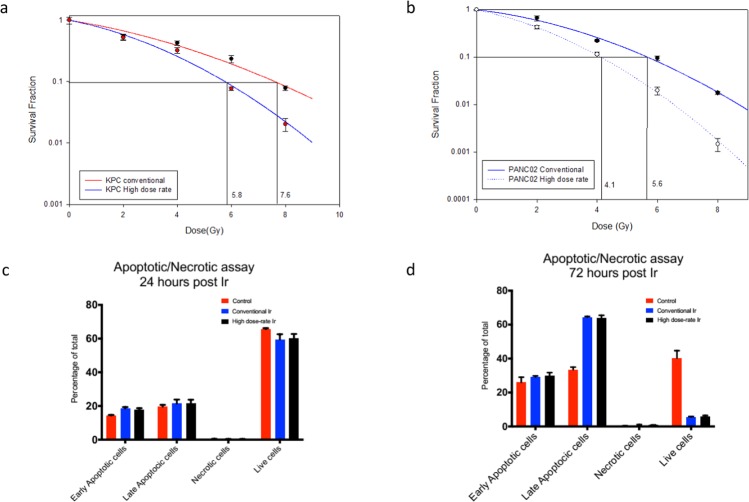
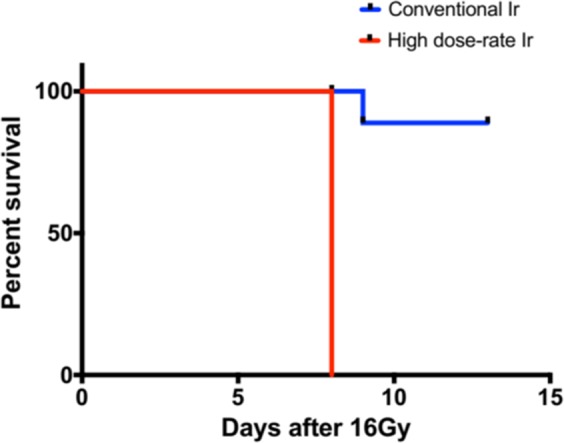
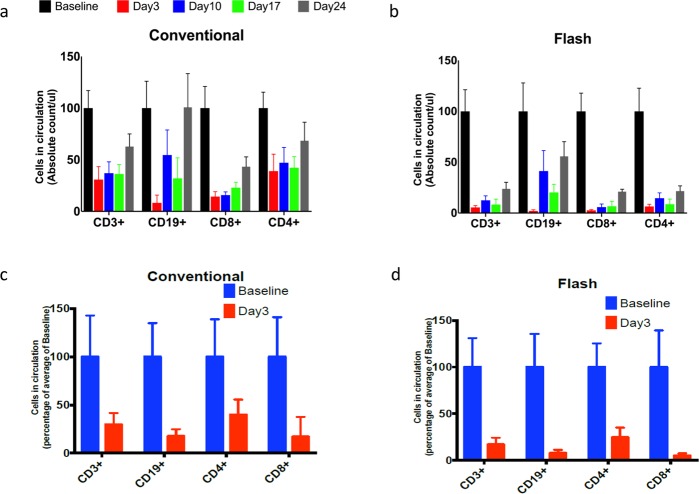
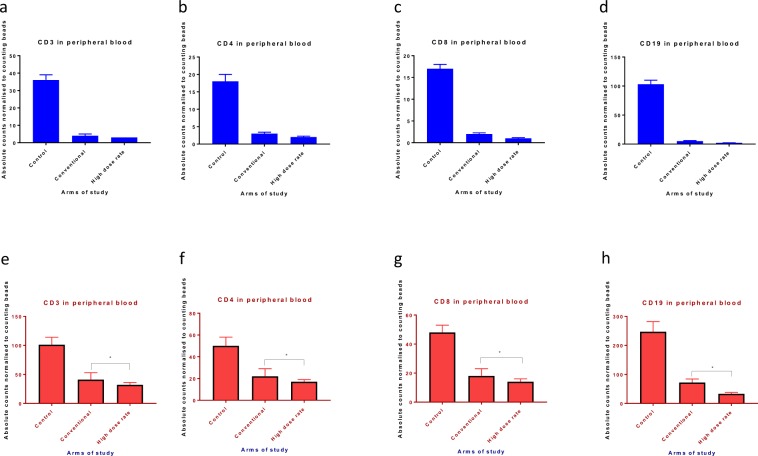
Recent reports have shown that very high dose rate radiation (35-100 Gy/second) referred to as FLASH tends to spare the normal tissues while retaining the therapeutic effect on tumor. We undertook a series of experiments to assess if ultra-high dose rate of 35 Gy/second can spare the immune system in models of radiation induced lymphopenia. We compared the tumoricidal potency of ultra-high dose rate and conventional dose rate radiation using a classical clonogenic assay in murine pancreatic cancer cell lines. We also assessed the lymphocyte sparing potential in cardiac and splenic irradiation models of lymphopenia and assessed the severity of radiation-induced gastrointestinal toxicity triggered by the two dose rate regimes in vivo. Ultra-high dose rate irradiation more potently induces clonogenic cell death than conventional dose rate irradiation with a dose enhancement factor at 10% survival (DEF) of 1.310 and 1.365 for KPC and Panc02 cell lines, respectively. Ultra-high dose rate was equally potent in depleting CD3, CD4, CD8, and CD19 lymphocyte populations in both cardiac and splenic irradiation models of lymphopenia. Radiation-induced gastrointestinal toxicity was more pronounced and mouse survival (7 days vs. 15 days, p = 0.0001) was inferior in the ultra-high dose rate arm compared to conventional dose rate arm. These results suggest that, contrary to published data in other models of radiation-induced acute and chronic toxicity, dose rates of 35 Gy/s do not protect mice from the detrimental side effects of irradiation in our models of cardiac and splenic radiation-induced lymphopenia or gastrointestinal mucosal injury.
最近的报告表明,超高剂量率辐射(35-100Gy/秒),称为 FLASH,倾向于保护正常组织,同时保留对肿瘤的治疗效果。我们进行了一系列实验,以评估 35Gy/秒的超高剂量率是否可以在辐射诱导的淋巴细胞减少症模型中保护免疫系统。我们使用经典的克隆形成测定法比较了超高剂量率和常规剂量率辐射对小鼠胰腺癌细胞系的杀瘤效力。我们还评估了在心脏和脾脏照射模型中淋巴细胞减少症的淋巴细胞保护潜力,并评估了两种剂量率方案在体内引发的辐射诱导胃肠道毒性的严重程度。超高剂量率照射比常规剂量率照射更有效地诱导集落形成细胞死亡,在 10%存活(DEF)时,KPC 和 Panc02 细胞系的剂量增强因子分别为 1.310 和 1.365。超高剂量率在心脏和脾脏照射模型中同样有效地耗尽 CD3、CD4、CD8 和 CD19 淋巴细胞群。与常规剂量率组相比,超高剂量率组的辐射诱导胃肠道毒性更明显,小鼠存活时间(7 天与 15 天,p=0.0001)更差。这些结果表明,与其他辐射诱导的急性和慢性毒性模型中的已发表数据相反,在我们的心脏和脾脏照射诱导的淋巴细胞减少症或胃肠道粘膜损伤模型中,35Gy/s 的剂量率并不能保护小鼠免受照射的有害副作用。