Sánchez-Ventura Judith, Lane Michael A, Udina Esther
Department of Cell Biology, Physiology and Immunology, Institute of Neuroscience, Universitat Autònoma de Barcelona, Barcelona, Spain.
Centro de Investigación Biomédica en Red sobre Enfermedades Neurodegenerativas (CIBERNED), Bellaterra, Spain.
Front Cell Neurosci. 2022 May 20;16:893857. doi: 10.3389/fncel.2022.893857. eCollection 2022.
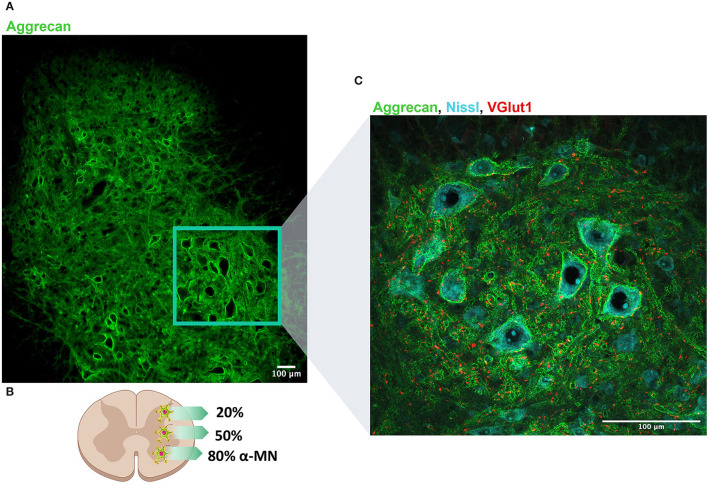
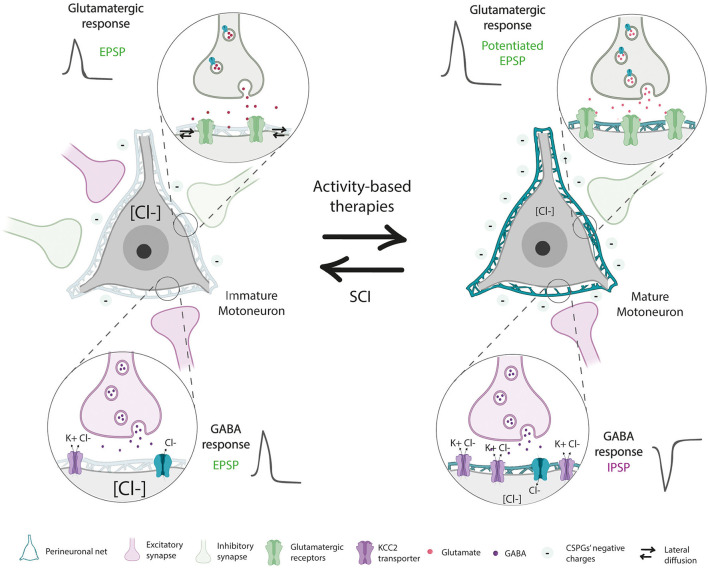
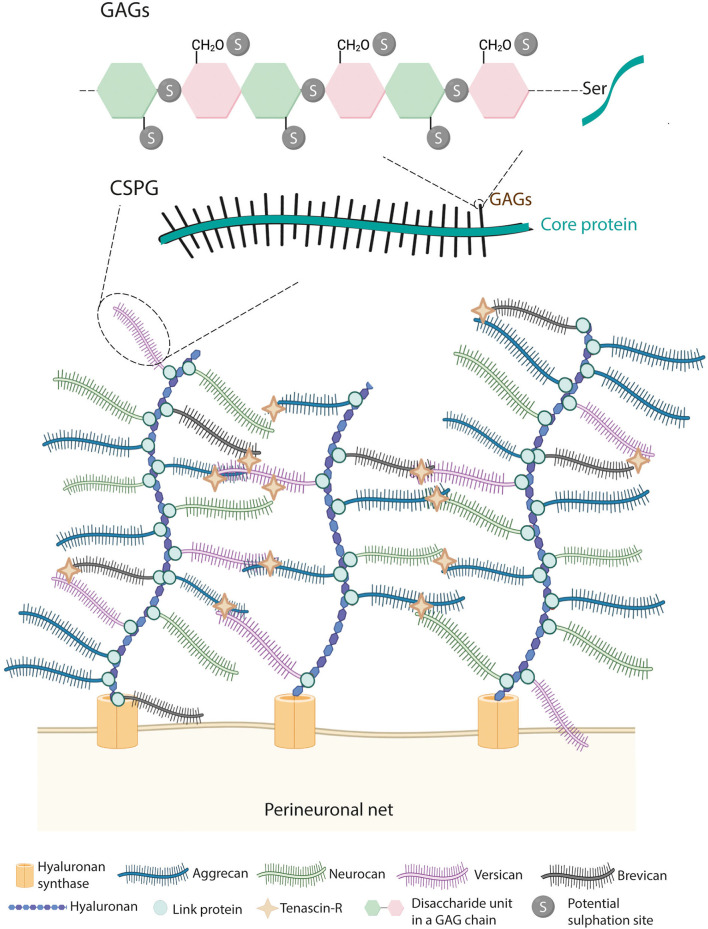
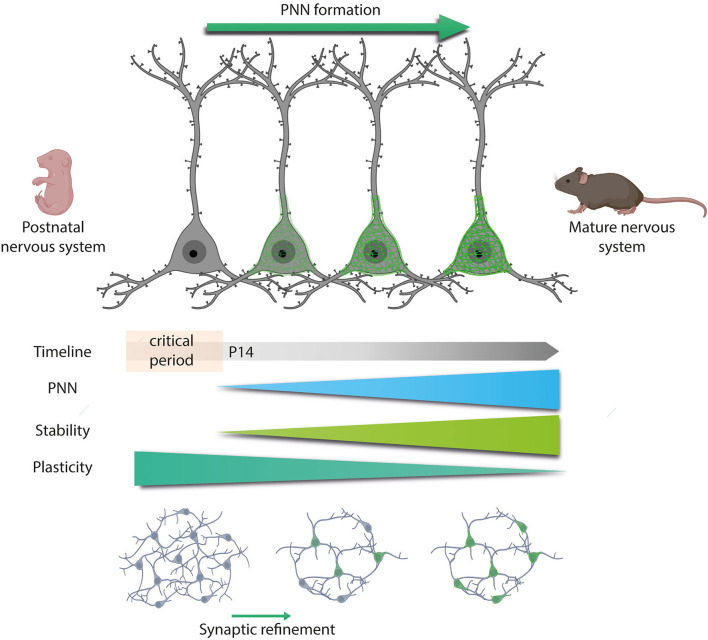
Rather than being a stable scaffold, perineuronal nets (PNNs) are a dynamic and specialized extracellular matrix involved in plasticity modulation. They have been extensively studied in the brain and associated with neuroprotection, ionic buffering, and neural maturation. However, their biological function in the spinal cord and the effects of disrupting spinal PNNs remain elusive. The goal of this review is to summarize the current knowledge of spinal PNNs and their potential in pathological conditions such as traumatic spinal cord injury (SCI). We also highlighted interventions that have been used to modulate the extracellular matrix after SCI, targeting the glial scar and spinal PNNs, in an effort to promote regeneration and stabilization of the spinal circuits, respectively. These concepts are discussed in the framework of developmental and neuroplastic changes in PNNs, drawing similarities between immature and denervated neurons after an SCI, which may provide a useful context for future SCI research.
神经周网(PNNs)并非稳定的支架,而是一种参与可塑性调节的动态且特殊的细胞外基质。它们在大脑中已得到广泛研究,并与神经保护、离子缓冲和神经成熟相关。然而,它们在脊髓中的生物学功能以及破坏脊髓PNNs的影响仍不清楚。本综述的目的是总结目前关于脊髓PNNs的知识及其在创伤性脊髓损伤(SCI)等病理状况中的潜力。我们还强调了SCI后用于调节细胞外基质的干预措施,分别针对胶质瘢痕和脊髓PNNs,以促进脊髓回路的再生和稳定。这些概念在PNNs发育和神经可塑性变化的框架内进行讨论,探讨SCI后未成熟神经元和失神经支配神经元之间的相似性,这可能为未来的SCI研究提供有用的背景。