Department of Urology, The First Affiliated Hospital of Jinzhou Medical University, Jinzhou, China.
Department of Urology Surgery, Dalinghe Hospital Affiliated to Medical College of Jinzhou Medical University, Jinzhou 121206, China.
Oxid Med Cell Longev. 2022 May 27;2022:7616696. doi: 10.1155/2022/7616696. eCollection 2022.
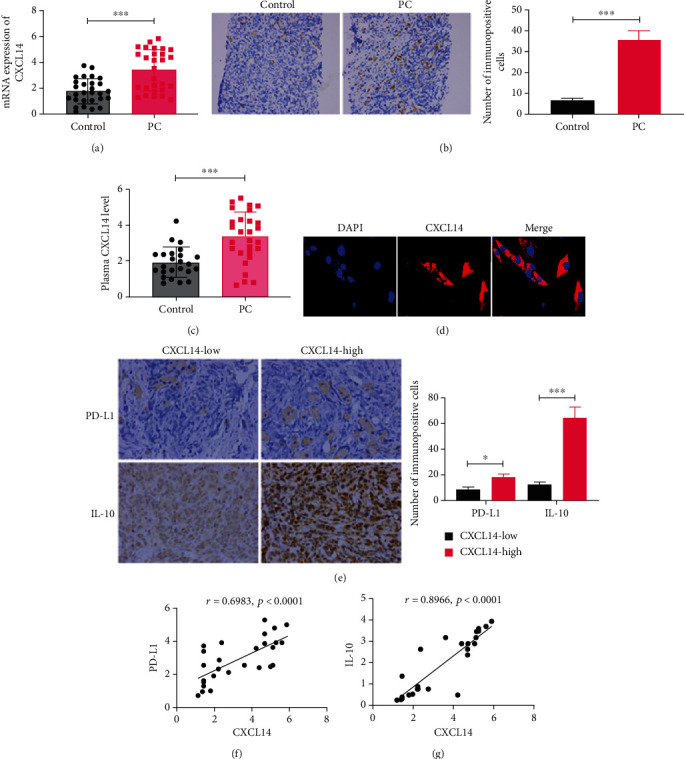
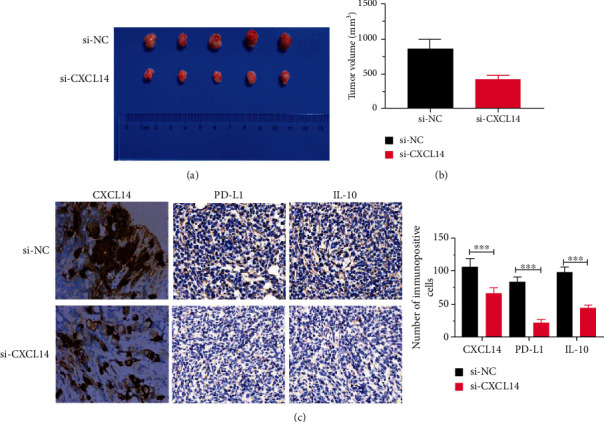
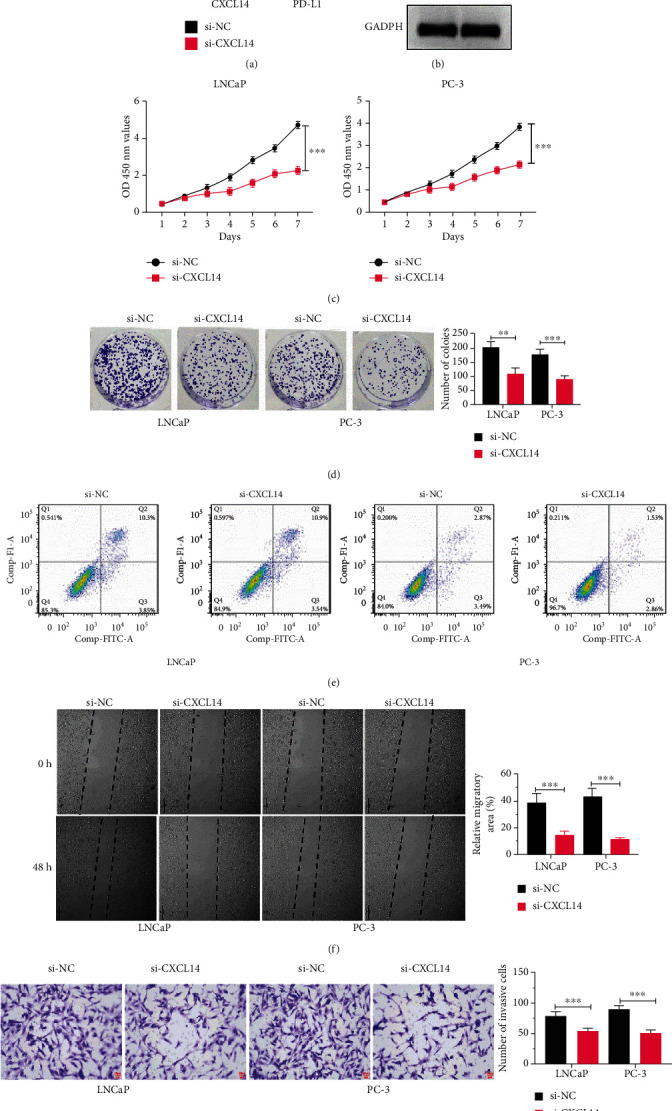
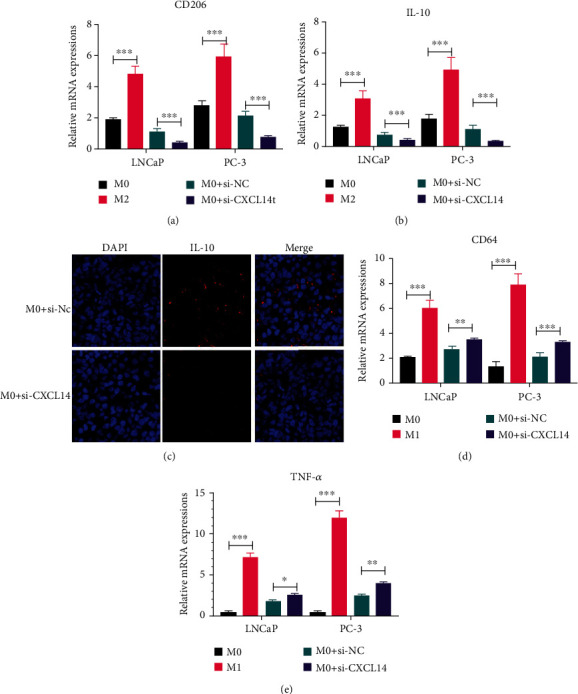
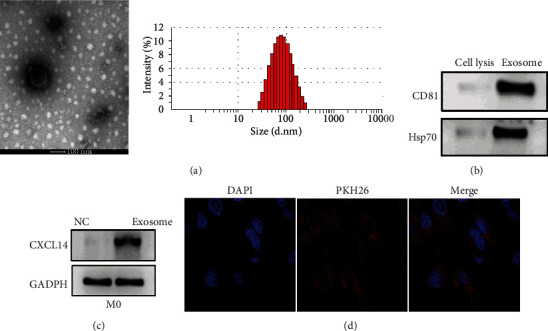
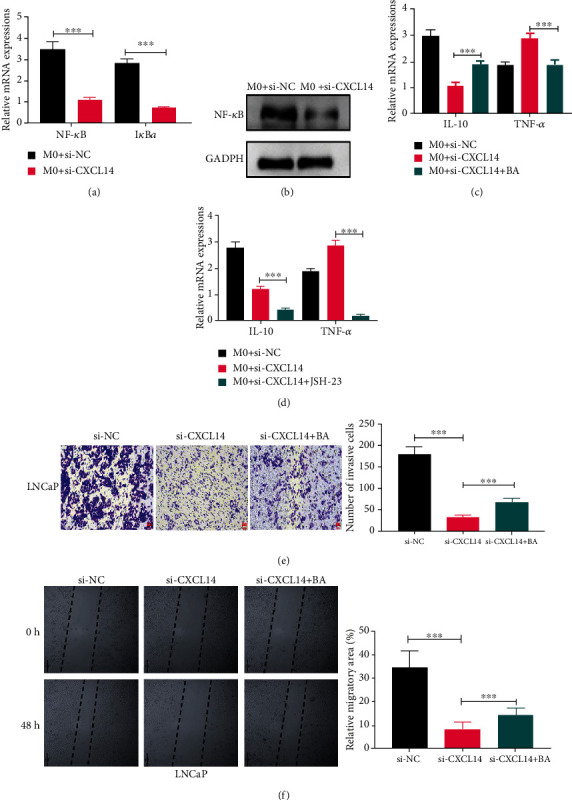
Chemokine (C-X-C motif) ligand 14 (CXCL14) plays a critical role in maintaining homeostasis and inflammation in the local cell environment and regulating cancer progression. However, the role of CXCL14 in prostate cancer (PC) has not been fully investigated. In this study, the expression of CXCL14 was determined in PC tumor tissues by qRT-PCR and immunohistochemistry assay. Wound healing, invasion, colony formation, cell proliferation, and apoptosis assays were performed to evaluate the role of CXCL14 in PC progression. Exosomes were isolated from PC cell-condition medium by using ultracentrifugation assay and identified by using transmission electron microscopy and nanoparticle tracking analysis. M2 macrophage polarization-associated genes were measured by using qRT-PCR and Western blot assays. A PC xenograft mouse model was used to assess the role of CXCL14 in tumor growth in vivo. The results showed that CXCL14 was significantly upregulated in PC tissues and was positively correlated with pathological stages, lymph node metastasis, and angiolymphatic invasion. The positive correlations were also observed between CXCL14 and PD-L1 and IL-10. Knockdown CXCL14 dramatically inhibited PC cell proliferation, invasion, and colony formation, but not apoptosis. CXCL14 promoted M2 macrophage polarization through the NF-B signaling pathway and exosome-mediated mechanism. Moreover, CXCL14 knockdown inhibited tumor growth in vivo. Taken together, exosomal CXCL14 promoted M2 macrophage polarization through the NF-B signaling pathway and contributed to PC progression.
趋化因子(C-X-C 基序)配体 14(CXCL14)在维持局部细胞环境的稳态和炎症以及调节癌症进展中起着关键作用。然而,CXCL14 在前列腺癌(PC)中的作用尚未被充分研究。在这项研究中,通过 qRT-PCR 和免疫组织化学检测确定了 PC 肿瘤组织中 CXCL14 的表达。通过划痕愈合、侵袭、集落形成、细胞增殖和凋亡检测来评估 CXCL14 在 PC 进展中的作用。通过超速离心法从 PC 细胞条件培养基中分离外泌体,并通过透射电子显微镜和纳米颗粒跟踪分析进行鉴定。通过 qRT-PCR 和 Western blot 检测测量 M2 巨噬细胞极化相关基因。使用 PC 异种移植小鼠模型来评估 CXCL14 在体内肿瘤生长中的作用。结果表明,CXCL14 在 PC 组织中显著上调,并与病理分期、淋巴结转移和血管淋巴管浸润呈正相关。CXCL14 还与 PD-L1 和 IL-10 呈正相关。敲低 CXCL14 可显著抑制 PC 细胞的增殖、侵袭和集落形成,但不影响细胞凋亡。CXCL14 通过 NF-B 信号通路和外泌体介导的机制促进 M2 巨噬细胞极化。此外,CXCL14 敲低抑制了体内肿瘤的生长。总之,外泌体 CXCL14 通过 NF-B 信号通路促进 M2 巨噬细胞极化,并促进 PC 进展。