Choi Jong Han, Cho Yoon Jeong, Kim Hyun-Jin, Ko Seung-Hyun, Chon Suk, Kang Jee-Hyun, Kim Kyoung-Kon, Kim Eun Mi, Kim Hyun Jung, Song Kee-Ho, Nam Ga Eun, Kim Kwang Il
Division of Endocrinology and Metabolism, Department of Internal Medicine, Konkuk University Medical Center, Konkuk University School of Medicine, Seoul, Korea.
Department of Family Medicine, Daegu Catholic University School of Medicine, Daegu, Korea.
J Obes Metab Syndr. 2022 Jun 30;31(2):100-122. doi: 10.7570/jomes22009. Epub 2022 Jun 7.
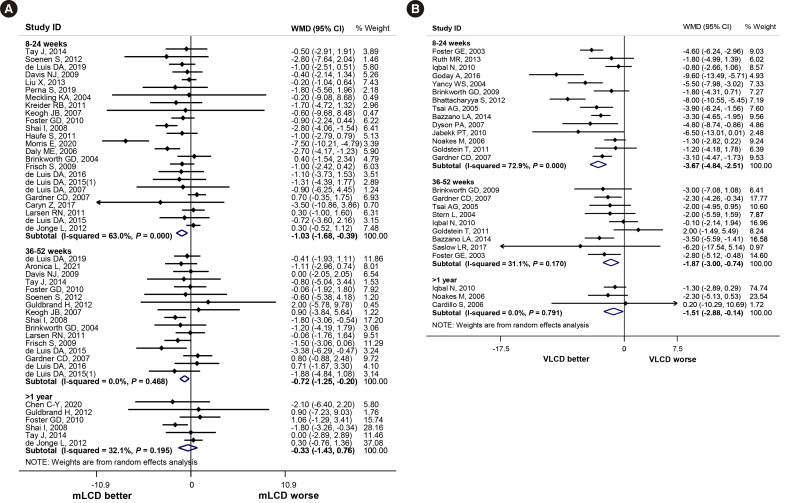
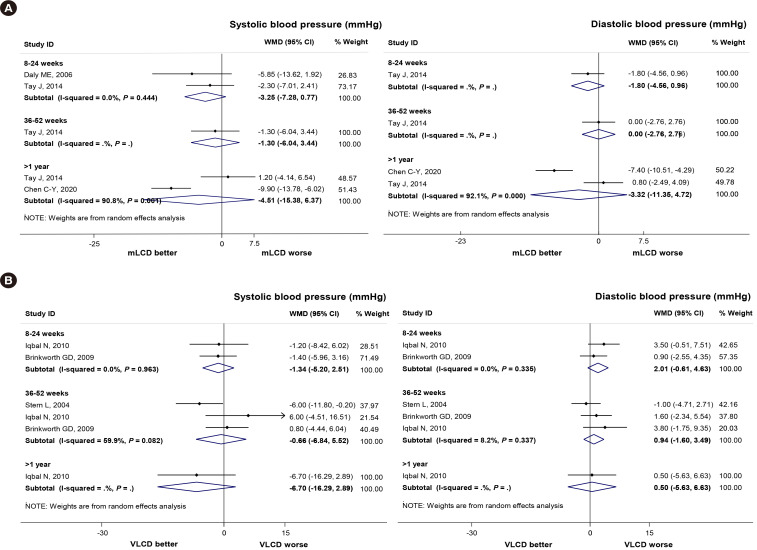
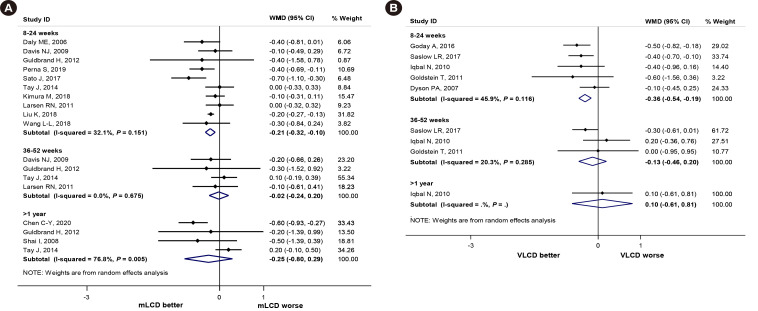
Carbohydrate-restricted diets and intermittent fasting (IF) have been rapidly gaining interest among the general population and patients with cardiometabolic disease, such as overweight or obesity, diabetes, and hypertension. However, there are limited expert recommendations for these dietary regimens. This study aimed to evaluate the level of scientific evidence on the benefits and harms of carbohydrate-restricted diets and IF to make responsible recommendations. A meta-analysis and systematic literature review of 66 articles on 50 randomized controlled trials (RCTs) of carbohydrate-restricted diets and 10 articles on eight RCTs of IF was performed. Based on the analysis, the following recommendations are suggested. In adults with overweight or obesity, a moderately-low carbohydrate or low carbohydrate diet (mLCD) can be considered as a dietary regimen for weight reduction. In adults with type 2 diabetes mellitus, mLCD can be considered as a dietary regimen for improving glycemic control and reducing body weight. In contrast, a very-low carbohydrate diet (VLCD) and IF are recommended against in patients with diabetes. Furthermore, no recommendations are suggested for VLCD and IF in adults with overweight or obesity, and carbohydrate-restricted diets and IF in patients with hypertension. Here, we describe the results of our analysis and the evidence for these recommendations.
低碳水化合物饮食和间歇性禁食(IF)在普通人群以及患有心脏代谢疾病(如超重或肥胖、糖尿病和高血压)的患者中迅速受到关注。然而,针对这些饮食方案的专家建议有限。本研究旨在评估低碳水化合物饮食和间歇性禁食的益处和危害的科学证据水平,以便做出合理的建议。对66篇关于50项低碳水化合物饮食随机对照试验(RCT)的文章以及10篇关于8项间歇性禁食RCT的文章进行了荟萃分析和系统文献综述。基于该分析,提出以下建议。对于超重或肥胖的成年人,可考虑采用中度低碳水化合物或低碳水化合物饮食(mLCD)作为减肥的饮食方案。对于2型糖尿病成年人,mLCD可被视为改善血糖控制和减轻体重的饮食方案。相比之下,不建议糖尿病患者采用极低碳水化合物饮食(VLCD)和间歇性禁食。此外,对于超重或肥胖的成年人,不建议采用VLCD和间歇性禁食;对于高血压患者,不建议采用低碳水化合物饮食和间歇性禁食。在此,我们描述了分析结果以及这些建议的证据。