Hnit Su Su Thae, Yao Mu, Xie Chanlu, Bi Ling, Wong Matthew, Liu Tao, De Souza Paul, Li Zhong, Dong Qihan
Chinese Medicine Anti-cancer Evaluation Program, Greg Brown Laboratory, Central Clinical School and Charles Perkins Centre, The University of Sydney, Sydney, NSW, Australia.
Department of Endocrinology, Royal Prince Alfred Hospital, Sydney, NSW, Australia.
Discov Oncol. 2022 Jun 7;13(1):44. doi: 10.1007/s12672-022-00505-1.
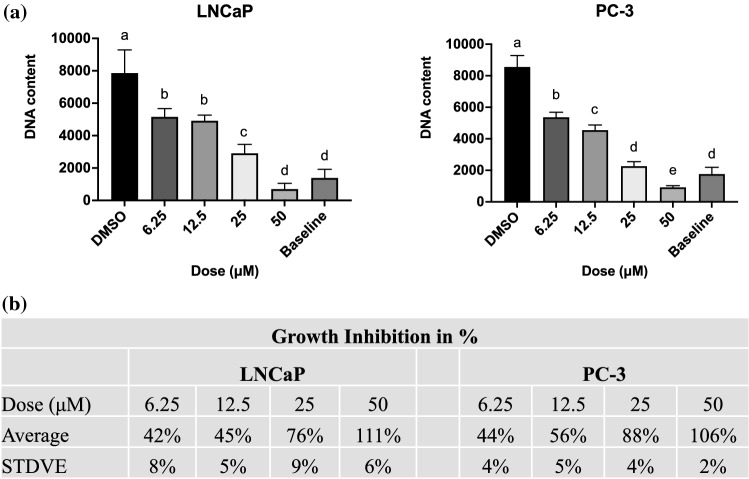
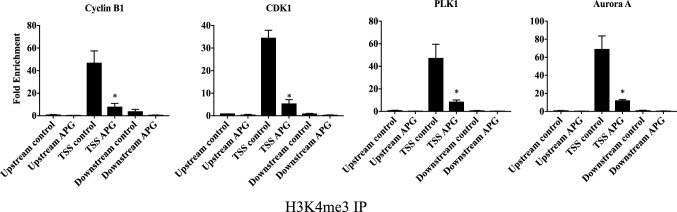
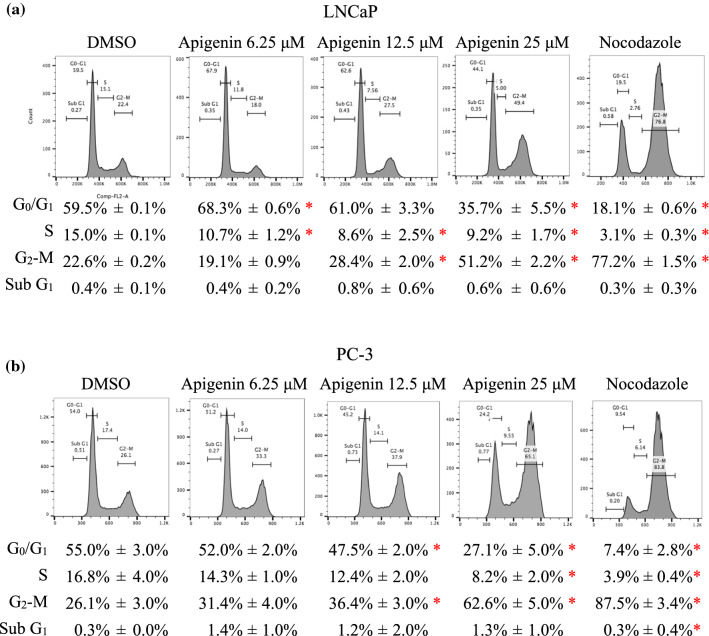
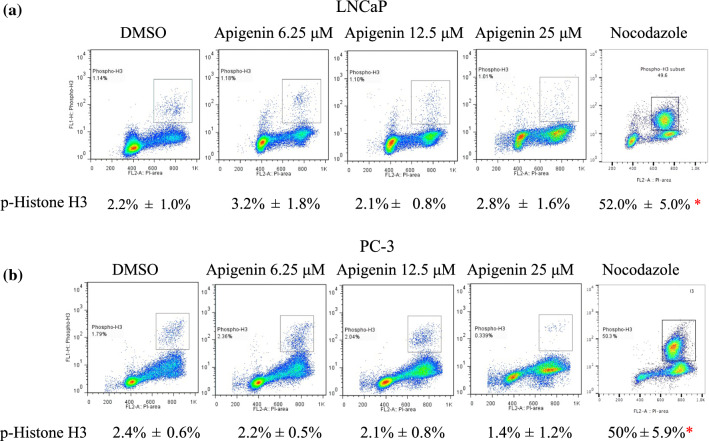
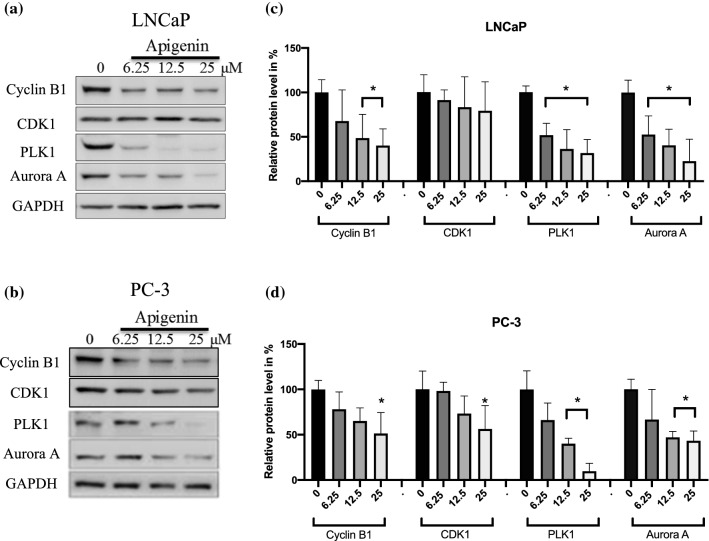
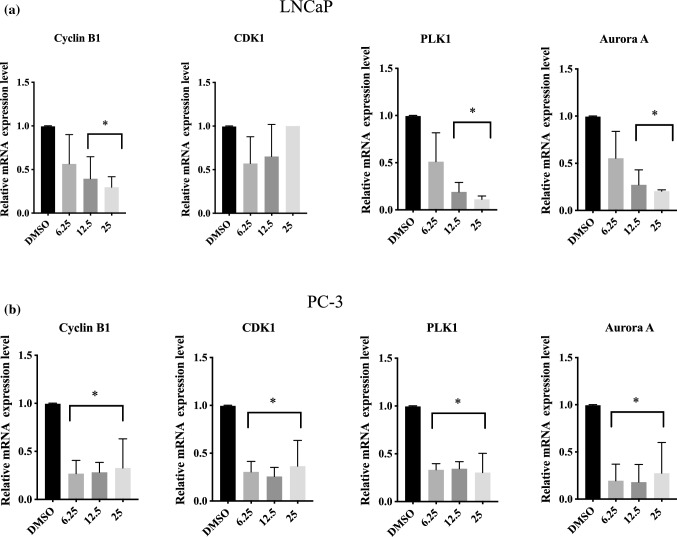
As a natural flavone, apigenin is abundantly present in vegetables, fruits, oregano, tea, chamomile, wheat sprout and is regarded as a major component of the Mediterranean diet. Apigenin is known to inhibit proliferation in different cancer cell lines by inducing G/M arrest, but it is unclear whether this action is predominantly imposed on G or M phases. In this study, we demonstrate that apigenin arrests prostate cancer cells at G phase by flow cytometric analysis of prostate cancer cells co-stained for phospho-Histone H3 and DNA. Concurrently, apigenin also reduces the mRNA and protein levels of the key regulators that govern G-M transition. Further analysis using chromatin immunoprecipitation (ChIP) confirmed the diminished transcriptional activities of the genes coding for these regulators. Unravelling the inhibitory effect of apigenin on G-M transition in cancer cells provides the mechanistic understanding of its action and supports the potential for apigenin as an anti-cancer agent.
芹菜素作为一种天然黄酮类化合物,大量存在于蔬菜、水果、牛至、茶、洋甘菊、麦芽中,被视为地中海饮食的主要成分。已知芹菜素通过诱导G/M期阻滞来抑制不同癌细胞系的增殖,但尚不清楚这种作用主要是作用于G期还是M期。在本研究中,我们通过对同时标记磷酸化组蛋白H3和DNA的前列腺癌细胞进行流式细胞术分析,证明芹菜素使前列腺癌细胞停滞于G期。同时,芹菜素还降低了调控G-M转换的关键调节因子的mRNA和蛋白质水平。使用染色质免疫沉淀(ChIP)的进一步分析证实了编码这些调节因子的基因的转录活性降低。阐明芹菜素对癌细胞G-M转换的抑制作用,为其作用机制提供了理解,并支持了芹菜素作为抗癌剂的潜力。