Biochemistry Department, The University of Washington, Seattle, WA 98195, USA.
Biochemistry Department, The University of Washington, Seattle, WA 98195, USA; Promega Corporation, 2800 Woods Hollow Road, Fitchburg, WI 53711, USA.
Cell Rep. 2022 Jun 7;39(10):110917. doi: 10.1016/j.celrep.2022.110917.
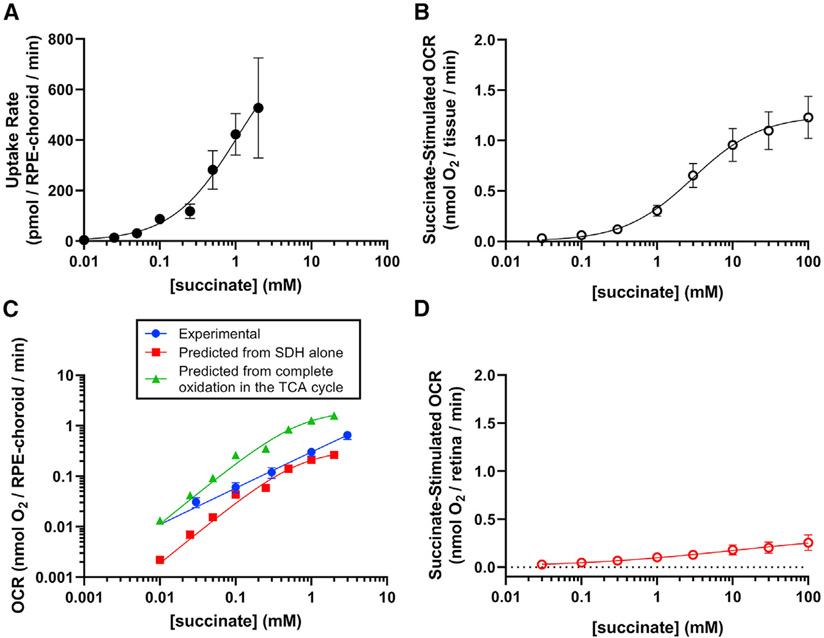
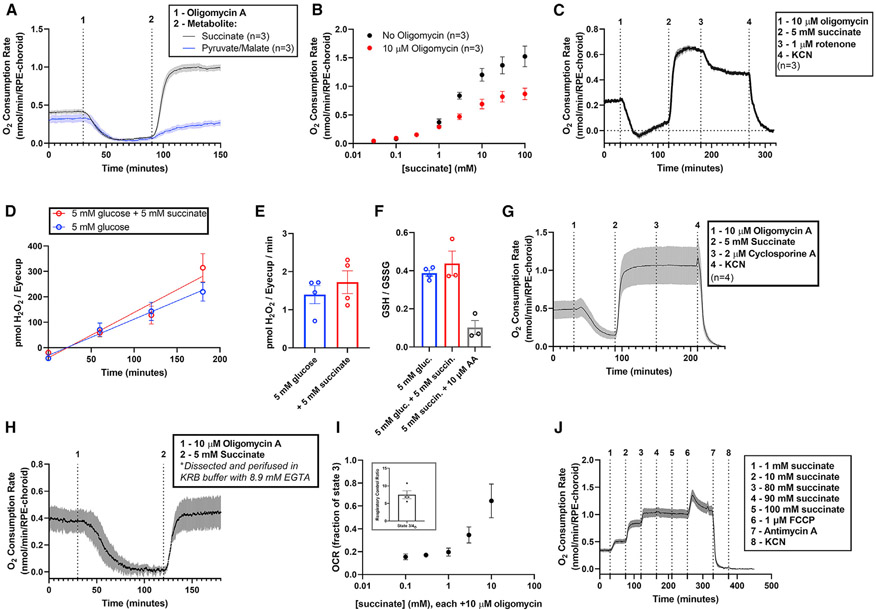
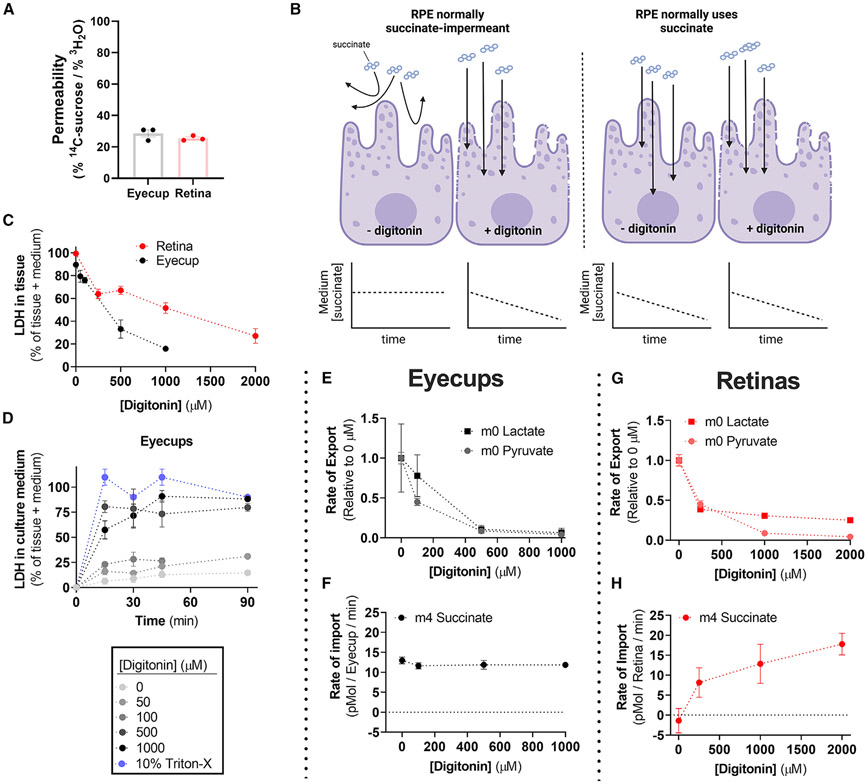
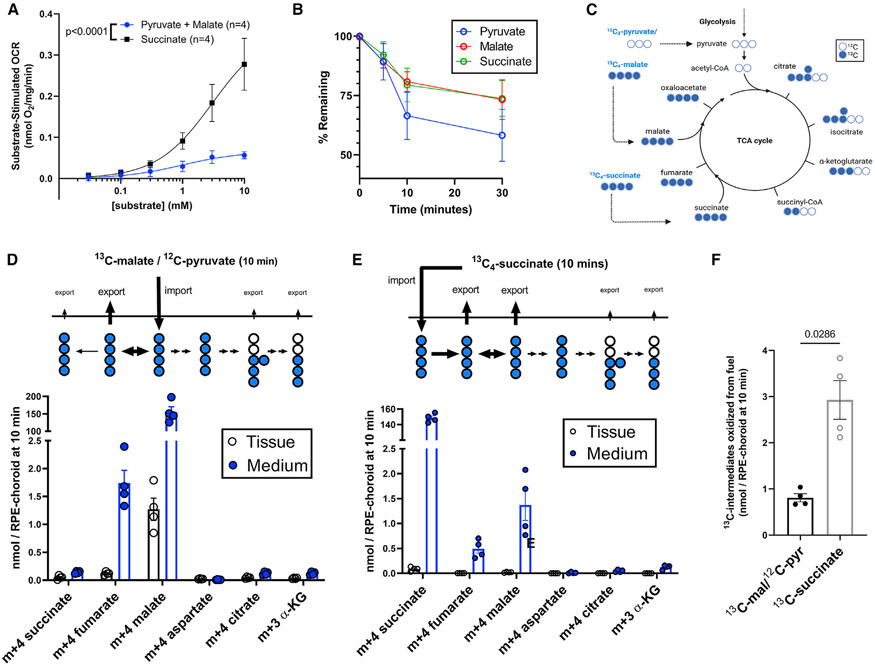
Fumarate can be a surrogate for O as a terminal electron acceptor in the electron transport chain. Reduction of fumarate produces succinate, which can be exported. It is debated whether intact tissues can import and oxidize succinate produced by other tissues. In a previous report, we showed that mitochondria in retinal pigment epithelium (RPE)-choroid preparations can use succinate to reduce O to HO. However, cells in that preparation could have been disrupted during tissue isolation. We now use multiple strategies to quantify intactness of the isolated RPE-choroid tissue. We find that exogenous C-succinate is oxidized by intact cells then exported as fumarate or malate. Unexpectedly, we also find that oxidation of succinate is different from oxidation of other substrates because it uncouples electron transport from ATP synthesis. Retinas produce and export succinate. Our findings imply that retina succinate may substantially increase O consumption by uncoupling adjacent RPE mitochondria.
延胡索酸盐可以作为电子传递链中的末端电子受体 O 的替代物。延胡索酸盐的还原产生琥珀酸盐,可以被输出。目前仍存在争议的是,完整的组织是否能够吸收和氧化由其他组织产生的琥珀酸盐。在之前的一份报告中,我们表明,视网膜色素上皮 (RPE)-脉络膜制剂中的线粒体可以利用琥珀酸盐将 O 还原为 HO。然而,在组织分离过程中,该制剂中的细胞可能已经被破坏。现在,我们使用多种策略来量化分离的 RPE-脉络膜组织的完整性。我们发现,外源性 C-琥珀酸盐被完整的细胞氧化,然后作为富马酸或苹果酸输出。出乎意料的是,我们还发现,琥珀酸盐的氧化与其他底物的氧化不同,因为它使电子传递与 ATP 合成解耦。视网膜会产生和输出琥珀酸盐。我们的发现表明,视网膜琥珀酸盐可能通过使相邻的 RPE 线粒体解耦,从而大大增加 O 的消耗。