College of Engineering, Mathematics and Physical Science, University of Exeter, Exeter, UK.
Faculty of Civil Engineering and Geosciences, Delft University of Technology, Delft, The Netherlands.
Sci Rep. 2022 Jun 8;12(1):9416. doi: 10.1038/s41598-022-13779-w.
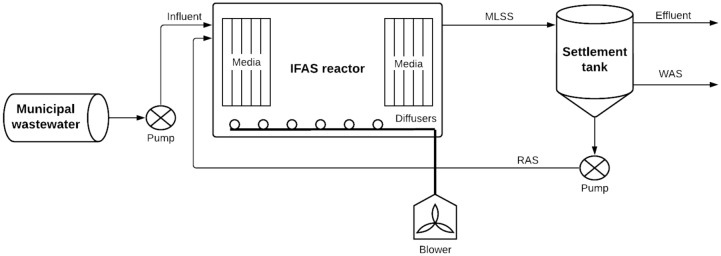
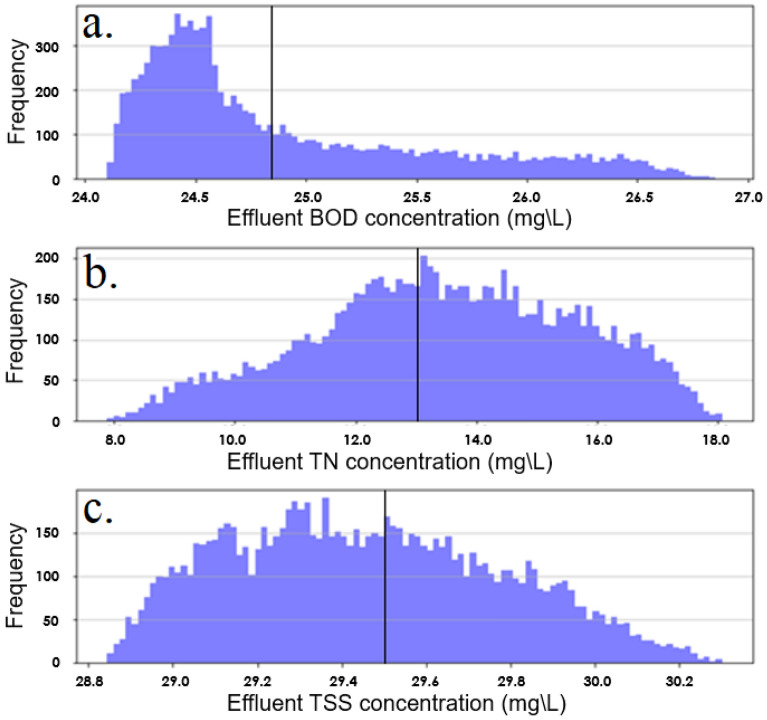
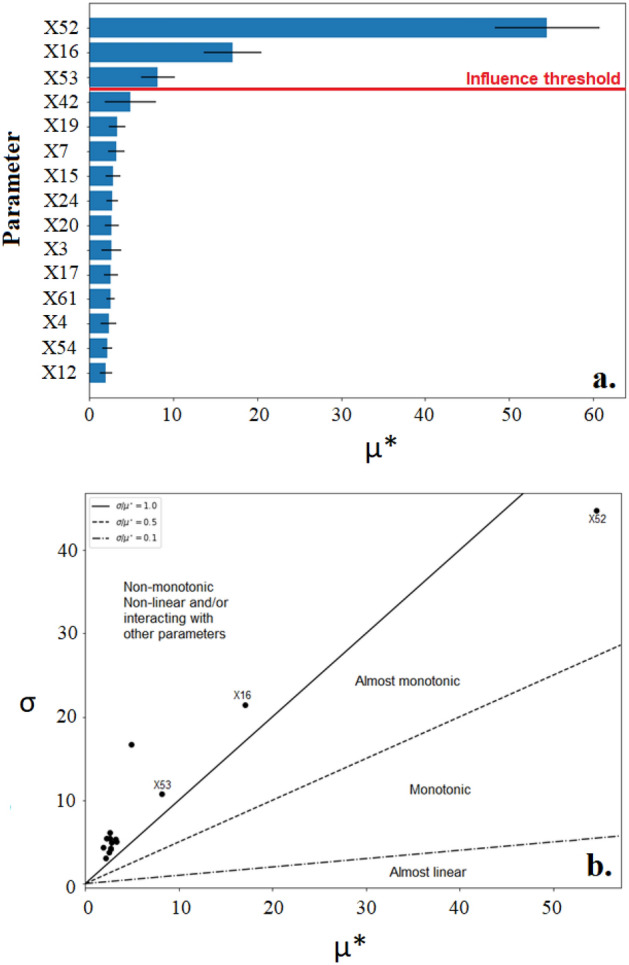
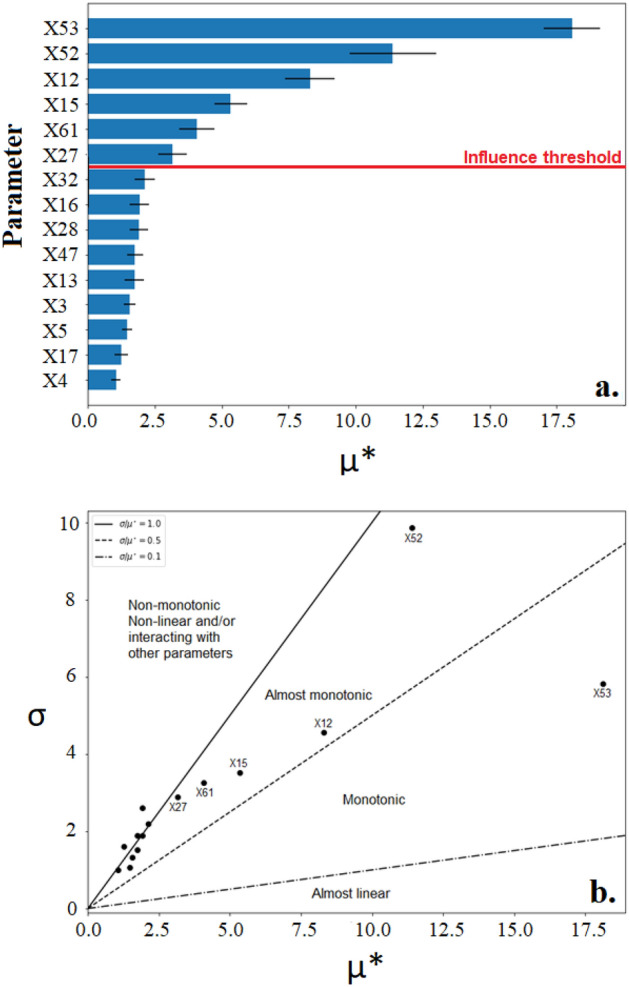
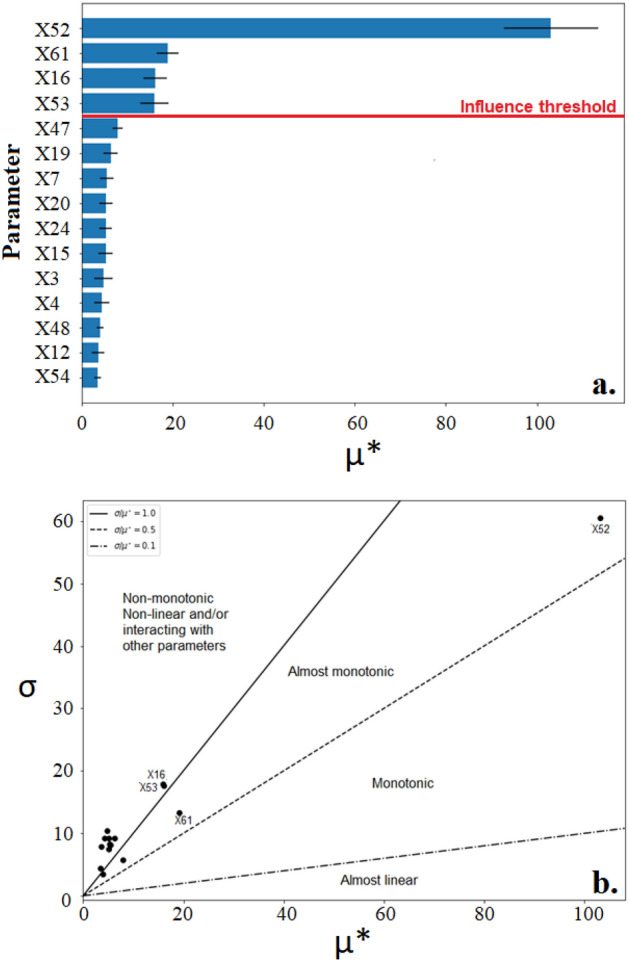
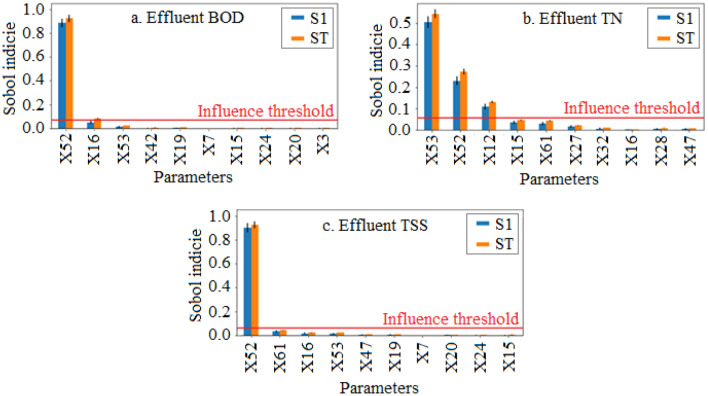
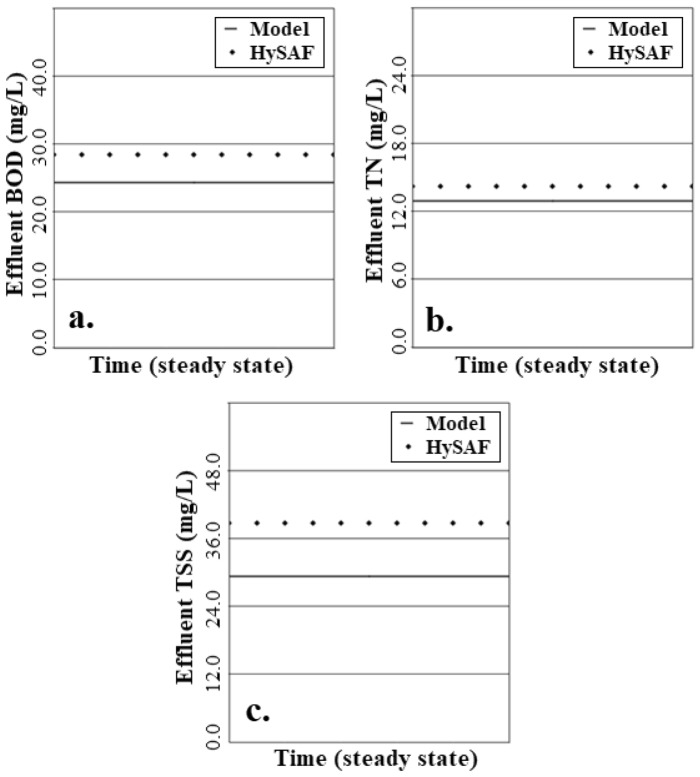
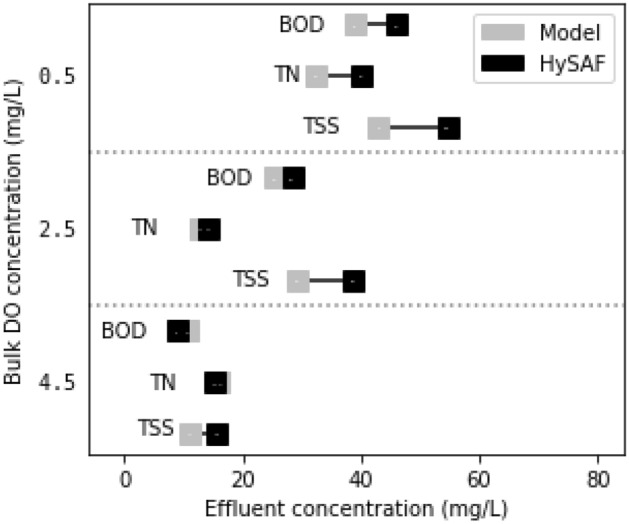
IFAS systems are inherently complex due to the hybrid use of both suspended and attached bacterial colonies for the purpose of pollutant degradation as part of wastewater treatment. This poses challenges when attempting to represent these systems mathematically due to the vast number of parameters involved. Besides becoming convoluted, large effort will be incurred during model calibration. This paper demonstrates a systematic approach to calibration of an IFAS process model that incorporates two sensitivity analyses to identify influential parameters and detect collinearity from a subset of 68 kinetic and stoichiometric parameters, and the use of the Nelder-Mead optimization algorithm to estimate the required values of these parameters. The model considers the removal of three critical pollutants including biochemical oxygen demand (BOD), total nitrogen (TN) and total suspended solids (TSS). Results from the sensitivity analyses identified four parameters that were the primary influence on the model. The model was found to be most sensitive to the two stoichiometric parameters including aerobic heterotrophic yield on soluble substrate whose total effects were responsible for 92.4% of the model's BOD output sensitivity and 92.8% of the model's TSS output sensitivity. The anoxic heterotrophic yield on soluble substrate was observed to be responsible for 54.3% of the model's TN output sensitivity. To a lesser extent the two kinetic parameters, aerobic heterotrophic decay rate and reduction factor for denitrification on nitrite, were responsible for only 8.0% and 13.1% of the model's BOD and TN output sensitivities respectively. Parameter estimation identified the need for only minor adjustments to default values in order to achieve sufficient accuracy of simulation with deviation from observed data to be only ± 3.6 mg/L, ± 1.3 mg/L, and ± 9.5 mg/L for BOD, TN and TSS respectively. Validation showed the model was limited in its capacity to predict system behaviour under extreme dissolved oxygen stress.
由于 IFAS 系统同时混合使用悬浮和附着的细菌菌落来进行污染物降解,因此具有固有的复杂性,这是废水处理的一部分。这给试图用数学方法表示这些系统带来了挑战,因为涉及的参数数量非常多。除了变得复杂之外,在模型校准过程中还需要付出大量的努力。本文展示了一种系统的方法来校准 IFAS 工艺模型,该模型结合了两种敏感性分析,以确定有影响的参数,并从 68 个动力学和化学计量参数中检测出共线性,以及使用 Nelder-Mead 优化算法来估计这些参数的所需值。该模型考虑了去除三种关键污染物,包括生化需氧量(BOD)、总氮(TN)和总悬浮固体(TSS)。敏感性分析的结果确定了四个对模型有主要影响的参数。该模型对两个化学计量参数最敏感,包括好氧异养对可溶性基质的产率,其总效应分别负责模型 BOD 输出灵敏度的 92.4%和模型 TSS 输出灵敏度的 92.8%。发现缺氧异养对可溶性基质的产率对模型的 TN 输出灵敏度负责 54.3%。在较小程度上,两个动力学参数,好氧异养衰减率和亚硝酸盐反硝化的还原因子,分别只对模型的 BOD 和 TN 输出灵敏度负责 8.0%和 13.1%。参数估计确定只需要对默认值进行微小调整,以便在模拟中达到足够的精度,与观察数据的偏差仅为 BOD 为 ± 3.6 mg/L、TN 为 ± 1.3 mg/L 和 TSS 为 ± 9.5 mg/L。验证表明,该模型在预测极端溶解氧胁迫下系统行为的能力方面存在局限性。