WOTR Centre for Resilience Studies (W-CReS), Watershed Organisation Trust (WOTR), Pune, India.
School of Social Work, Tata Institute of Social Sciences (TISS), Mumbai, India.
Sci Data. 2022 Jun 9;9(1):285. doi: 10.1038/s41597-022-01314-5.
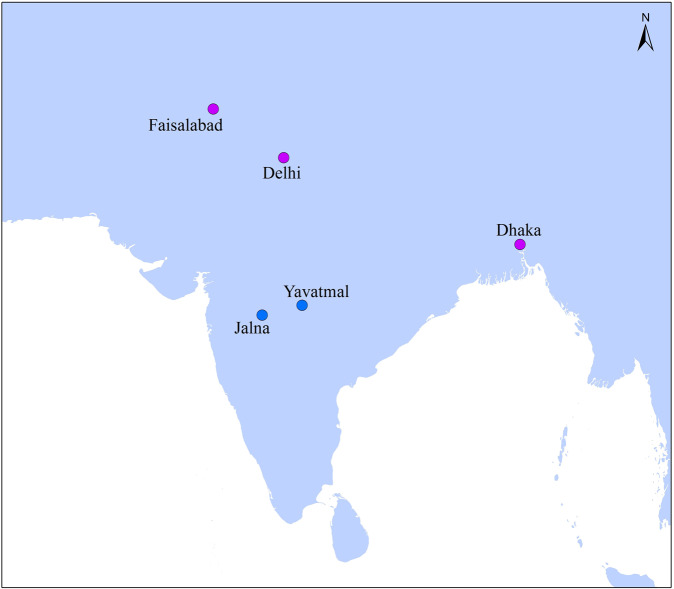
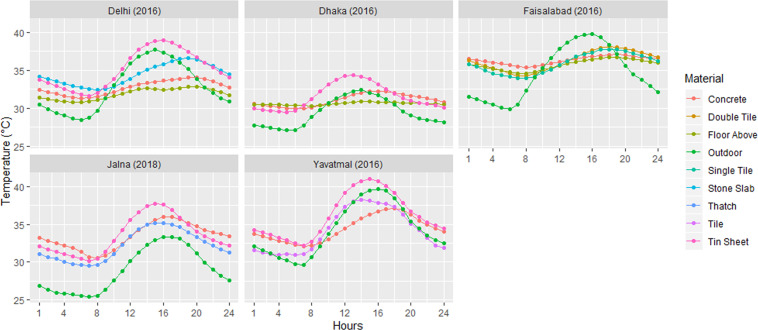
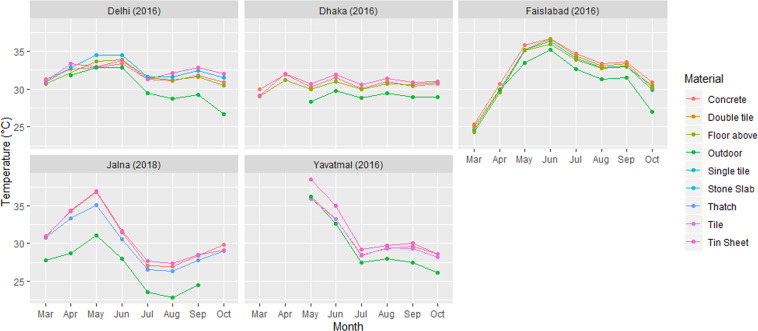
Rising temperatures are causing distress across the world, and for those most vulnerable, it is a silent killer. Information about indoor air temperature in residential dwellings is of interest for a range of reasons, such as health, thermal comfort and coping practices. However, there have been only few studies that measure indoor heat exposure, and contrast these to outdoor temperatures in rural-urban areas, of which none are in South Asia. We aim to close this knowledge gap with our indoor and outdoor heat measurement dataset, covering five low-income sites in South Asia. Two sites are in rural areas (Maharashtra, India), while three sites focus on urban areas (Dhaka, Delhi and Faisalabad). Data are based on 206 indoor temperature data loggers and complemented by data from five outdoor automated weather stations. The data-set can be used to examine temperature and humidity variation in low-socioeconomic status households in rural and urban areas and to better understand factors aggravating heat stress. This is important to plan and implement actions for combating heat stress.
气温上升正在给全世界带来困扰,而对于那些最脆弱的人来说,这是一种无声的杀手。了解住宅室内空气温度是出于多种原因,如健康、热舒适度和应对措施。然而,只有少数研究测量过室内热暴露情况,并将其与农村-城市地区的室外温度进行对比,而在南亚则没有。我们旨在通过我们的室内和室外热测量数据集来填补这一知识空白,该数据集涵盖了南亚的五个低收入地区。两个地区位于农村(印度马哈拉施特拉邦),而三个地区则集中在城市地区(孟加拉国达卡、印度德里和巴基斯坦费萨拉巴德)。数据基于 206 个室内温度数据记录器,并辅以来自五个户外自动气象站的数据。该数据集可用于研究农村和城市地区低收入家庭的温度和湿度变化,并更好地了解加剧热应激的因素。这对于规划和实施应对热应激的措施非常重要。