Cancer Genomics Lab, Fondazione Edo ed Elvo Tempia, 13900, Biella, Italy.
Department of Life Sciences and Systems Biology, University of Turin, 10100, Turin, Italy.
BMC Cancer. 2022 Jun 9;22(1):634. doi: 10.1186/s12885-022-09698-8.
Breast cancer (BC) is the most frequently diagnosed cancer among women. Numerous studies explored cell-free circulating microRNAs as diagnostic biomarkers of BC. As inconsistent and rarely intersecting microRNA panels have been reported thus far, we aim to evaluate the overall diagnostic performance as well as the sources of heterogeneity between studies.
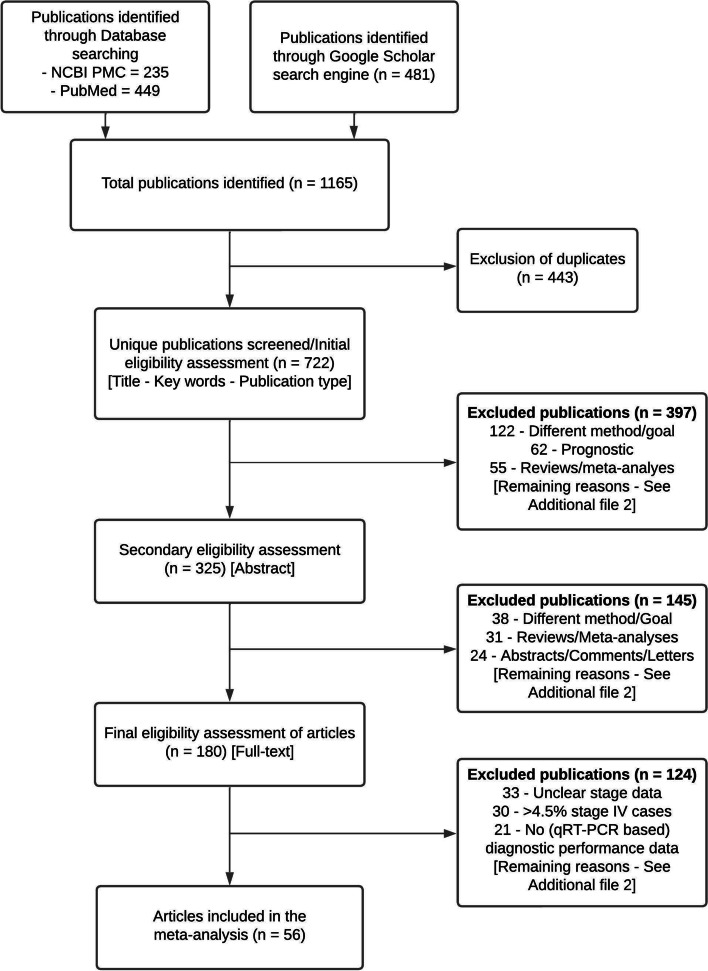
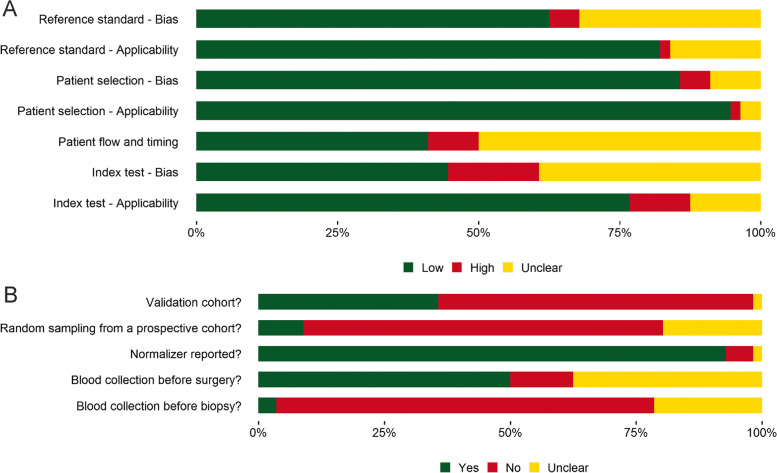
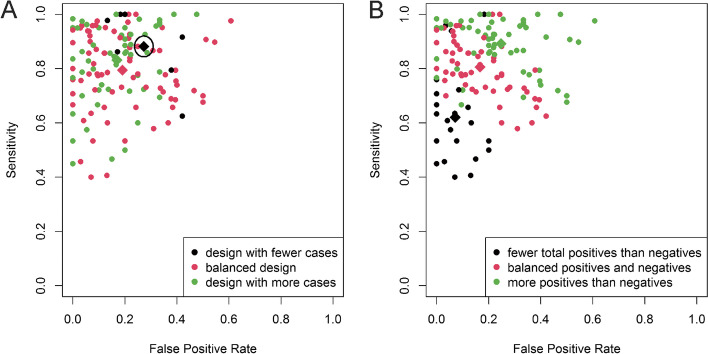
Based on the search of three online search engines performed up to March 21 2022, 56 eligible publications that investigated diagnostic circulating microRNAs by utilizing Real-Time Quantitative Reverse Transcription PCR (qRT-PCR) were obtained. Primary studies' potential for bias was evaluated with the revised tool for the quality assessment of diagnostic accuracy studies (QUADAS-2). A bivariate generalized linear mixed-effects model was applied to obtain pooled sensitivity and specificity. A novel methodology was utilized in which the sample and study models' characteristics were analysed to determine the potential preference of studies for sensitivity or specificity.
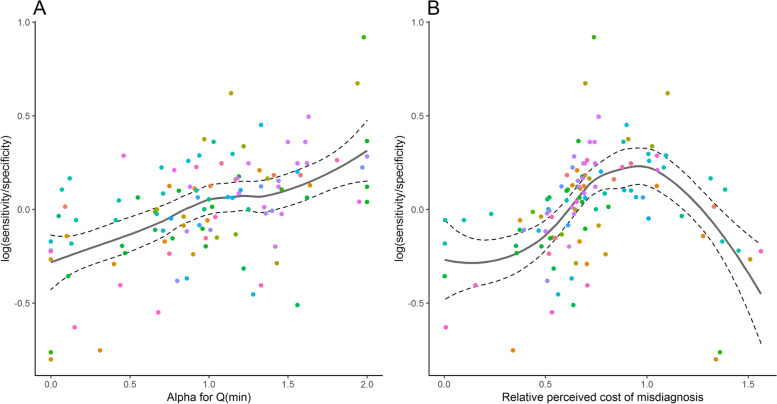
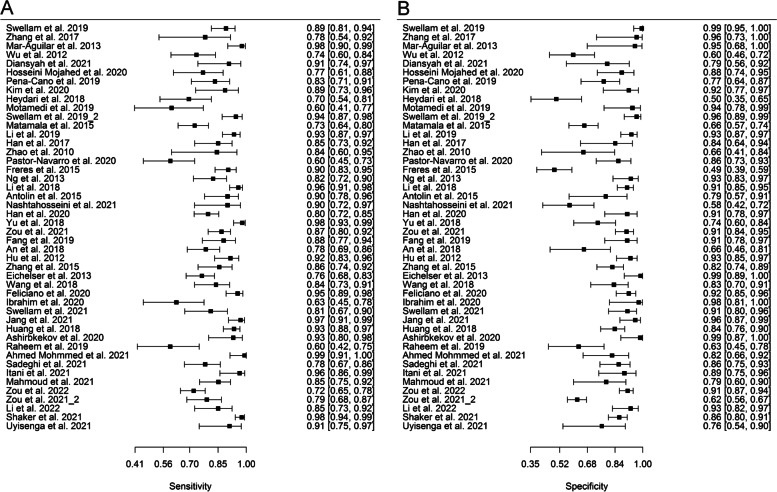
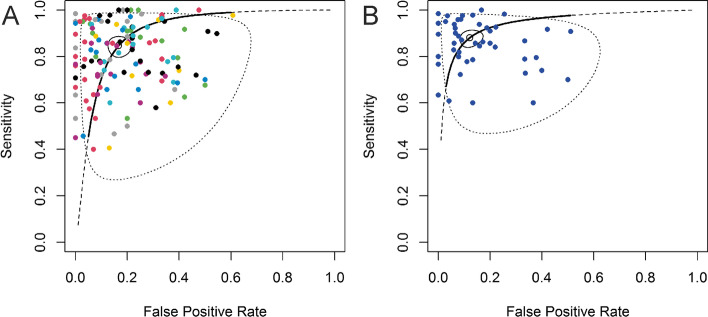
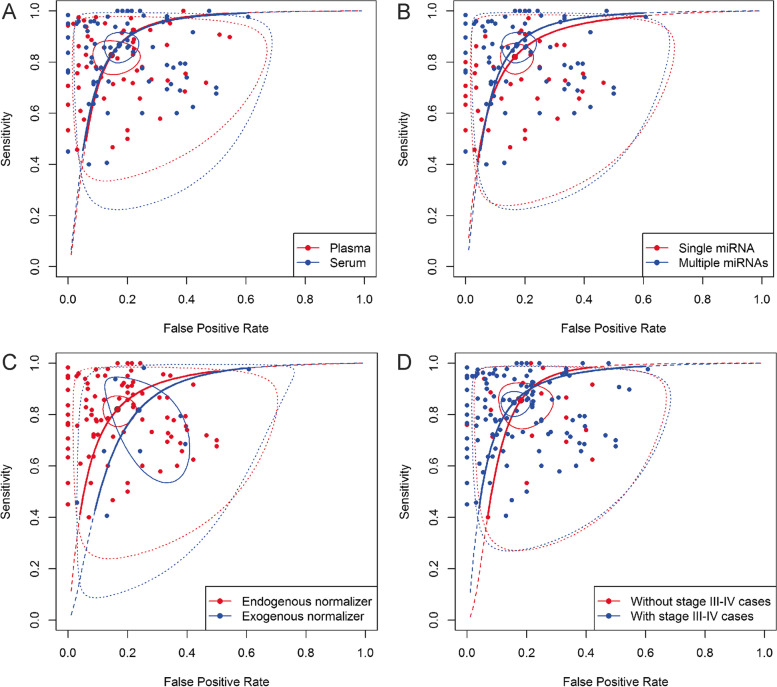
Pooled sensitivity and specificity of 0.85 [0.81-0.88] and 0.83 [0.79-0.87] were obtained, respectively. Subgroup analysis showed a significantly better performance of multiple (sensitivity: 0.90 [0.86-0.93]; specificity: 0.86 [0.80-0.90]) vs single (sensitivity: 0.82 [0.77-0.86], specificity: 0.83 [0.78-0.87]) microRNA panels and a comparable pooled diagnostic performance between studies using serum (sensitivity: 0.87 [0.81-0.91]; specificity: 0.83 [0.78-0.87]) and plasma (sensitivity: 0.83 [0.77-0.87]; specificity: 0.85 [0.78-0.91]) as specimen type. In addition, based on bivariate and univariate analyses, miRNA(s) based on endogenous normalizers tend to have a higher diagnostic performance than miRNA(s) based on exogenous ones. Moreover, a slight tendency of studies to prefer specificity over sensitivity was observed.
In this study the diagnostic ability of circulating microRNAs to diagnose BC was reaffirmed. Nonetheless, some subgroup analyses showed between-study heterogeneity. Finally, lack of standardization and of result reproducibility remain the biggest issues regarding the diagnostic application of circulating cell-free microRNAs.
乳腺癌(BC)是女性中最常见的癌症。许多研究探索了无细胞循环 microRNAs 作为 BC 的诊断生物标志物。迄今为止,已经报道了不一致且很少交叉的 microRNA 面板,因此,我们旨在评估总体诊断性能以及研究之间异质性的来源。
根据截至 2022 年 3 月 21 日在三个在线搜索引擎上的搜索,获得了 56 项通过实时定量逆转录聚合酶链反应(qRT-PCR)研究诊断性循环 microRNAs 的合格出版物。使用修订后的诊断准确性研究质量评估工具(QUADAS-2)评估主要研究的潜在偏倚。应用二元广义线性混合效应模型获得合并敏感性和特异性。利用一种新的方法,分析样本和研究模型的特征,以确定研究对敏感性或特异性的潜在偏好。
分别获得了 0.85 [0.81-0.88]和 0.83 [0.79-0.87]的合并敏感性和特异性。亚组分析表明,多(敏感性:0.90 [0.86-0.93];特异性:0.86 [0.80-0.90])vs 单(敏感性:0.82 [0.77-0.86],特异性:0.83 [0.78-0.87])microRNA 面板的性能显著更好,并且使用血清(敏感性:0.87 [0.81-0.91];特异性:0.83 [0.78-0.87])和血浆(敏感性:0.83 [0.77-0.87];特异性:0.85 [0.78-0.91])作为标本类型的研究之间的合并诊断性能相当。此外,基于双变量和单变量分析,基于内源性正常化剂的 miRNA(s) 比基于外源性的 miRNA(s) 具有更高的诊断性能。此外,观察到研究略微倾向于特异性而非敏感性。
本研究再次证实了循环 microRNAs 诊断 BC 的诊断能力。然而,一些亚组分析显示研究之间存在异质性。最后,缺乏标准化和结果可重复性仍然是循环无细胞 microRNAs 诊断应用中最大的问题。