Kjällquist Una, Acs Balazs, Margolin Sara, Karlsson Emelie, Kessler Luisa Edman, Garcia Hernandez Scarlett, Ekholm Maria, Lundgren Christine, Olsson Erik, Lindman Henrik, Foukakis Theodoros, Matikas Alexios, Hartman Johan
Department of Oncology-Pathology, Karolinska Institute, 17164 Stockholm, Sweden.
Breast Center, Theme Cancer, Karolinska University Hospital, Solna, 17167 Stockholm, Sweden.
Cancers (Basel). 2022 May 25;14(11):2615. doi: 10.3390/cancers14112615.
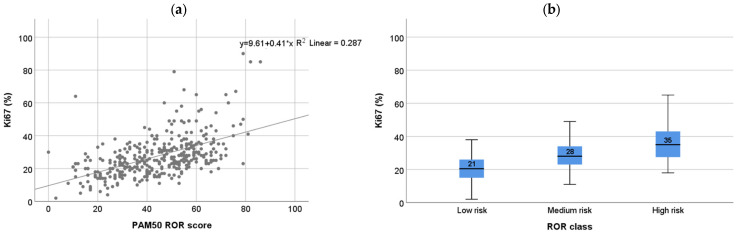
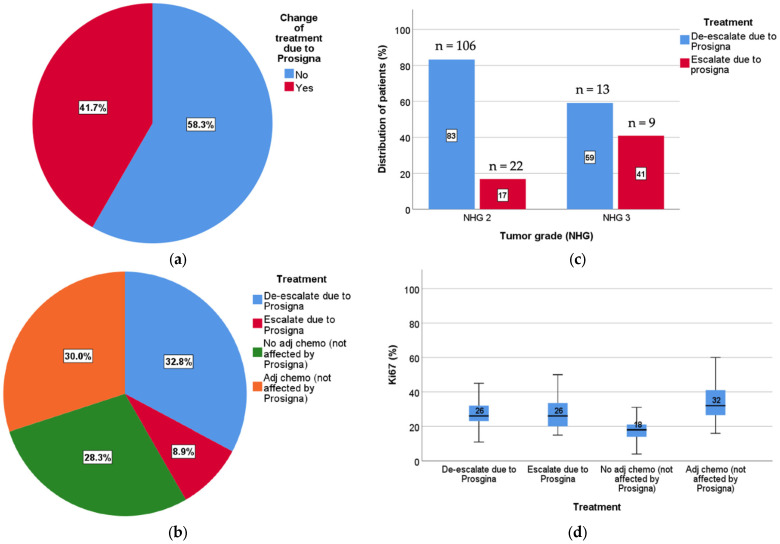
Molecular signatures to guide decisions for adjuvant chemotherapy are recommended in early ER-positive, HER2-negative breast cancer. The objective of this study was to assess what impact gene-expression-based risk testing has had following its recommendation by Swedish national guidelines. Postmenopausal women with ER-positive, HER2-negative and node negative breast cancer at intermediate clinical risk and eligible for chemotherapy were identified retrospectively from five Swedish hospitals. Tumor characteristics, results from Prosigna test and final treatment decision were available for all patients. Treatment recommendations were compared with the last version of regional guidelines before the introduction of routine risk signature testing. Among the 360 included patients, 41% ( = 148) had a change in decision for adjuvant treatment based on Prosigna test result. Out of the patients with clinical indication for adjuvant chemotherapy, 52% ( = 118) could avoid treatment based on results from Prosigna test. On the contrary, 23% ( = 30) of the patients with no indication were escalated to receive adjuvant chemotherapy after testing. Ki67 could not distinguish between the Prosigna risk groups or intrinsic subtypes and did not significantly differ between patients in which decision for adjuvant therapy was changed based on the test results. In conclusion, we report the first real-world data from implementation of gene-expression-based risk assessment in a Swedish context, which may facilitate the optimization of future versions of the national guidelines.
对于早期雌激素受体阳性、人表皮生长因子受体2阴性乳腺癌,推荐使用分子特征来指导辅助化疗决策。本研究的目的是评估基于基因表达的风险检测在瑞典国家指南推荐后所产生的影响。从瑞典五家医院回顾性确定了处于中度临床风险且符合化疗条件的绝经后雌激素受体阳性、人表皮生长因子受体2阴性且无淋巴结转移的乳腺癌患者。所有患者均有肿瘤特征、Prosigna检测结果及最终治疗决策。将治疗建议与常规风险特征检测引入前的最新版本区域指南进行比较。在纳入的360例患者中,41%(n = 148)根据Prosigna检测结果改变了辅助治疗决策。在有辅助化疗临床指征的患者中,52%(n = 118)可根据Prosigna检测结果避免治疗。相反,23%(n = 30)无指征的患者在检测后被升级接受辅助化疗。Ki67无法区分Prosigna风险组或内在亚型,且在根据检测结果改变辅助治疗决策的患者之间无显著差异。总之,我们报告了在瑞典实施基于基因表达的风险评估的首批真实世界数据,这可能有助于优化国家指南的未来版本。