Lachiondo-Ortega Sofia, Delgado Teresa Cardoso, Baños-Jaime Blanca, Velázquez-Cruz Alejandro, Díaz-Moreno Irene, Martínez-Chantar María Luz
Liver Disease Lab, Center for Cooperative Research in Biosciences (CIC bioGUNE), Basque Research and Technology Alliance (BRTA), 48160 Derio, Spain.
Centro de Investigaciones Científicas Isla de la Cartuja (cicCartuja), Instituto de Investigaciones Químicas (IIQ), Universidad de Sevilla, Consejo Superior de Investigaciones Científicas (CSIC), 41092 Sevilla, Spain.
Cancers (Basel). 2022 May 27;14(11):2666. doi: 10.3390/cancers14112666.
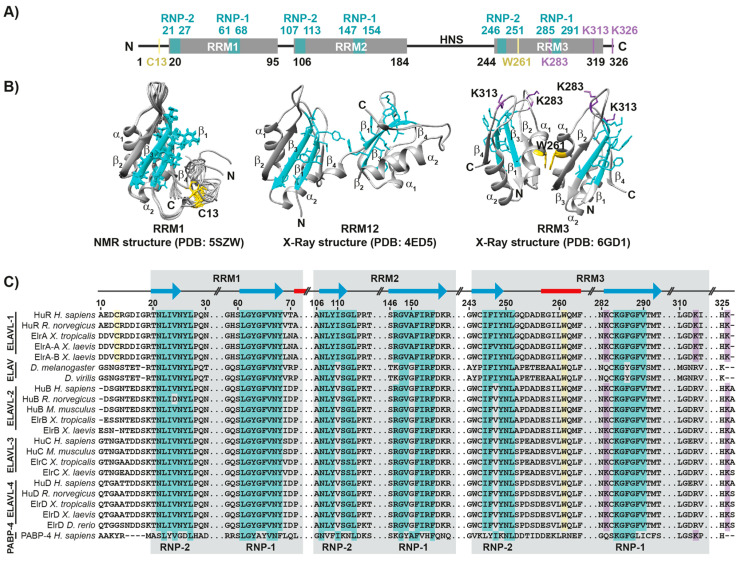
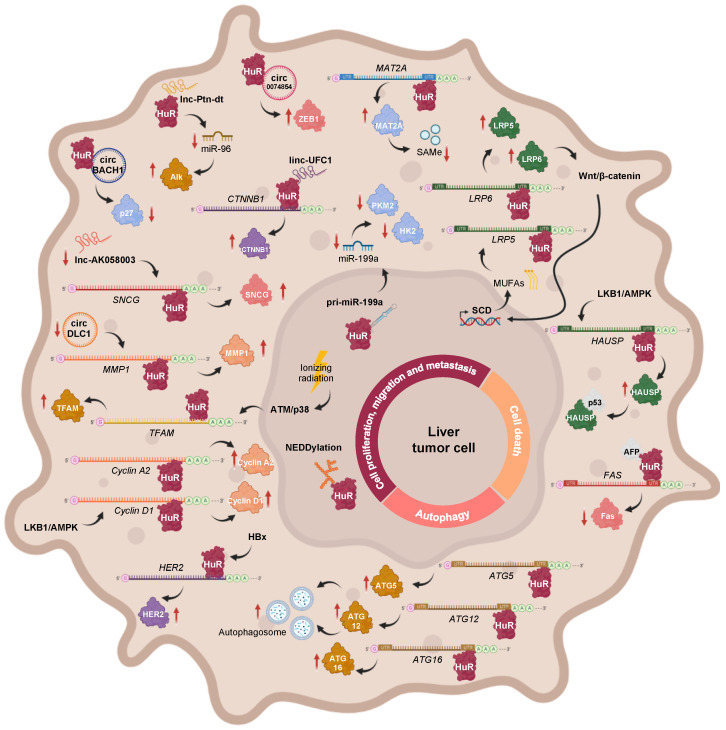
Hu antigen R (HuR) is a 36-kDa ubiquitous member of the ELAV/Hu family of RNA-binding proteins (RBPs), which plays an important role as a post-transcriptional regulator of specific RNAs under physiological and pathological conditions, including cancer. Herein, we review HuR protein structure, function, and its regulation, as well as its implications in the pathogenesis, progression, and treatment of hepatobiliary cancers. In particular, we focus on hepatocellular carcinoma (HCC) and cholangiocarcinoma (CCA), tumors where the increased cytoplasmic localization of HuR and activity are proposed, as valuable diagnostic and prognostic markers. An overview of the main regulatory axes involving HuR, which are associated with cell proliferation, invasion, metastasis, apoptosis, and autophagy in HCC, is provided. These include the transcriptional, post-transcriptional, and post-translational modulators of HuR function, in addition to HuR target transcripts. Finally, whereas studies addressing the relevance of targeting HuR in CCA are limited, in the past few years, HuR has emerged as a potential therapeutic target in HCC. In fact, the therapeutic efficacy of some pharmacological inhibitors of HuR has been evaluated, in early experimental models of HCC. We, further, discuss the major findings and future perspectives of therapeutic approaches that specifically block HuR interactions, either with post-translational modifiers or cognate transcripts in hepatobiliary cancers.
Hu抗原R(HuR)是RNA结合蛋白(RBP)的ELAV/Hu家族中一种分子量为36 kDa的普遍存在的成员,在生理和病理条件下,包括癌症,作为特定RNA的转录后调节因子发挥重要作用。在此,我们综述HuR蛋白的结构、功能及其调节,以及它在肝胆癌的发病机制、进展和治疗中的意义。特别地,我们聚焦于肝细胞癌(HCC)和胆管癌(CCA),这两种肿瘤中HuR在细胞质中的定位和活性增加,被认为是有价值的诊断和预后标志物。本文提供了涉及HuR的主要调节轴的概述,这些调节轴与HCC中的细胞增殖、侵袭、转移、凋亡和自噬相关。除了HuR靶转录本外,还包括HuR功能的转录、转录后和翻译后调节因子。最后,虽然针对HuR在CCA中的相关性的研究有限,但在过去几年中,HuR已成为HCC中的一个潜在治疗靶点。事实上,在HCC的早期实验模型中已经评估了一些HuR药理学抑制剂的治疗效果。我们进一步讨论了特异性阻断HuR与翻译后修饰因子或肝胆癌中同源转录本相互作用的治疗方法的主要发现和未来前景。