
SUMOylation 控制肝癌中 Hu 抗原 R 的转录后活性。
SUMOylation controls Hu antigen R posttranscriptional activity in liver cancer.
机构信息
Liver Disease Lab, Center for Cooperative Research in Biosciences (CIC bioGUNE), Basque Research and Technology Alliance (BRTA), 48160 Derio, Bizkaia, Spain.
Liver Disease Lab, Center for Cooperative Research in Biosciences (CIC bioGUNE), Basque Research and Technology Alliance (BRTA), 48160 Derio, Bizkaia, Spain; Department of Biochemistry and Molecular Biology, Faculty of Sciences, University of Extremadura, University Institute of Biosanitary Research of Extremadura (INUBE), 06071 Badajoz, Spain; Biofisika Institute, Consejo Superior de Investigaciones Científicas (CSIC), Departamento Bioquímica y Biología Molecular, Facultad de Ciencia y Tecnología, Universidad del País Vasco (UPV/EHU), Leioa, Spain.
出版信息
Cell Rep. 2024 Mar 26;43(3):113924. doi: 10.1016/j.celrep.2024.113924. Epub 2024 Mar 18.
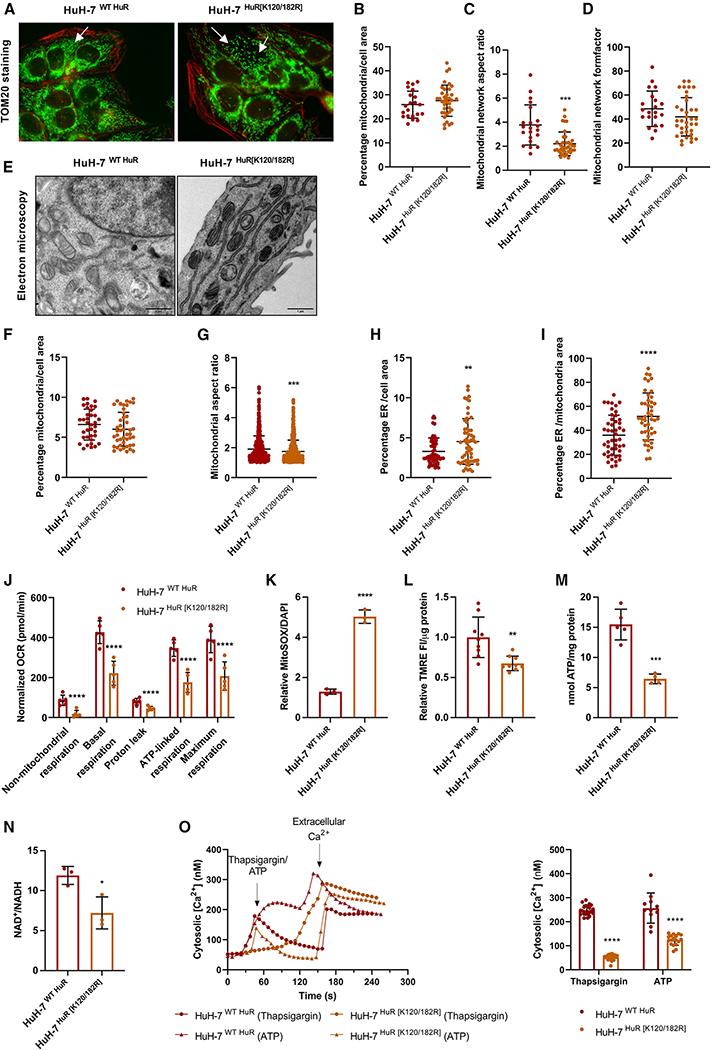
The posttranslational modification of proteins critically influences many biological processes and is a key mechanism that regulates the function of the RNA-binding protein Hu antigen R (HuR), a hub in liver cancer. Here, we show that HuR is SUMOylated in the tumor sections of patients with hepatocellular carcinoma in contrast to the surrounding tissue, as well as in human cell line and mouse models of the disease. SUMOylation of HuR promotes major cancer hallmarks, namely proliferation and invasion, whereas the absence of HuR SUMOylation results in a senescent phenotype with dysfunctional mitochondria and endoplasmic reticulum. Mechanistically, SUMOylation induces a structural rearrangement of the RNA recognition motifs that modulates HuR binding affinity to its target RNAs, further modifying the transcriptomic profile toward hepatic tumor progression. Overall, SUMOylation constitutes a mechanism of HuR regulation that could be potentially exploited as a therapeutic strategy for liver cancer.
蛋白质的翻译后修饰对许多生物过程至关重要,是调节 RNA 结合蛋白 Hu 抗原 R(HuR)功能的关键机制,HuR 是肝癌的一个中心节点。在这里,我们发现 HuR 在肝癌患者的肿瘤组织中发生 SUMO 化,与周围组织形成对比,在人类细胞系和疾病的小鼠模型中也是如此。HuR 的 SUMO 化促进了主要的癌症特征,即增殖和侵袭,而 HuR SUMO 化的缺失则导致具有功能失调的线粒体和内质网的衰老表型。从机制上讲,SUMO 化诱导 RNA 识别模体的结构重排,从而调节 HuR 与其靶 RNA 的结合亲和力,进一步将转录组图谱朝着肝肿瘤进展的方向进行修饰。总的来说,SUMO 化构成了 HuR 调节的一种机制,可能被用作肝癌的治疗策略。



 Zotero 插件