• 文献检索
  • 文档翻译
  • 深度研究
  • 学术资讯
  • Suppr Zotero 插件Zotero 插件
  • 邀请有礼
  • 套餐&价格
  • 历史记录
应用&插件
Suppr Zotero 插件Zotero 插件浏览器插件Mac 客户端Windows 客户端微信小程序
定价
高级版会员购买积分包购买API积分包
服务
文献检索文档翻译深度研究API 文档MCP 服务
关于我们
关于 Suppr公司介绍联系我们用户协议隐私条款
关注我们

Suppr 超能文献

核心技术专利:CN118964589B侵权必究
粤ICP备2023148730 号-1Suppr @ 2026

文献检索

告别复杂PubMed语法,用中文像聊天一样搜索,搜遍4000万医学文献。AI智能推荐,让科研检索更轻松。

立即免费搜索

文件翻译

保留排版,准确专业,支持PDF/Word/PPT等文件格式,支持 12+语言互译。

免费翻译文档

深度研究

AI帮你快速写综述,25分钟生成高质量综述,智能提取关键信息,辅助科研写作。

立即免费体验

评估 COVID-19 期间哈萨克斯坦城市学校的水环境卫生设施获取情况:以哈萨克斯坦中部为例的案例研究。

Assessing Access to WASH in Urban Schools during COVID-19 in Kazakhstan: Case Study of Central Kazakhstan.

机构信息

Division of Social Medicine and Global Health, Department of Clinical Sciences, Lund University, Jan Waldenströms gata 35, 214 28 Malmö, Sweden.

School of Public Health, Biomedicine and Pharmacy, Karaganda Medical University, Karaganda 100008, Kazakhstan.

出版信息

Int J Environ Res Public Health. 2022 May 25;19(11):6438. doi: 10.3390/ijerph19116438.

DOI:10.3390/ijerph19116438
PMID:35682022
原文链接:https://pmc.ncbi.nlm.nih.gov/articles/PMC9180471/
Abstract

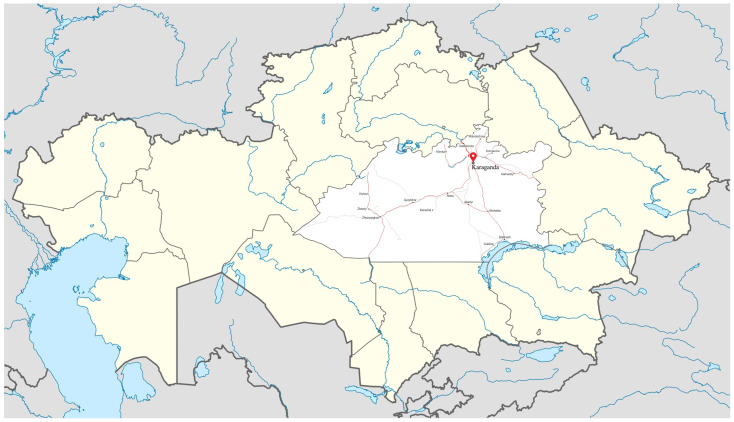
The WHO/UNICEF Joint Monitoring Program (JMP) for Water Supply, Sanitation and Hygiene (WASH) produces global estimates of the real situation of access to water, sanitation and hygiene services, and sanitation and hygiene in households, educational institutes and health care facilities; however it is lacking data on schools in Kazakhstan. Thus, the aim of this research was to assess access to WASH in schools of urban area in Kazakhstan. The study was conducted in seven schools of Central Kazakhstan during the COVID-19 pandemic and restrictive measures. Three data collection methods were used: a questionnaire for administrative staff, a questionnaire for parents and observation. Parents of offline study pupils (only second and third grades due to the pandemic) were included in the survey. Students had access to in-building toilets in all schools connected to the centralized sewer. The number of school toilets varied from 7 (KAZ200085) to 61 (KAZ200089). The average amount of toilets was 28.08 ± 16.97. Only two out of seven schools complied with the requirements of Kazakhstan national sanitary standards for the ratio of school toilets to the number of students. From the questionnaire with the school administrations, it was defined that the primary source of drinking water was the public water supply. All schools regularly disinfect and check the water supply system. At the same time, the results also revealed discrepancies in the answers between administration and parents (2.6% of parents showed that their children have rare access to drinking water), and insufficient monitoring of implementation of WASH services. This study also confirmed that the full provision of access to water and water services in the structure of educational institutions solves several SDG targets.

摘要

世界卫生组织/联合国儿童基金会联合监测规划(JMP)提供了关于获得水、环境卫生和个人卫生服务以及家庭、教育机构和保健设施环境卫生的全球真实状况的估计数,但缺乏哈萨克斯坦学校的数据。因此,本研究旨在评估哈萨克斯坦城市地区学校的水、环境卫生和个人卫生服务获取情况。该研究在哈萨克斯坦中部地区的七所学校进行,时间为 COVID-19 大流行和限制措施期间。采用了三种数据收集方法:管理人员问卷、家长问卷和观察。由于大流行,仅包括线下学习的二、三年级学生的家长被纳入调查。所有学校的学生都可以使用与集中式污水系统相连的校内厕所。学校厕所数量从 7 个(KAZ200085)到 61 个(KAZ200089)不等。学校厕所的平均数量为 28.08 ± 16.97。仅有两所学校符合哈萨克斯坦国家卫生标准对学生人数与学校厕所比例的要求。从与学校管理人员的问卷中,确定了公共供水是饮用水的主要来源。所有学校定期对水供应系统进行消毒和检查。同时,调查结果还揭示了管理部门和家长之间的答案差异(2.6%的家长表示他们的孩子很少有饮用水),以及对水环境卫生服务实施情况的监督不足。本研究还证实,在教育机构结构中全面提供获取水和水服务可解决几个可持续发展目标。
https://cdn.ncbi.nlm.nih.gov/pmc/blobs/4cc6/9180471/51e298aaab20/ijerph-19-06438-g001.jpg

相似文献

1
Assessing Access to WASH in Urban Schools during COVID-19 in Kazakhstan: Case Study of Central Kazakhstan.评估 COVID-19 期间哈萨克斯坦城市学校的水环境卫生设施获取情况:以哈萨克斯坦中部为例的案例研究。
Int J Environ Res Public Health. 2022 May 25;19(11):6438. doi: 10.3390/ijerph19116438.
2
Challenges of Access to WASH in Schools in Low- and Middle-Income Countries: Case Study from Rural Central Kazakhstan.中低收入国家学校供水、环境卫生和个人卫生设施获取面临的挑战:来自哈萨克斯坦中部农村地区的案例研究。
Int J Environ Res Public Health. 2021 Sep 13;18(18):9652. doi: 10.3390/ijerph18189652.
3
Assessment of Water, Sanitation, and Hygiene Conditions in Public Elementary Schools in Quetzaltenango, Guatemala, in the Context of the COVID-19 Pandemic.危地马拉克萨尔特南戈公立小学的水、环境卫生和个人卫生条件评估,以应对 COVID-19 大流行。
Int J Environ Res Public Health. 2023 Oct 13;20(20):6914. doi: 10.3390/ijerph20206914.
4
Water, Sanitation and Hygiene in Schools in Low- and Middle-Income Countries: A Systematic Review and Implications for the COVID-19 Pandemic.中低收入国家学校的水、环境卫生和个人卫生:系统评价及对 COVID-19 大流行的影响。
Int J Environ Res Public Health. 2022 Mar 7;19(5):3124. doi: 10.3390/ijerph19053124.
5
Kenyan school book knowledge for water, sanitation, hygiene and health education interventions: Disconnect, integration or opportunities?肯尼亚学校教材中的水、环境卫生和个人卫生教育干预措施:脱节、整合还是机遇?
Int J Hyg Environ Health. 2021 Jun;235:113756. doi: 10.1016/j.ijheh.2021.113756. Epub 2021 May 15.
6
Access to and challenges in water, sanitation, and hygiene in healthcare facilities during the early phase of the COVID-19 pandemic in Ethiopia: A mixed-methods evaluation.埃塞俄比亚 COVID-19 大流行早期医疗保健设施中获得水、环境卫生和个人卫生服务的机会和面临的挑战:混合方法评估。
PLoS One. 2022 May 13;17(5):e0268272. doi: 10.1371/journal.pone.0268272. eCollection 2022.
7
Drinking water, sanitation, and hygiene (WASH) situation in primary schools of Pakistan: the impact of WASH-related interventions and policy on children school performance.巴基斯坦小学的饮用水、环境卫生与个人卫生(WASH)状况:与WASH相关的干预措施和政策对儿童学业成绩的影响。
Environ Sci Pollut Res Int. 2022 Jan;29(1):1259-1277. doi: 10.1007/s11356-021-15681-w. Epub 2021 Aug 5.
8
The Status of School Water, Sanitation, and Hygiene Services in Addis Ababa, Ethiopia: Progress Towards Achieving the SDG 6.埃塞俄比亚亚的斯亚贝巴学校水、环境卫生和个人卫生服务的现状:实现可持续发展目标6的进展情况
Environ Health Insights. 2023 Sep 15;17:11786302231199003. doi: 10.1177/11786302231199003. eCollection 2023.
9
Environmental health knowledge and practice survey among secondary schoolchildren in Zaria, Nigeria.尼日利亚扎里亚中学生的环境卫生知识与实践调查
Environ Health Perspect. 1994 Mar;102(3):310-2. doi: 10.1289/ehp.94102310.
10
Knowledge, Practice of Personal Hygiene, School Sanitation, and Risk Factors of Contracting Diarrhea among Rural Students from Five Western Provinces in China.中国西部五省农村学生个人卫生知识、行为、学校卫生及腹泻病发病影响因素分析
Int J Environ Res Public Health. 2021 Sep 9;18(18):9505. doi: 10.3390/ijerph18189505.

引用本文的文献

1
Knowledge, attitudes, and practices of hygiene among children in schools of Central Kazakhstan: a cross-sectional study.哈萨克斯坦中部地区学校儿童的卫生知识、态度和行为:一项横断面研究。
Front Public Health. 2025 Jun 3;13:1595672. doi: 10.3389/fpubh.2025.1595672. eCollection 2025.
2
The Status of School Water, Sanitation, and Hygiene Services in Addis Ababa, Ethiopia: Progress Towards Achieving the SDG 6.埃塞俄比亚亚的斯亚贝巴学校水、环境卫生和个人卫生服务的现状:实现可持续发展目标6的进展情况
Environ Health Insights. 2023 Sep 15;17:11786302231199003. doi: 10.1177/11786302231199003. eCollection 2023.

本文引用的文献

1
Menstrual hygiene practice among adolescent girls in Ethiopia: A systematic review and meta-analysis.青春期少女在埃塞俄比亚的月经卫生实践:系统评价和荟萃分析。
PLoS One. 2022 Jan 4;17(1):e0262295. doi: 10.1371/journal.pone.0262295. eCollection 2022.
2
Challenges of Access to WASH in Schools in Low- and Middle-Income Countries: Case Study from Rural Central Kazakhstan.中低收入国家学校供水、环境卫生和个人卫生设施获取面临的挑战:来自哈萨克斯坦中部农村地区的案例研究。
Int J Environ Res Public Health. 2021 Sep 13;18(18):9652. doi: 10.3390/ijerph18189652.
3
Global Variation in Hand Hygiene Practices Among Adolescents: The Role of Family and School-Level Factors.
全球青少年手部卫生习惯的差异:家庭和学校层面因素的作用。
Int J Environ Res Public Health. 2021 May 7;18(9):4984. doi: 10.3390/ijerph18094984.
4
Associations of hand washing frequency with the incidence of illness: a systematic review and meta-analysis.洗手频率与疾病发病率的关联:一项系统评价与荟萃分析
Ann Transl Med. 2021 Mar;9(5):395. doi: 10.21037/atm-20-6005.
5
Analysis of factors affecting students going to school toilets in a rural primary school in China.中国一所农村小学学生使用学校厕所的影响因素分析。
BMC Public Health. 2021 Jan 6;21(1):32. doi: 10.1186/s12889-020-10099-4.
6
COVID-19 pandemic: Water, sanitation and hygiene (WASH) as a critical control measure remains a major challenge in low-income countries.COVID-19 大流行:水、环境卫生和个人卫生(WASH)作为一项关键控制措施,在低收入国家仍然是一项重大挑战。
Water Res. 2021 Mar 1;191:116793. doi: 10.1016/j.watres.2020.116793. Epub 2020 Dec 27.
7
Menstrual hygiene management in schools: midway progress update on the "MHM in Ten" 2014-2024 global agenda.学校的经期卫生管理:“2014-2024 年全球经期卫生管理行动计划”的中期进展更新。
Health Res Policy Syst. 2021 Jan 2;19(1):1. doi: 10.1186/s12961-020-00669-8.
8
Hand-Washing Practices among Adolescents Aged 12-15 Years from 80 Countries.80 个国家 12-15 岁青少年的洗手习惯。
Int J Environ Res Public Health. 2020 Dec 27;18(1):138. doi: 10.3390/ijerph18010138.
9
Factors associated with water quality, sanitation, and hygiene in rural schools in 14 low- and middle-income countries.与 14 个中低收入国家农村学校水质、环境卫生和个人卫生相关的因素。
Sci Total Environ. 2021 Mar 20;761:144226. doi: 10.1016/j.scitotenv.2020.144226. Epub 2020 Dec 4.
10
School Toileting Environment, Bullying, and Lower Urinary Tract Symptoms in a Population of Adolescent and Young Adult Girls: Preventing Lower Urinary Tract Symptoms Consortium Analysis of Avon Longitudinal Study of Parents and Children.学校如厕环境、欺凌与青少年女性下尿路症状:英国纵向父母与子女研究预防下尿路症状联盟分析
Urology. 2021 May;151:86-93. doi: 10.1016/j.urology.2020.06.060. Epub 2020 Jul 15.