Lushan Botanical Garden, Chinese Academy of Sciences, Jiujiang 332000, China.
Int J Mol Sci. 2022 Jun 2;23(11):6236. doi: 10.3390/ijms23116236.
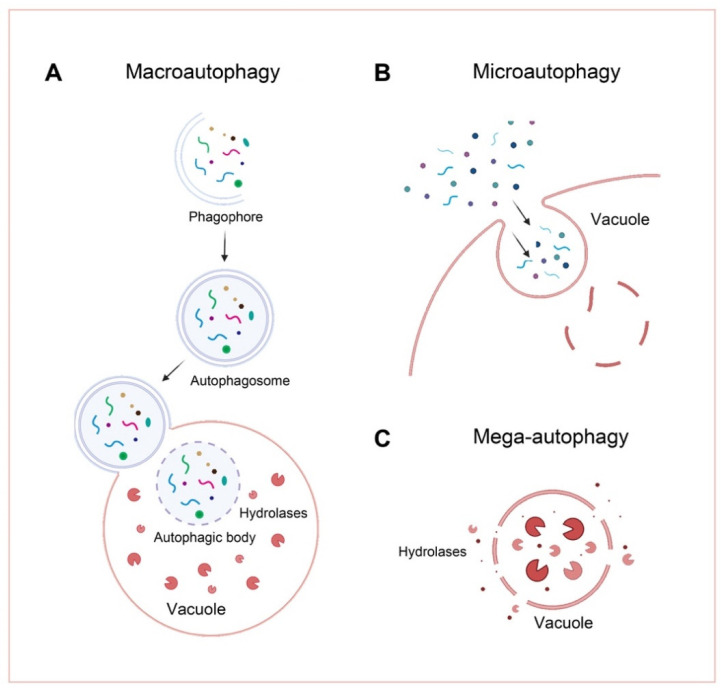
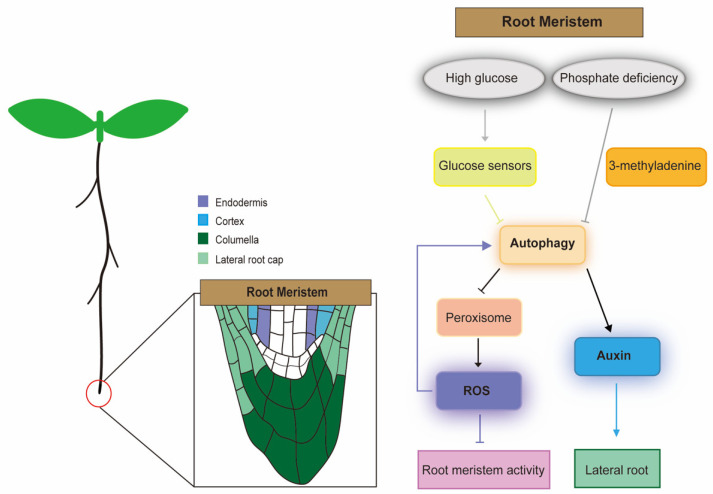
Autophagy is a highly conserved cell degradation process that widely exists in eukaryotic cells. In plants, autophagy helps maintain cellular homeostasis by degrading and recovering intracellular substances through strict regulatory pathways, thus helping plants respond to a variety of developmental and environmental signals. Autophagy is involved in plant growth and development, including leaf starch degradation, senescence, anthers development, regulation of lipid metabolism, and maintenance of peroxisome mass. More and more studies have shown that autophagy plays a role in stress response and contributes to maintain plant survival. The meristem is the basis for the formation and development of new tissues and organs during the post-embryonic development of plants. The differentiation process of meristems is an extremely complex process, involving a large number of morphological and structural changes, environmental factors, endogenous hormones, and molecular regulatory mechanisms. Recent studies have demonstrated that autophagy relates to meristem development, affecting plant growth and development under stress conditions, especially in shoot and root apical meristem. Here, we provide an overview of the current knowledge about how autophagy regulates different meristems under different stress conditions and possibly provide new insights for future research.
自噬是一种高度保守的细胞降解过程,广泛存在于真核细胞中。在植物中,自噬通过严格的调控途径降解和回收细胞内物质,有助于维持细胞内稳态,从而帮助植物响应多种发育和环境信号。自噬参与植物的生长和发育,包括叶片淀粉的降解、衰老、花药的发育、脂质代谢的调节以及过氧化物酶体质量的维持。越来越多的研究表明,自噬在应激响应中发挥作用,有助于维持植物的生存。分生组织是植物胚胎后发育过程中形成和发育新组织和器官的基础。分生组织的分化过程是一个极其复杂的过程,涉及大量的形态和结构变化、环境因素、内源激素和分子调控机制。最近的研究表明,自噬与分生组织的发育有关,影响植物在胁迫条件下的生长和发育,特别是在茎尖和根端分生组织中。在这里,我们概述了自噬如何在不同胁迫条件下调节不同分生组织的现有知识,并可能为未来的研究提供新的见解。