Jirešová Jana, Scholtz Vladimír, Julák Jaroslav, Šerá Božena
Department of Physics and Measurements, University of Chemistry and Technology, Prague, Technická 5, 166 28 Prague, Czech Republic.
Institute of Immunology and Microbiology, First Faculty of Medicine, Charles University and General University Hospital in Prague, Studničkova 7, 128 00 Prague, Czech Republic.
Plants (Basel). 2022 May 30;11(11):1471. doi: 10.3390/plants11111471.
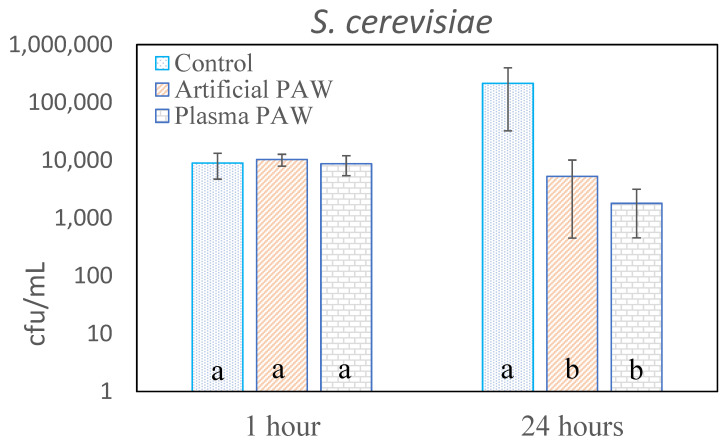
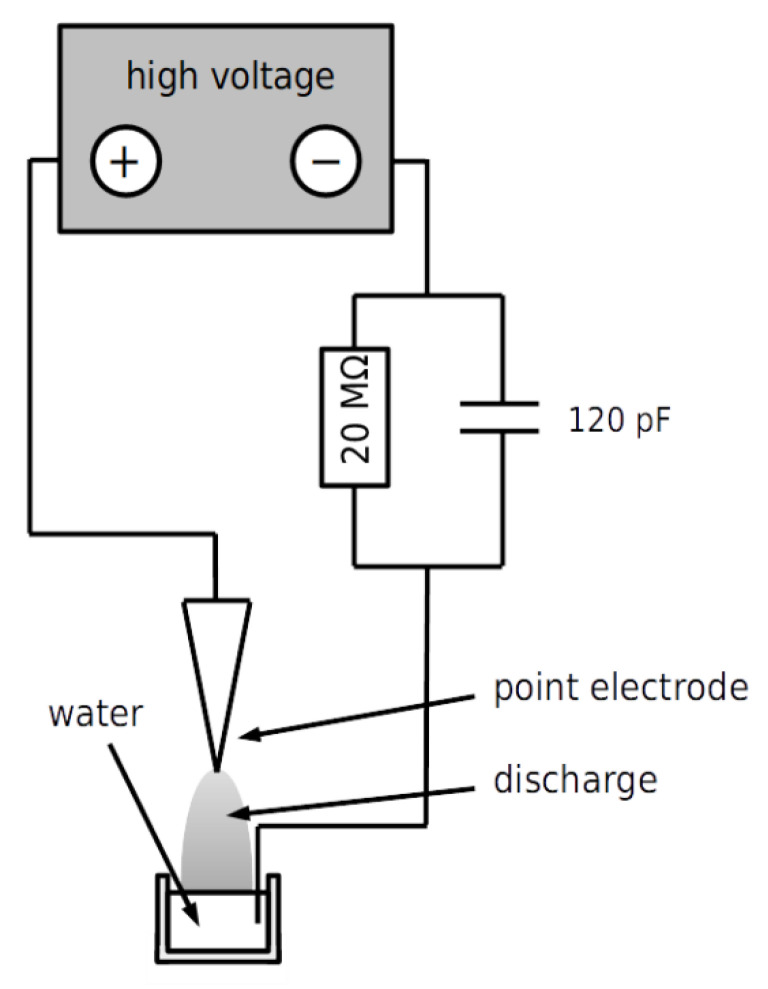
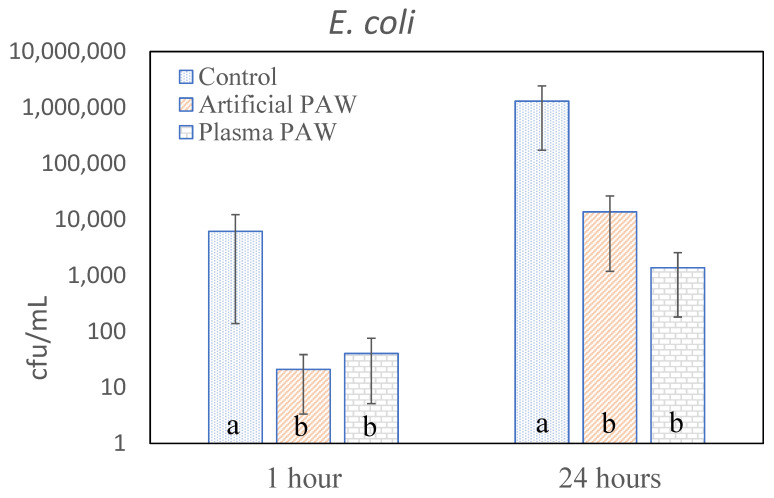
Recently, much attention has been paid to the use of low-temperature plasmas and plasma-activated water (PAW) in various areas of biological research. In addition to its use in medicine, especially for low-temperature disinfection and sterilization, a number of works using plasma in various fields of agriculture have already appeared. While direct plasma action involves the effects of many highly reactive species with short lifetimes, the use of PAW involves the action of only long-lived particles. A number of articles have shown that the main stable components of PAW are HO, O, HNO, and HNO. If so, then it would be faster and much more practical to artificially prepare PAW by directly mixing these chemicals in a given ratio. In this article, we review the literature describing the composition and properties of PAW prepared by various methods. We also draw attention to an otherwise rather neglected fact, that there are no significant differences between the action of PAW and artificially prepared PAW. The effect of PAW on the properties of wheat grains ( L.) was determined. PAW exposure increased germination, shoot length, and fresh and dry shoot weight. The root length and R/S length, i.e., the ratio between the underground (R) and aboveground (S) length of the wheat seedlings, slightly decreased, while the other parameters changed only irregularly or not at all. Grains artificially inoculated with were significantly decontaminated after only one hour of exposure to PAW, while decontamination required soaking for 24 h. The differences between the PAW prepared by plasma treatment and the PAW prepared by artificially mixing the active ingredients, i.e., nitric acid and hydrogen peroxide, proved to be inconsistent and statistically insignificant. Therefore, it may be sufficient for further research to focus only on the effects of artificial PAW.
近年来,低温等离子体和等离子体活化水(PAW)在生物研究的各个领域中的应用受到了广泛关注。除了在医学领域的应用,特别是低温消毒和灭菌外,在农业各个领域使用等离子体的一些研究也已出现。虽然直接等离子体作用涉及许多寿命短的高活性物种的影响,但PAW的使用仅涉及长寿命粒子的作用。一些文章表明,PAW的主要稳定成分是HO、O、HNO和HNO。如果是这样,那么通过按给定比例直接混合这些化学物质来人工制备PAW将更快且更实用。在本文中,我们回顾了描述通过各种方法制备的PAW的组成和性质的文献。我们还提请注意一个在其他方面相当被忽视的事实,即PAW和人工制备的PAW的作用之间没有显著差异。测定了PAW对小麦籽粒(L.)性质的影响。PAW处理增加了发芽率、芽长以及鲜重和干重。根长和R/S长度,即小麦幼苗地下(R)和地上(S)长度的比值略有下降,而其他参数仅不规则变化或根本没有变化。人工接种的籽粒在暴露于PAW仅一小时后就得到了显著净化,而接种的籽粒净化需要浸泡24小时。经等离子体处理制备的PAW与通过人工混合活性成分(即硝酸和过氧化氢)制备的PAW之间的差异被证明是不一致的,且在统计学上不显著。因此,对于进一步的研究,仅关注人工PAW的影响可能就足够了。