Marček Tihana, Hamow Kamirán Áron, Janda Tibor, Darko Eva
Faculty of Food Technology, Josip Juraj Strossmayer University of Osijek, Franje Kuhača 18, 31000 Osijek, Croatia.
Agricultural Institute, Centre for Agricultural Research, ELKH, 2462 Martonvásár, Hungary.
Plants (Basel). 2023 Mar 8;12(6):1235. doi: 10.3390/plants12061235.
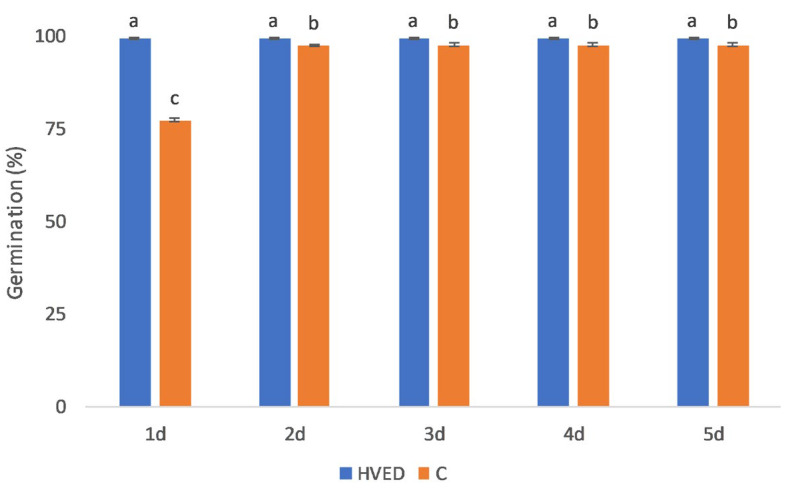
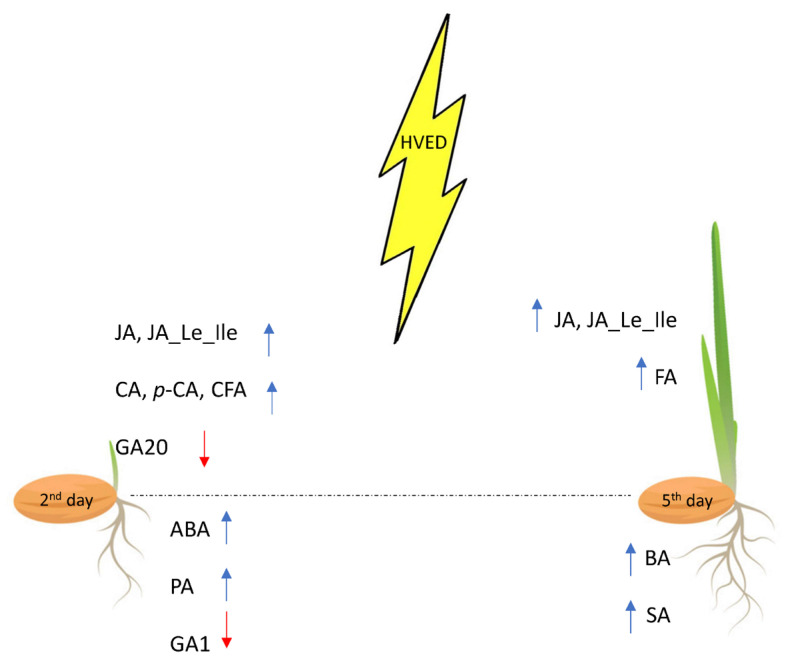
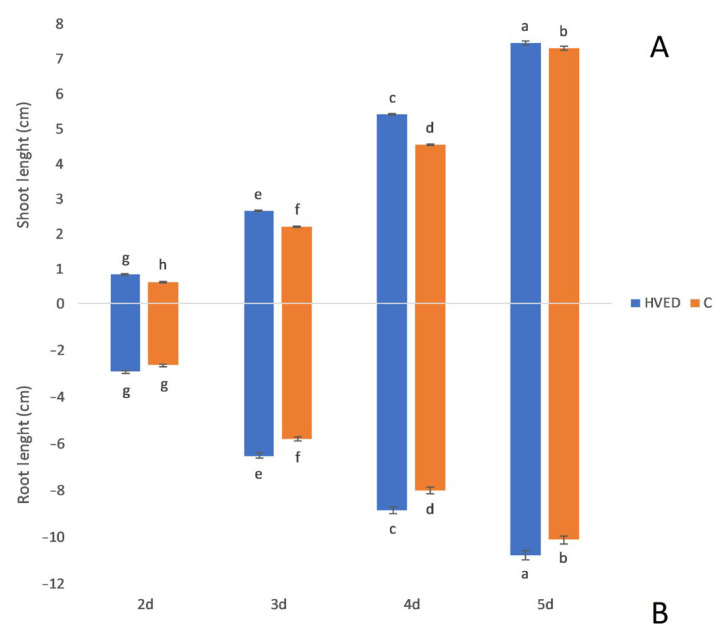
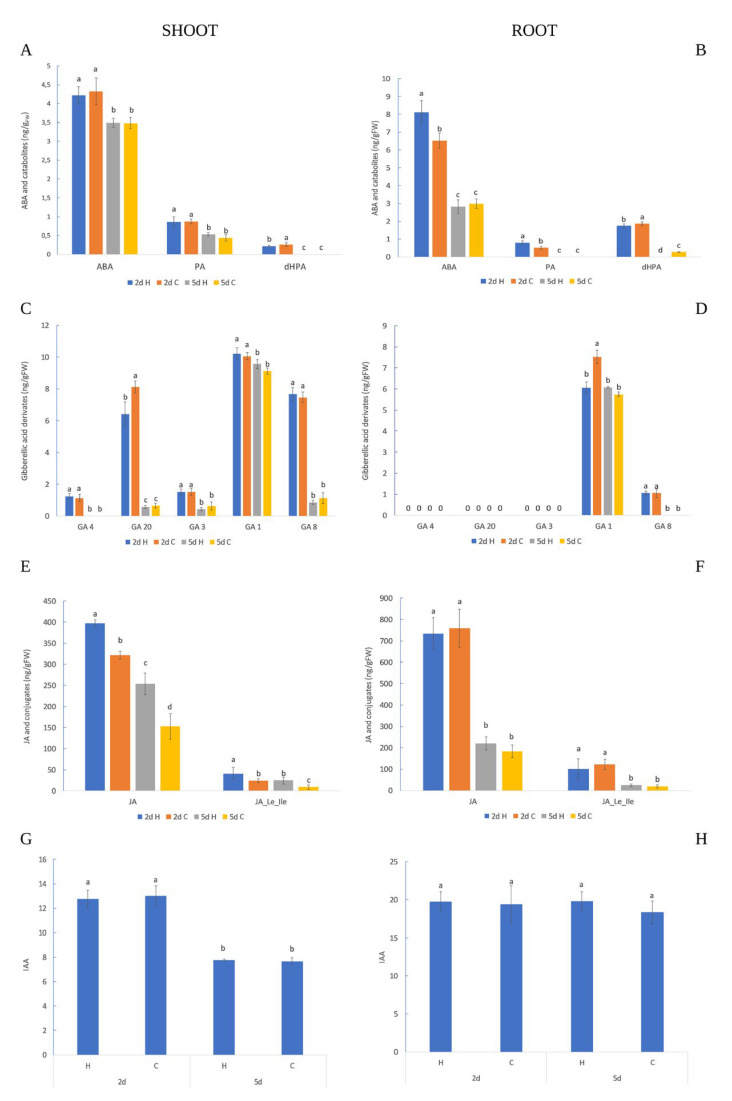
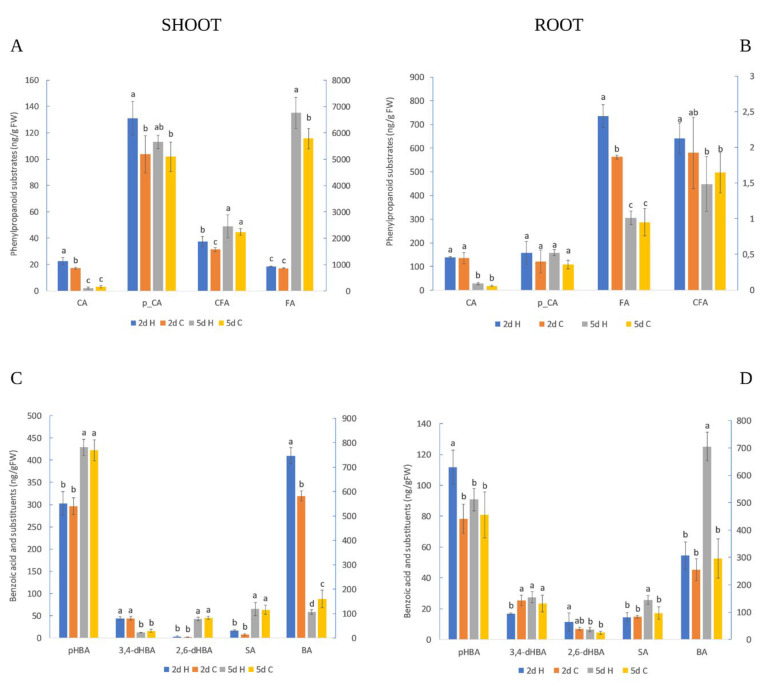
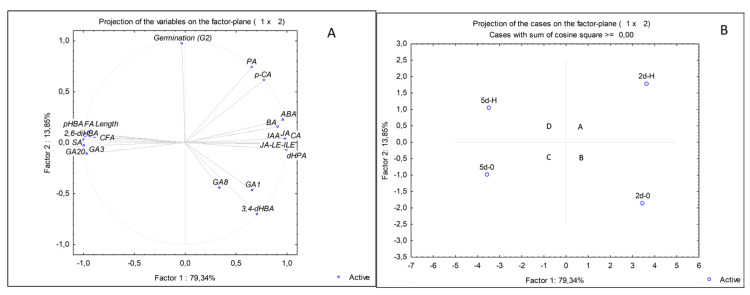
High voltage electrical discharge (HVED) is an eco-friendly low-cost method based on the creation of plasma-activated water (PAW) through the release of electrical discharge in water which results in the formation of reactive particles. Recent studies have reported that such novel plasma technologies promote germination and growth but their hormonal and metabolic background is still not known. In the present work, the HVED-induced hormonal and metabolic changes were studied during the germination of wheat seedlings. Hormonal changes including abscisic acid (ABA), gibberellic acids (GAs), indol acetic acid (IAA) and jasmonic acid (JA) and the polyphenol responses were detected in the early (2nd day) and late (5th day) germination phases of wheat as well as their redistribution in shoot and root. HVED treatment significantly stimulated germination and growth both in the shoot and root. The root early response to HVED involved the upregulation of ABA and increased phaseic and ferulic acid content, while the active form of gibberellic acid (GA1) was downregulated. In the later phase (5th day of germination), HVED had a stimulatory effect on the production of benzoic and salicylic acid. The shoot showed a different response: HVED induced the synthesis of JA_Le_Ile, an active form of JA, and provoked the biosynthesis of cinnamic, -coumaric and caffeic acid in both phases of germination. Surprisingly, in 2-day-old shoots, HVED decreased the GA20 levels, being intermediate in the synthesis of bioactive gibberellins. These HVED-provoked metabolic changes indicated a stress-related response that could contribute to germination in wheat.
高压放电(HVED)是一种环保且低成本的方法,它基于通过在水中释放放电来产生等离子体活化水(PAW),这会导致反应性粒子的形成。最近的研究报道,这种新型等离子体技术可促进种子萌发和生长,但其激素和代谢背景仍不清楚。在本研究中,对小麦幼苗萌发过程中高压放电诱导的激素和代谢变化进行了研究。在小麦萌发的早期(第2天)和晚期(第5天)检测了包括脱落酸(ABA)、赤霉素(GAs)、吲哚乙酸(IAA)和茉莉酸(JA)在内的激素变化以及多酚反应,以及它们在地上部和根部的重新分布。高压放电处理显著促进了地上部和根部的萌发和生长。根部对高压放电的早期反应涉及ABA的上调以及相酸和阿魏酸含量的增加,而赤霉素的活性形式(GA1)则下调。在后期(萌发第5天),高压放电对苯甲酸和水杨酸的产生具有刺激作用。地上部表现出不同的反应:高压放电在萌发的两个阶段均诱导了茉莉酸的活性形式JA_Le_Ile的合成,并引发了肉桂酸、对香豆酸和咖啡酸的生物合成。令人惊讶的是,在2日龄的地上部中,高压放电降低了GA20的水平,在生物活性赤霉素的合成中处于中间水平。这些高压放电引发的代谢变化表明了一种与胁迫相关的反应,可能有助于小麦的萌发。