Espinosa Eduardo, Espinoza José, Melín Pedro, Rohten Jaime, Rivera Marco, Muñoz Javier
Department of Electrical Engineering, Faculty of Engineering, Universidad Católica de la Santísima Concepción, Concepción 4090541, Chile.
Department of Electrical Engineering, Universidad de Concepción, Concepción 4070386, Chile.
Sensors (Basel). 2022 May 28;22(11):4100. doi: 10.3390/s22114100.
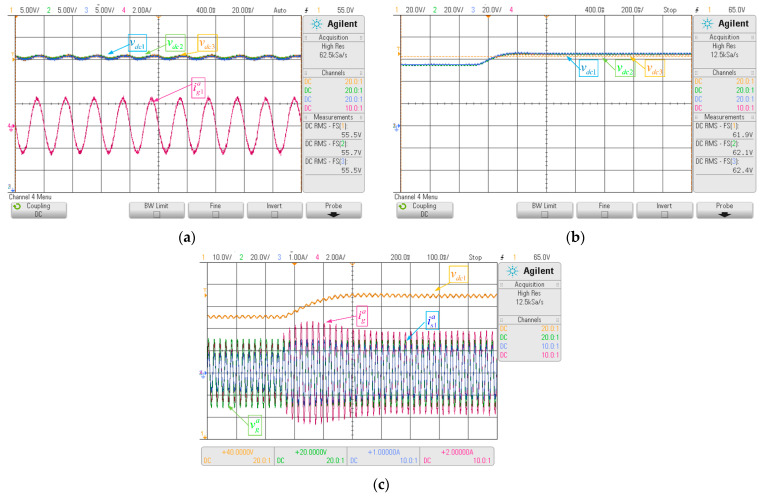
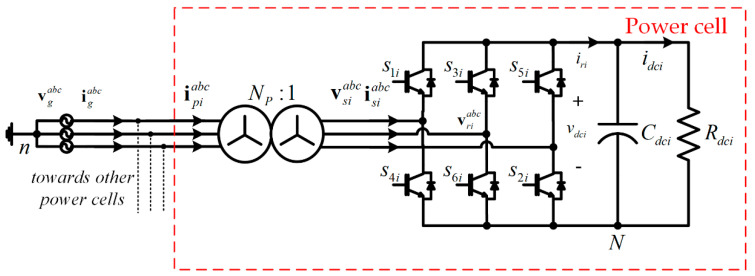
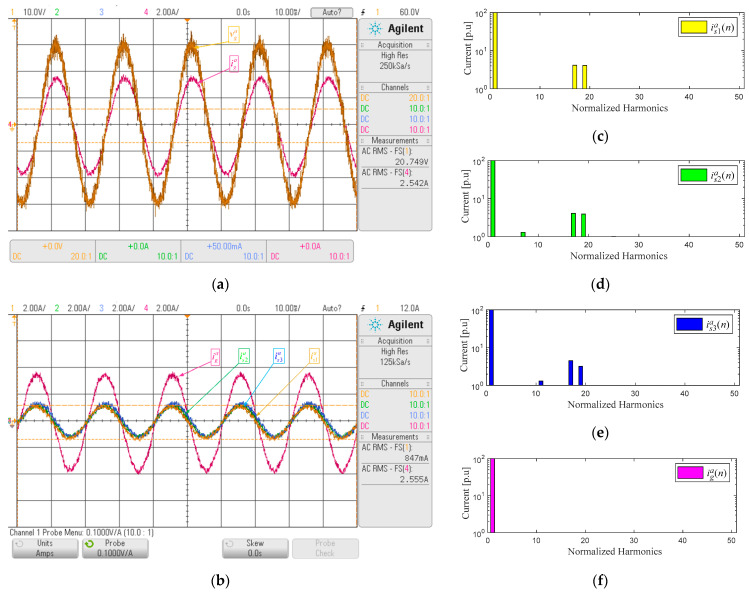
The use of controlled power converters has been extended for high power applications, stacking off-the-shelve semiconductors, and allowing the implementation of, among others, AC drives for medium voltages of 2.3 kV to 13.8 kV. For AC drives based on power cells assembled with three-phase diode rectifiers and cascaded H-bridge inverters, a sophisticated input multipulse transformer is required to reduce the grid voltage, provide isolation among the power cells, and compensate for low-frequency current harmonics generated by the diode-based rectifiers. However, this input multipulse transformer is bulky, heavy, and expensive and must be designed according to the number of power cells, not allowing total modularity of the AC drives based on cascade H-bridges. This study proposes and evaluates a control strategy based on a finite control set-model predictive control that emulates the harmonic cancellation performed by an input multipulse transformer in a cascade H-bridge topology. Hence, the proposed method requires conventional input transformers and replaces the three-phase diode rectifiers. As a result, greater modularity than the conventional multicell converter and improved AC overall input current with a THD as low as 2% with a unitary displacement power factor are achieved. In this case, each power cell manages its own DC voltage using a nonlinear control strategy, ensuring stable system operation for passive and regenerative loads. The experimental tests demonstrated the correct performance of the proposed scheme.
可控功率变换器的应用已扩展到高功率领域,通过堆叠现成的半导体器件,实现了多种应用,其中包括用于2.3 kV至13.8 kV中压的交流驱动器。对于基于由三相二极管整流器和级联H桥逆变器组装而成的功率单元的交流驱动器,需要一个复杂的输入多脉冲变压器来降低电网电压、在功率单元之间提供隔离,并补偿基于二极管的整流器产生的低频电流谐波。然而,这种输入多脉冲变压器体积庞大、重量较重且成本高昂,并且必须根据功率单元的数量进行设计,这使得基于级联H桥的交流驱动器无法实现完全模块化。本研究提出并评估了一种基于有限控制集模型预测控制的控制策略,该策略可模拟级联H桥拓扑中输入多脉冲变压器所执行的谐波消除功能。因此,所提出的方法只需传统的输入变压器,并取代了三相二极管整流器。结果,实现了比传统多单元变换器更高的模块化,且交流总输入电流得到改善,总谐波失真低至2%,位移功率因数为单位值。在这种情况下,每个功率单元使用非线性控制策略来管理自身的直流电压,确保系统对于无源和再生负载都能稳定运行。实验测试证明了所提方案的正确性能。