Cleirec Grégoire, Desmier Esther, Lacatus Cristina, Lesgourgues Simon, Braun Anais, Peloso Claire, Obadia Chanaëlle
Addiction Support and Prevention Center 110 Les Halles, Groupe SOS Solidarités, Paris, France.
Addiction Department of Hôpital suburbain du Bouscat, Le Bouscat, France.
Front Psychiatry. 2022 May 24;13:899221. doi: 10.3389/fpsyt.2022.899221. eCollection 2022.
Cannabidiol (CBD), the second most prevalent cannabinoid found in cannabis, is considered to be safe for use. Studies suggest that CBD may be of benefit in treating cannabis use disorder (CUD). In clinical practice, CBD is already being used by patients who are trying to reduce or stop their cannabis consumption. The aim of this study was to assess the potential of CBD inhaled using a vaping device in CUD.
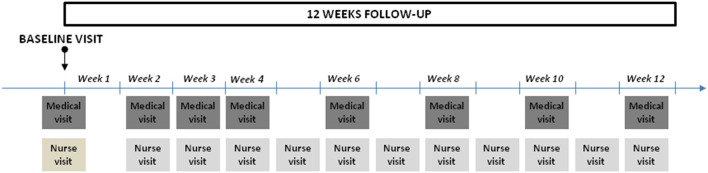
This was an exploratory, observational, non-randomized, open-label study conducted at an Addiction Support and Prevention Center in Paris. The primary endpoint was a reduction of at least 50% in the reported number of joints consumed daily at 12 weeks. The participants were given an electronic cigarette along with liquid containing CBD. Nicotine at 6 mg/ml could be added in case of co-consumption of tobacco. They were assessed once a week and the CBD liquid dose was adjusted based on withdrawal signs and cravings (33.3, 66.6 or 100 mg/mL).
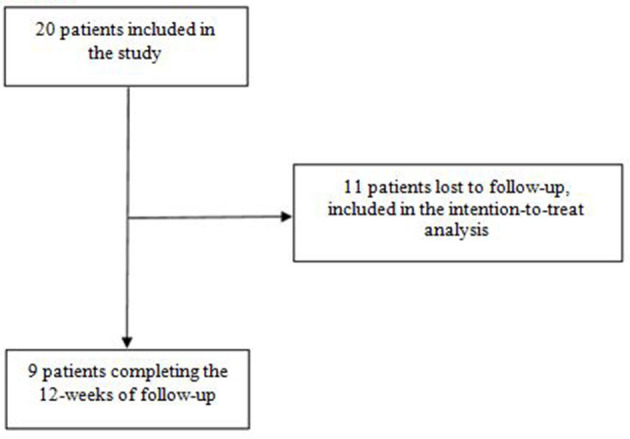
Between November 2020 and May 2021, 20 patients were included and 9 (45%) completed the follow-up. All of the participants used tobacco, and were provided a liquid with nicotine. At 12 weeks, 6 patients (30%) had reduced their daily cannabis consumption by at least 50%. The mean number of joints per day was 3, compared to 6.7 at baseline. The mean amount of CBD inhaled per day was 215.8 mg. No symptomatic treatment for cannabis withdrawal was prescribed. Mild adverse effects attributable to CBD and not requiring the prescription of any medicines were reported in a few patients.
This research provides evidence in favor of the use of CBD in CUD. It also highlights the benefits of inhalation as the route of CBD administration in patients who use cannabis: inhalation can allow users to self-titrate CBD based on their withdrawal symptoms and cravings. This study illustrates the interest of proposing an addictological intervention targeting at the same time tobacco and cannabis dependence in users who are co-consumers. A double-blind, randomized, placebo-controlled clinical trial is needed to assess the efficacy of inhaled CBD in CUD.Study registration number (IDRCB) issued by the ANSM (-French National Agency for Medicines and Health Products Safety): 2018-A03256-49. This study received IEC approval from the CPP Sud-Ouest et Outre-Mer 1 (South-West and Overseas 1 IEC) on 15/06/2020 (CPP 1-19-041/ID 3012).
大麻二酚(CBD)是大麻中含量第二高的大麻素,被认为使用安全。研究表明,CBD可能有助于治疗大麻使用障碍(CUD)。在临床实践中,试图减少或停止大麻消费的患者已经在使用CBD。本研究的目的是评估使用雾化装置吸入CBD治疗CUD的潜力。
这是一项在巴黎一家成瘾支持与预防中心进行的探索性、观察性、非随机、开放标签研究。主要终点是在12周时报告的每日吸食大麻烟卷数量减少至少50%。参与者被给予一支电子烟以及含有CBD的液体。如果同时吸食烟草,可添加6mg/ml的尼古丁。每周对他们进行一次评估,并根据戒断症状和渴望程度调整CBD液体剂量(33.3、66.6或100mg/mL)。
在2020年11月至2021年5月期间,纳入了20名患者,9名(45%)完成了随访。所有参与者都吸食烟草,并被提供了含尼古丁的液体。在12周时,6名患者(30%)的每日大麻消费量减少了至少50%。每天吸食大麻烟卷的平均数为3支,而基线时为6.7支。每天吸入的CBD平均量为215.8mg。未开具任何用于大麻戒断的对症治疗药物。少数患者报告了归因于CBD的轻度不良反应,且无需开具任何药物。
本研究为CBD用于治疗CUD提供了证据。它还强调了吸入作为CBD给药途径对吸食大麻患者的益处:吸入可使使用者根据自身的戒断症状和渴望程度自行调整CBD剂量。本研究表明了针对同时存在烟草和大麻依赖的使用者提出成瘾学干预措施的意义。需要进行一项双盲、随机、安慰剂对照的临床试验来评估吸入CBD治疗CUD的疗效。法国国家药品与健康产品安全局(ANSM)颁发的研究注册号(IDRCB):2018 - A03256 - 49。本研究于2020年6月15日获得西南及海外第一地区伦理委员会(CPP Sud - Ouest et Outre - Mer 1)的IEC批准(CPP 1 - 19 - 041/ID 3012)。