• 文献检索
  • 文档翻译
  • 深度研究
  • 学术资讯
  • Suppr Zotero 插件Zotero 插件
  • 邀请有礼
  • 套餐&价格
  • 历史记录
应用&插件
Suppr Zotero 插件Zotero 插件浏览器插件Mac 客户端Windows 客户端微信小程序
定价
高级版会员购买积分包购买API积分包
服务
文献检索文档翻译深度研究API 文档MCP 服务
关于我们
关于 Suppr公司介绍联系我们用户协议隐私条款
关注我们

Suppr 超能文献

核心技术专利:CN118964589B侵权必究
粤ICP备2023148730 号-1Suppr @ 2026

文献检索

告别复杂PubMed语法,用中文像聊天一样搜索,搜遍4000万医学文献。AI智能推荐,让科研检索更轻松。

立即免费搜索

文件翻译

保留排版,准确专业,支持PDF/Word/PPT等文件格式,支持 12+语言互译。

免费翻译文档

深度研究

AI帮你快速写综述,25分钟生成高质量综述,智能提取关键信息,辅助科研写作。

立即免费体验

基于健康技能的中国成年人分类及其在智能家居中使用情况的分析:一项全国性横断面调查。

Chinese adult segmentation according to health skills and analysis of their use for smart home: a cross-sectional national survey.

机构信息

Southern Medical University, No.1023-1063 Shatai Road, Baiyun District, Guangzhou City, Guangdong Province, China.

School of Public Health, Peking University, No.38 Xueyuan Road, Haidian District, Beijing City, China.

出版信息

BMC Health Serv Res. 2022 Jun 10;22(1):760. doi: 10.1186/s12913-022-08126-8.

DOI:10.1186/s12913-022-08126-8
PMID:35689205
原文链接:https://pmc.ncbi.nlm.nih.gov/articles/PMC9184334/
Abstract

BACKGROUND

Digital health has become a heated topic today and smart homes have received much attention as an important area of digital health. Smart home is a device that enables automation and remote control in a home environment via the internet. However, most of the existing studies have focused on discussing the impact of smart home on people. Only few studies have focused on relationship between health skills and use of smart home.

AIMS

To analyze the health skills of Chinese adults and segment them to compare and analyze the use of smart home for each group.

METHODS

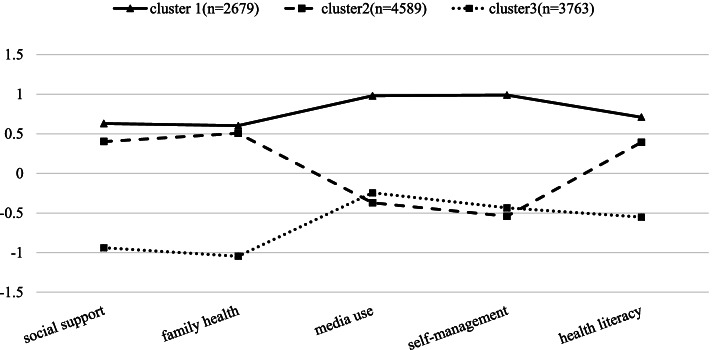
We used data from 11,031 participants aged 18 and above. The population was clustered based on five health skills factors: perceived social support, family health, health literacy, media use, and chronic diseases self-behavioral management. A total of 23 smart homes were categorized into three sub-categories based on their functions: entertainment smart home, functional smart home, and health smart home. We analyzed demographic characteristics and utilization rate of smart home across different cluster. Each groups' features and the differences in their needs for smart home functions were compared and analyzed.

RESULTS

As a result of the survey on health skills, three groups with different characteristics were clustered: good health skills, middle health skills, and poor health skills. The utilization rate of smart home was the highest was good health skills group (total smart home: 92.7%; entertainment smart home: 61.1%, functional smart home: 77.4%, and health smart home: 75.3%; P < 0.001). For entertainment smart home, smart TV had the highest utilization rate (good health skills: 45.7%; middle health skills: 43.5%, poor health skills: 33.4%, P < 0.001). For functional smart home, smart washing machine (good health skills: 37.7%, middle health skills: 35.11%, poor health skills: 26.5%; P < 0.001) and smart air conditioner (good health skills: 36.0%, middle health skills: 29.1%, poor health skills: 24.6%) were higher than other of this category. For health smart home, sports bracelet has the highest utilization rate (good health skills: 37.3%, middle health skills: 24.5%, poor health skills: 22.8%).

CONCLUSION

People can be divided into different categories based on health skill profiles, those with good health skills had a better utilization rate of smart home. The government and smart home companies need to focus on people with poor smart home use in various ways to promote their use of smart homes for personal health management.

摘要

背景

如今,数字健康已成为热门话题,智能家居作为数字健康的重要领域备受关注。智能家居是一种通过互联网实现家庭环境自动化和远程控制的设备。然而,现有的大多数研究都集中在讨论智能家居对人们的影响上。只有少数研究关注健康技能与智能家居使用之间的关系。

目的

分析中国成年人的健康技能,并对其进行细分,以比较和分析每个群体对智能家居的使用情况。

方法

我们使用了来自 11031 名 18 岁及以上成年人的数据。根据五个健康技能因素对人群进行聚类:感知社会支持、家庭健康、健康素养、媒体使用和慢性病自我行为管理。总共将 23 种智能家居分为三大类:娱乐智能家居、功能智能家居和健康智能家居。我们分析了不同群体的人口统计学特征和智能家居的利用率。比较和分析了不同群体的特征以及对智能家居功能的不同需求。

结果

通过对健康技能的调查,我们将人群聚类为三个具有不同特征的群体:健康技能良好、中等健康技能和健康技能较差。智能家居的利用率最高的是健康技能良好的群体(总智能家居:92.7%;娱乐智能家居:61.1%,功能智能家居:77.4%,健康智能家居:75.3%;P<0.001)。在娱乐智能家居方面,智能电视的利用率最高(健康技能良好群体:45.7%;中等健康技能群体:43.5%,健康技能较差群体:33.4%;P<0.001)。在功能智能家居方面,智能洗衣机(健康技能良好群体:37.7%,中等健康技能群体:35.11%,健康技能较差群体:26.5%;P<0.001)和智能空调(健康技能良好群体:36.0%,中等健康技能群体:29.1%,健康技能较差群体:24.6%)的利用率高于其他类别。在健康智能家居方面,运动手环的利用率最高(健康技能良好群体:37.3%,中等健康技能群体:24.5%,健康技能较差群体:22.8%)。

结论

可以根据健康技能特征将人群分为不同类别,健康技能较好的人群对智能家居的利用率更高。政府和智能家居公司需要以各种方式关注智能家居使用率较低的人群,以促进他们将智能家居用于个人健康管理。
https://cdn.ncbi.nlm.nih.gov/pmc/blobs/d164/9185986/b578d489d204/12913_2022_8126_Fig1_HTML.jpg

相似文献

1
Chinese adult segmentation according to health skills and analysis of their use for smart home: a cross-sectional national survey.基于健康技能的中国成年人分类及其在智能家居中使用情况的分析:一项全国性横断面调查。
BMC Health Serv Res. 2022 Jun 10;22(1):760. doi: 10.1186/s12913-022-08126-8.
2
Older Adult Segmentation According to Residentially-Based Lifestyles and Analysis of Their Needs for Smart Home Functions.基于居住生活方式的老年人群体细分及其对智能家居功能需求的分析。
Int J Environ Res Public Health. 2020 Nov 16;17(22):8492. doi: 10.3390/ijerph17228492.
3
Exploring the critical quality attributes and models of smart homes.探索智能家居的关键质量属性和模型。
Maturitas. 2015 Dec;82(4):377-86. doi: 10.1016/j.maturitas.2015.07.025. Epub 2015 Aug 1.
4
A study on smart home use intention of elderly consumers based on technology acceptance models.基于技术接受模型的老年消费者智能家居使用意愿研究
PLoS One. 2024 Mar 27;19(3):e0300574. doi: 10.1371/journal.pone.0300574. eCollection 2024.
5
Development of a Smart Home Interface With Older Adults: Multi-Method Co-Design Study.与老年人共同开发智能家居界面:多方法协同设计研究。
JMIR Aging. 2023 Jun 16;6:e44439. doi: 10.2196/44439.
6
Entertainment or Health? Exploring the Internet Usage Patterns of the Urban Poor: A Secondary Analysis of a Randomized Controlled Trial.娱乐还是健康?探索城市贫困人口的互联网使用模式:一项随机对照试验的二次分析
J Med Internet Res. 2016 Mar 3;18(3):e46. doi: 10.2196/jmir.4375.
7
Smart Home-based IoT for Real-time and Secure Remote Health Monitoring of Triage and Priority System using Body Sensors: Multi-driven Systematic Review.基于智能家居的物联网,利用身体传感器实现分诊和优先级系统的实时安全远程健康监测:多驱动系统评价。
J Med Syst. 2019 Jan 15;43(3):42. doi: 10.1007/s10916-019-1158-z.
8
Understanding the influencing factors and mechanism of social compensation for Chinese older adults using social media in the context of smart home: a qualitative analysis.理解中国老年人在智能家居背景下使用社交媒体的社会补偿的影响因素和机制:一项定性分析。
Front Public Health. 2023 Oct 12;11:1174920. doi: 10.3389/fpubh.2023.1174920. eCollection 2023.
9
The Use of Smart Speakers in Care Home Residents: Implementation Study.智能音箱在养老院居民中的使用:实施研究。
J Med Internet Res. 2021 Dec 20;23(12):e26767. doi: 10.2196/26767.
10
The expectations and acceptability of a smart nursing home model among Chinese elderly people: A mixed methods study protocol.《中国老年人对智能养老院模式的期望和可接受性的混合方法研究方案》
PLoS One. 2021 Aug 23;16(8):e0255865. doi: 10.1371/journal.pone.0255865. eCollection 2021.

引用本文的文献

1
Enhancing elderly care with smart homes: A comparative study of use and payment willingness.利用智能家居提升老年护理:使用情况与支付意愿的比较研究
Digit Health. 2025 Sep 8;11:20552076251374223. doi: 10.1177/20552076251374223. eCollection 2025 Jan-Dec.
2
Balancing act: exploring the impact of work-family conflict on anxiety among working parents with family health as a mediator.平衡之举:以家庭健康为中介,探究工作与家庭冲突对在职父母焦虑情绪的影响。
Front Psychol. 2025 Jul 18;16:1531091. doi: 10.3389/fpsyg.2025.1531091. eCollection 2025.
3
Association of smoking status and nicotine dependence with multi-morbidity in China: A nationally representative crosssectional study.

本文引用的文献

1
Using Wearables and Machine Learning to Enable Personalized Lifestyle Recommendations to Improve Blood Pressure.利用可穿戴设备和机器学习为基础,提供个性化的生活方式建议,以改善血压状况。
IEEE J Transl Eng Health Med. 2021 Jul 19;9:2700513. doi: 10.1109/JTEHM.2021.3098173. eCollection 2021.
2
Providing mainstream smart home technology as assistive technology for persons with disabilities: a qualitative study with professionals.为残疾人士提供主流智能家居技术作为辅助技术:一项针对专业人士的定性研究。
Disabil Rehabil Assist Technol. 2023 Oct;18(7):1192-1199. doi: 10.1080/17483107.2021.1998673. Epub 2021 Nov 9.
3
Factors influencing community-dwelling older adults' readiness to adopt smart home technology: A qualitative exploratory study.
中国吸烟状况和尼古丁依赖与多种疾病并存的关联:一项具有全国代表性的横断面研究。
Tob Induc Dis. 2023 Jun 16;21:81. doi: 10.18332/tid/166110. eCollection 2023.
影响社区居住的老年人采用智能家居技术准备度的因素:一项定性探索性研究。
J Adv Nurs. 2021 Dec;77(12):4847-4861. doi: 10.1111/jan.14996. Epub 2021 Sep 3.
4
Real wage growth in the U.S. health workforce and the narrowing of the gender pay gap.美国卫生劳动力的实际工资增长与性别薪酬差距的缩小。
Hum Resour Health. 2021 Aug 28;19(1):105. doi: 10.1186/s12960-021-00647-3.
5
Disparities in digital access among American rural and urban households and implications for telemedicine-based services.美国农村和城市家庭在数字接入方面的差距及其对远程医疗服务的影响。
J Rural Health. 2022 Jun;38(3):512-518. doi: 10.1111/jrh.12614. Epub 2021 Aug 6.
6
Disparities in Technology and Broadband Internet Access Across Rurality: Implications for Health and Education.城乡间技术和宽带互联网接入的差距:对健康和教育的影响。
Fam Community Health. 2021;44(4):257-265. doi: 10.1097/FCH.0000000000000306.
7
Safely and Actively Aging in Place: Older Adults' Attitudes and Intentions Toward Smart Home Technologies.安全且积极地居家养老:老年人对智能家居技术的态度与意向
Gerontol Geriatr Med. 2021 May 22;7:23337214211017340. doi: 10.1177/23337214211017340. eCollection 2021 Jan-Dec.
8
Learning-Enabled Robotic Assistive Support: Understanding Older Adult Opinions and Comparing Them to Younger Adult Opinions.支持学习的机器人辅助:了解老年人的意见并与年轻人的意见进行比较。
Gerontechnology. 2020 Jul 28;19(3). doi: 10.4017/gt.2020.19.003.07.
9
Smart speaker devices can improve speech intelligibility in adults with intellectual disability.智能音箱设备可以提高智障成年人的言语可懂度。
Int J Lang Commun Disord. 2021 May;56(3):583-593. doi: 10.1111/1460-6984.12615. Epub 2021 Mar 27.
10
Understanding Older Adults' Perception and Usage of Indoor Lighting in Independent Senior Living.了解独立老年人对室内照明的感知和使用。
HERD. 2021 Jul;14(3):215-228. doi: 10.1177/1937586720988616. Epub 2021 Jan 29.