Channing Division of Network Medicine, Brigham and Women's Hospital and Harvard Medical School, Boston, MA, USA.
Department of Mathematics, The Pennsylvania State University, University Park, State College, PA, USA.
Nutr J. 2022 Jun 10;21(1):38. doi: 10.1186/s12937-022-00793-x.
Multivariable linear regression (MLR) models were previously used to predict serum pyridoxal 5'-phosphate (PLP) concentration, the active coenzyme form of vitamin B6, but with low predictability. We developed a deep learning algorithm (DLA) to predict serum PLP based on dietary intake, dietary supplements, and other potential predictors.
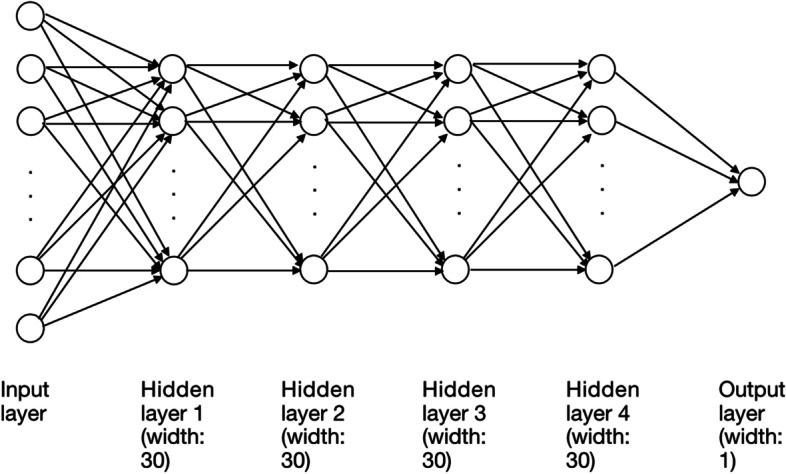
This cross-sectional analysis included 3778 participants aged ≥20 years in the National Health and Nutrition Examination Survey (NHANES) 2007-2010, with completed information on studied variables. Dietary intake and supplement use were assessed with two 24-hour dietary recalls. We included potential predictors for serum PLP concentration in the models, including dietary intake and supplement use, sociodemographic variables (age, sex, race-ethnicity, income, and education), lifestyle variables (smoking status and physical activity level), body mass index, medication use, blood pressure, blood lipids, glucose, and C-reactive protein. We used a 4-hidden-layer deep neural network to predict PLP concentration, with 3401 (90%) participants for training and 377 (10%) participants for test using random sampling. We obtained outputs after sending the features of the training set and conducting forward propagation. We then constructed a loss function based on the distances between outputs and labels and optimized it to find good parameters to fit the training set. We also developed a prediction model using MLR.
After training for 10 steps with the Adam optimization method, the highest R was 0.47 for the DLA and 0.18 for the MLR model in the test dataset. Similar results were observed in the sensitivity analyses after we excluded supplement-users or included only variables identified by stepwise regression models.
DLA achieved superior performance in predicting serum PLP concentration, relative to the traditional MLR model, using a nationally representative sample. As preliminary data analyses, the current study shed light on the use of DLA to understand a modifiable lifestyle factor.
先前使用多元线性回归(MLR)模型来预测血清吡哆醛 5'-磷酸(PLP)浓度,即维生素 B6 的活性辅酶形式,但预测能力较低。我们开发了一种深度学习算法(DLA),基于膳食摄入量、膳食补充剂和其他潜在预测因素来预测血清 PLP。
这项横断面分析纳入了 2007-2010 年国家健康和营养检查调查(NHANES)中年龄≥20 岁的 3778 名参与者,这些参与者完成了研究变量的信息。膳食摄入量和补充剂使用情况通过两次 24 小时膳食回顾进行评估。我们将血清 PLP 浓度的潜在预测因素纳入模型中,包括膳食摄入量和补充剂使用情况、社会人口统计学变量(年龄、性别、种族-民族、收入和教育程度)、生活方式变量(吸烟状况和身体活动水平)、体重指数、药物使用情况、血压、血脂、血糖和 C 反应蛋白。我们使用 4 隐藏层深度神经网络来预测 PLP 浓度,使用 3401(90%)名参与者进行训练,使用随机抽样的 377(10%)名参与者进行测试。我们在发送训练集的特征并进行前向传播后获得输出。然后,我们根据输出和标签之间的距离构建损失函数,并对其进行优化,以找到适合训练集的良好参数。我们还使用 MLR 开发了一个预测模型。
使用 Adam 优化方法进行 10 步训练后,DLA 在测试数据集上的最高 R 值为 0.47,而 MLR 模型的最高 R 值为 0.18。在排除补充剂使用者或仅包含逐步回归模型确定的变量的敏感性分析中,也观察到了类似的结果。
与传统的 MLR 模型相比,DLA 利用具有全国代表性的样本,在预测血清 PLP 浓度方面表现出优异的性能。作为初步数据分析,本研究为使用 DLA 来了解可改变的生活方式因素提供了思路。