School of Chemistry and Molecular Biosciences, The University of Queensland, Brisbane, QLD, 4072, Australia.
Faculty of Food Science, Engineering and Biotechnology, Technical University of Ambato, Tungurahua, Ambato, 180210, Ecuador.
Nat Commun. 2022 Jun 11;13(1):3368. doi: 10.1038/s41467-022-31023-x.
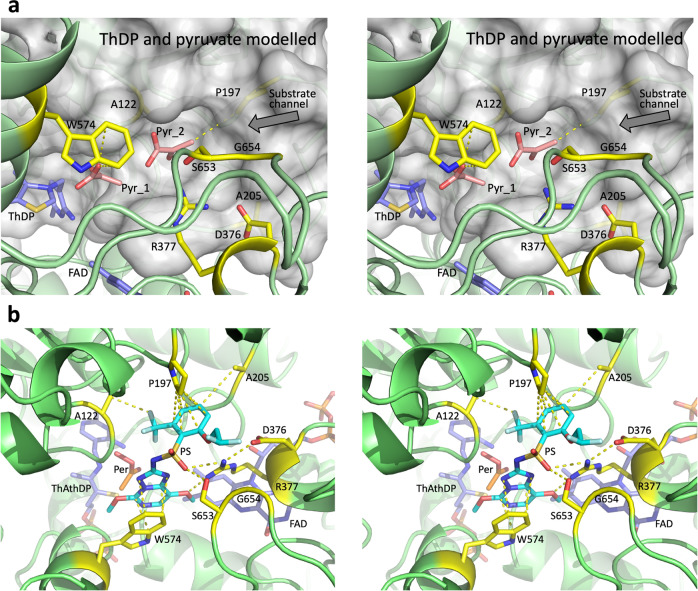
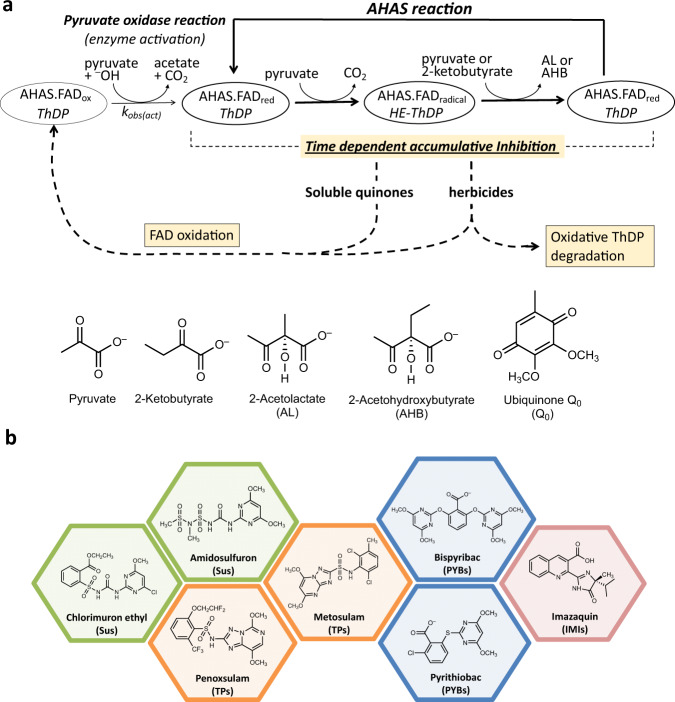
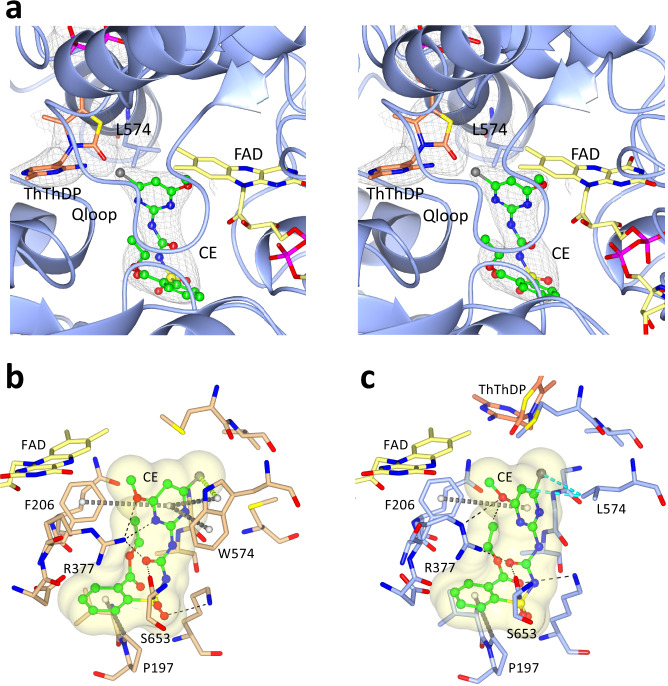
Acetohydroxyacid synthase (AHAS) is the target for more than 50 commercial herbicides; first applied to crops in the 1980s. Since then, 197 site-of-action resistance isolates have been identified in weeds, with mutations at P197 and W574 the most prevalent. Consequently, AHAS is at risk of not being a useful target for crop protection. To develop new herbicides, a functional understanding to explain the effect these mutations have on activity is required. Here, we show that these mutations can have two effects (i) to reduce binding affinity of the herbicides and (ii) to abolish time-dependent accumulative inhibition, critical to the exceptional effectiveness of this class of herbicide. In the two mutants, conformational changes occur resulting in a loss of accumulative inhibition by most herbicides. However, bispyribac, a bulky herbicide is able to counteract the detrimental effects of these mutations, explaining why no site-of-action resistance has yet been reported for this herbicide.
乙酰羟酸合酶(AHAS)是 50 多种商业除草剂的靶标;该酶于 20 世纪 80 年代首次应用于作物。自那时以来,杂草中已鉴定出 197 个作用部位抗性分离株,其中 P197 和 W574 的突变最为普遍。因此,AHAS 可能无法成为作物保护的有用靶标。为了开发新的除草剂,需要对这些突变如何影响活性有一个功能上的理解。在这里,我们表明这些突变可以产生两种影响:(i)降低除草剂的结合亲和力;(ii)消除对这类除草剂的非凡功效至关重要的时变累积抑制。在这两种突变体中,构象发生变化,导致大多数除草剂的累积抑制丧失。然而,双吡啶草酯是一种大体积的除草剂,能够抵消这些突变的不利影响,这解释了为什么迄今为止尚未报道该除草剂的作用部位抗性。