Yang Jeyul, Kim Yong Hwy, Phi Ji Hoon, Kim Seung-Ki, Wang Kyu-Chang
Neuro-Oncology Clinic, National Cancer Center, Goyang, South Korea.
Department of Neurosurgery, Seoul National University Hospital, Seoul National University College of Medicine, Seoul, South Korea.
Front Oncol. 2022 May 27;12:769576. doi: 10.3389/fonc.2022.769576. eCollection 2022.
Advances in surgical techniques based on in-depth anatomical knowledge of the skull base have broadened the indications for endoscopic skull base surgery (ESS) with the advantage of wide and direct surgical exposure while minimizing invasiveness. However, the low incidence of the indicated diseases and narrow surgical corridors in children have limited the popularization of ESS. In addition, surgical complications and preventive interventions are not yet well known. Therefore, we retrospectively investigated the complications and prevention methods of ESS in children with a comprehensive review.
We retrospectively analyzed the medical records of pediatric patients who underwent ESS for sellar and parasellar tumors at Seoul National University Children's Hospital from July 2010 to December 2020. Visual and endocrine status, extent of resection, complications, and recurrences were investigated depending on the pathology of the tumor. In addition, a comprehensive literature review regarding the complications of pediatric ESS was performed.
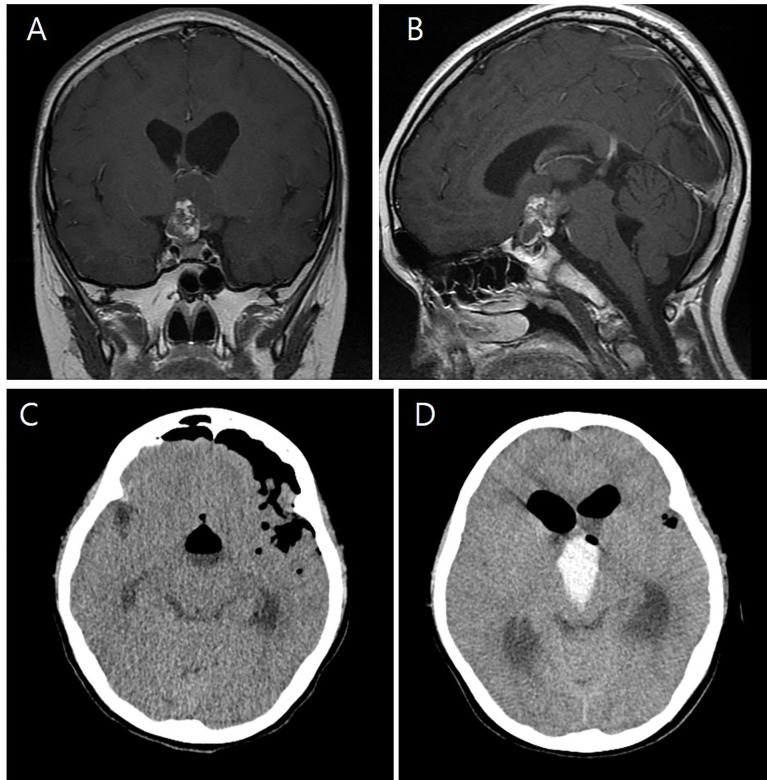
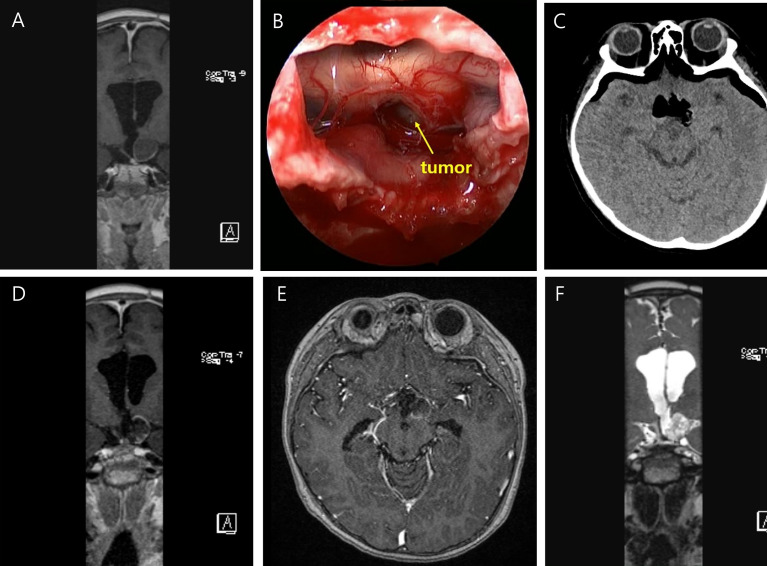
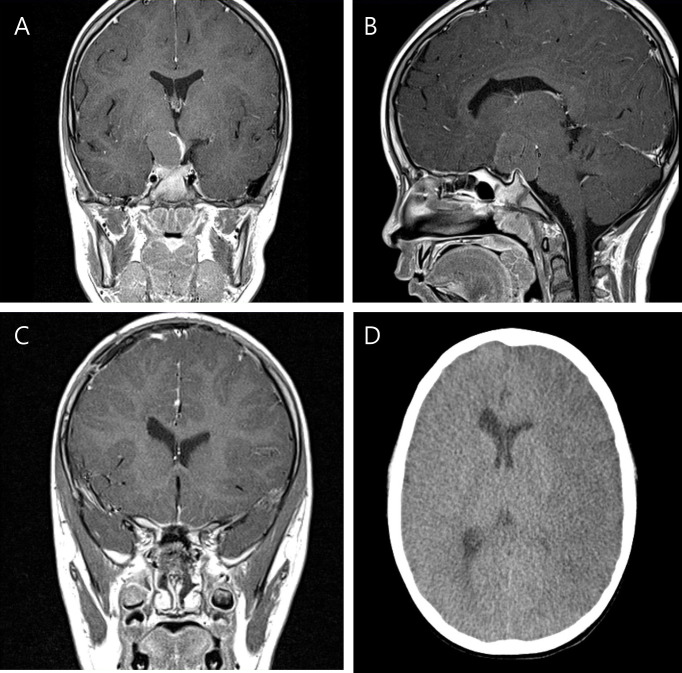
A total of 98 patients were enrolled. The median age of the patients was 12 years, and 52 patients were male. Preoperative visual disturbance was found in 53 patients, anterior pituitary function deficit in 69, and diabetes insipidus in 32. Gross total resection was attempted in 67 patients and achieved in 62 (93%). Biopsy and cyst fenestration were the goals of surgery in 26 patients, and all were achieved as planned. Regarding outcomes, visual disturbance worsened in two patients (2%), endocrine status was aggravated in 34 (35%) patients, and new-onset diabetes insipidus occurred in 27 (41%) patients. The overall surgical complication rate (other than aggravation of visual or endocrine status) was 17%. Postoperative meningitis (12%) was the most common complication, followed by cerebrospinal fluid leakage (2%), vasospasm, hemorrhage and infarction. By pathological diagnosis, craniopharyngioma had the highest complication rate of 29%. All but one patient with postoperative hemorrhage showed no permanent deficits.
ESS in children is feasible and relatively safe. More attention and different postoperative management protocols are required in children to avoid complications, especially in craniopharyngiomas. However, the complications can be mostly managed conservatively without permanent neurologic deficits.
基于对头颅底深入解剖学知识的手术技术进步拓宽了内镜颅底手术(ESS)的适应证范围,其优点是手术暴露广泛且直接,同时将侵袭性降至最低。然而,儿童中特定疾病的发病率低以及手术通道狭窄限制了ESS的普及。此外,手术并发症及预防干预措施尚不为人熟知。因此,我们进行了一项全面回顾,对儿童ESS的并发症及预防方法进行了回顾性研究。
我们回顾性分析了2010年7月至2020年12月在首尔国立大学儿童医院接受ESS治疗鞍区和鞍旁肿瘤的儿科患者的病历。根据肿瘤的病理情况,对视力和内分泌状况、切除范围、并发症及复发情况进行了调查。此外,还对儿科ESS并发症进行了全面的文献综述。
共纳入98例患者。患者的中位年龄为12岁,男性52例。术前53例患者存在视力障碍,69例存在垂体前叶功能减退,32例存在尿崩症。67例患者尝试进行全切除,62例(93%)成功。26例患者的手术目标为活检和囊肿开窗,均按计划完成。关于手术结果,2例患者(2%)视力障碍加重,34例(35%)患者内分泌状况恶化,27例(41%)患者出现新发尿崩症。总体手术并发症发生率(不包括视力或内分泌状况加重)为17%。术后脑膜炎(12%)是最常见的并发症,其次是脑脊液漏(2%)、血管痉挛、出血和梗死。根据病理诊断,颅咽管瘤的并发症发生率最高,为29%。除1例术后出血患者外,其余患者均未出现永久性神经功能缺损。
儿童ESS是可行且相对安全的。儿童需要更多关注和不同的术后管理方案以避免并发症,尤其是颅咽管瘤。然而,大多数并发症可以通过保守治疗处理,不会导致永久性神经功能缺损。