Zhang Jinsong, Will Taylor Ethan, Bennett Kate, Rayman Margaret P
The State Key Laboratory of Tea Plant Biology and Utilization, School of Tea & Food Science, Anhui Agricultural University, Hefei, China.
Department of Chemistry and Biochemistry, University of North Carolina at Greensboro, Greensboro, NC, USA.
Gondwana Res. 2023 Feb;114:87-92. doi: 10.1016/j.gr.2022.05.017. Epub 2022 Jun 6.
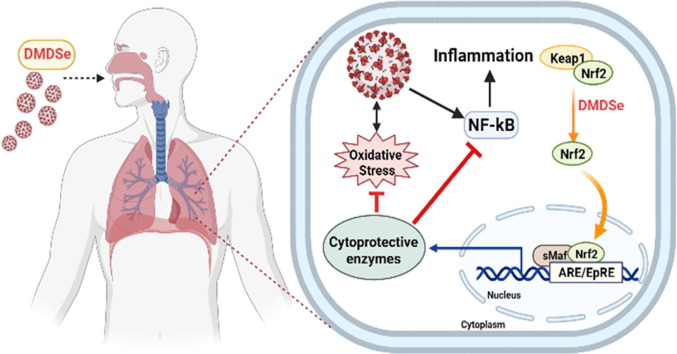
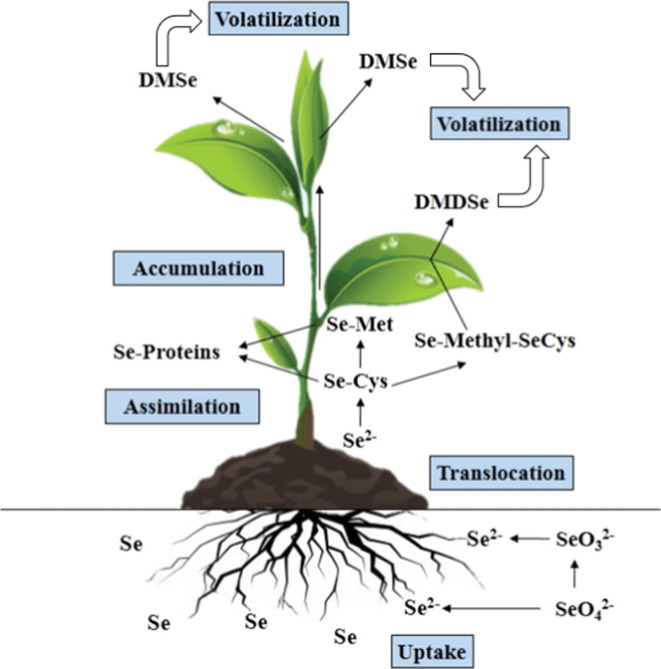
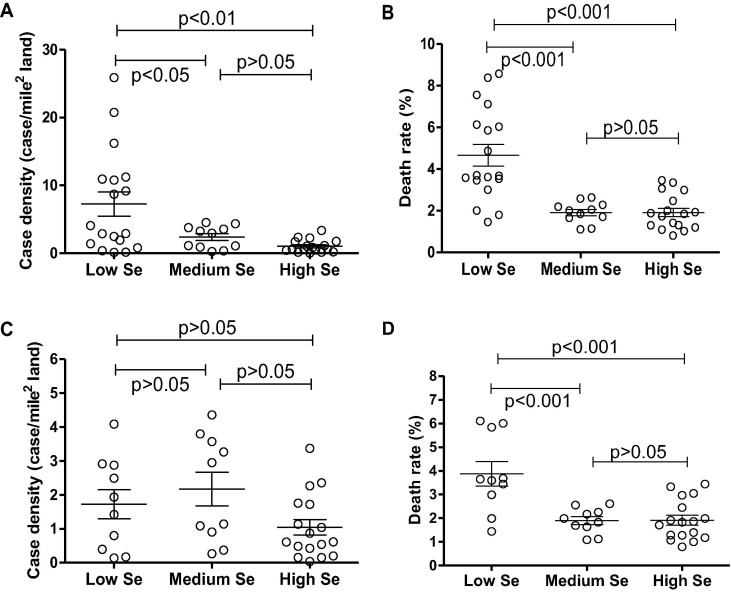
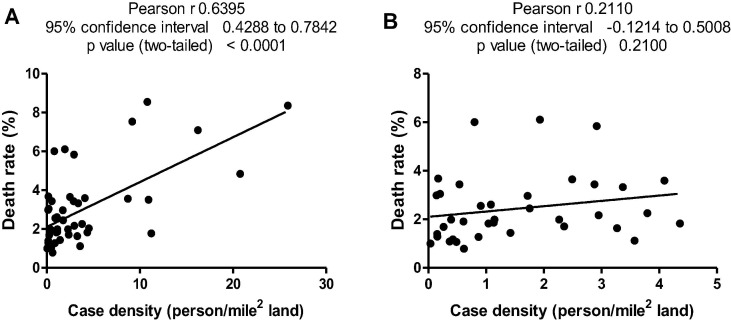
Environmental selenium (Se) distribution in the US is uneven, yet US residents appear to have a relatively narrow range of serum Se concentrations, according to the NHANES III survey data; this is probably due to the modern food-distribution system. In the US, Se concentration in alfalfa leaves has been used as a proxy for regional Se exposure (low, medium or high, corresponding to ≤ 0.05, 0.06-0.10 and ≥ 0.11 ppm respectively). Se in plants, soil, water, and bacteria can be transformed into volatile dimethyldiselenide, which can be inhaled and excreted via the lung. Hence, pulmonary Se exposure may be different in states with different atmospheric Se levels. We found a significantly higher death rate from COVID-19 in low-Se states than in medium-Se or high-Se states, though the case densities of these states were not significantly different. Because inhaled dimethyldiselenide is a potent inducer of nuclear-factor erythroid 2 p45-related factor 2 (Nrf2), exposure to higher atmospheric dimethyldiselenide may increase Nrf2-dependent antioxidant defences, reducing the activation of NFκB by SARS-CoV-2 in the lung, thereby decreasing cytokine activation and COVID-19 severity. Atmospheric dimethyldiselenide may thereby play a role in COVID-19 mortality, although the extent of its involvement is unclear.
根据美国国家健康与营养检查调查(NHANES III)的数据,美国环境中硒(Se)的分布并不均匀,但美国居民的血清硒浓度范围似乎相对较窄;这可能归因于现代食品分配系统。在美国,苜蓿叶中的硒浓度已被用作区域硒暴露(低、中或高,分别对应于≤0.05、0.06 - 0.10和≥0.11 ppm)的指标。植物、土壤、水和细菌中的硒可转化为挥发性二甲基二硒醚,它可通过肺部吸入和排出。因此,在大气硒水平不同的州,肺部硒暴露情况可能有所不同。我们发现,低硒州的COVID - 19死亡率显著高于中硒州或高硒州,尽管这些州的病例密度并无显著差异。由于吸入的二甲基二硒醚是核因子红细胞2 p45相关因子2(Nrf2)的强效诱导剂,暴露于较高浓度的大气二甲基二硒醚可能会增强Nrf2依赖的抗氧化防御,减少SARS-CoV-2在肺部对NFκB的激活,从而降低细胞因子的激活和COVID - 19的严重程度。大气二甲基二硒醚可能因此在COVID - 19死亡率中发挥作用,尽管其参与程度尚不清楚。