Department of Gastroenterology, The Third Xiangya Hospital of Central South University, 410013 Changsha, Hunan, China.
Hunan Provincial Key Laboratory of Uncontrollable Inflammation and Tumour, The Third Xiangya Hospital of Central South University, 410013 Changsha, Hunan, China.
Dis Markers. 2022 Jun 2;2022:8219557. doi: 10.1155/2022/8219557. eCollection 2022.
Crohn's disease (CD) is a chronic nonspecific inflammatory disease with unknown pathogenesis and vascular changes associated with the progression of CD. Many studies have shown that miRNAs participate in the development of CD. However, the effect of miRNAs in circulating exosomes on vascular endothelial cells in CD has not been investigated. Our study is aimed at identifying the differential miRNAs in circulating exosomes in CD and exploring their potential roles in human umbilical vein endothelial cells (HUVECs).
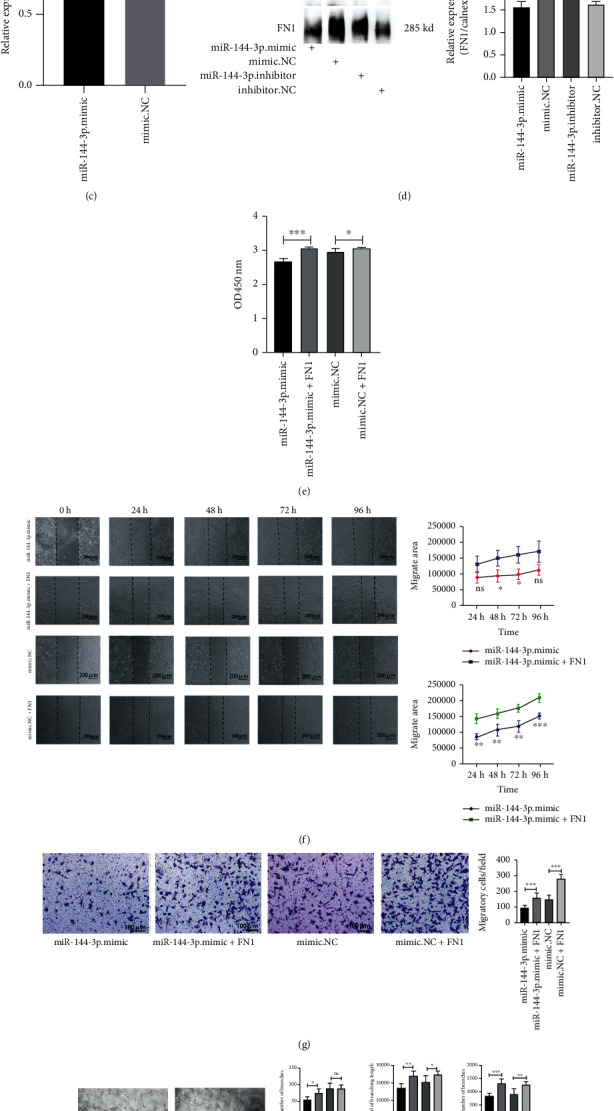
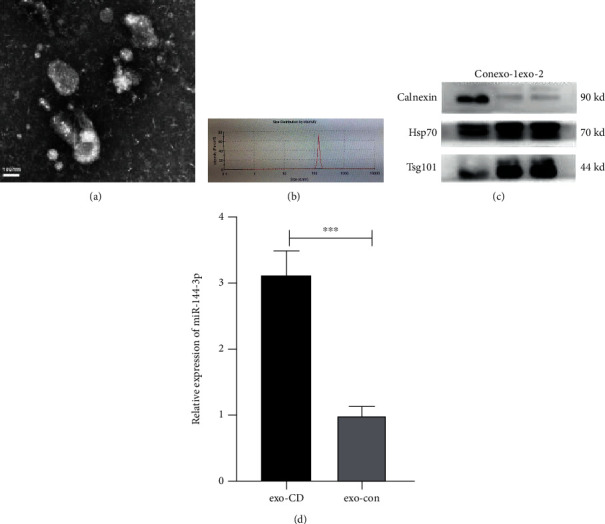
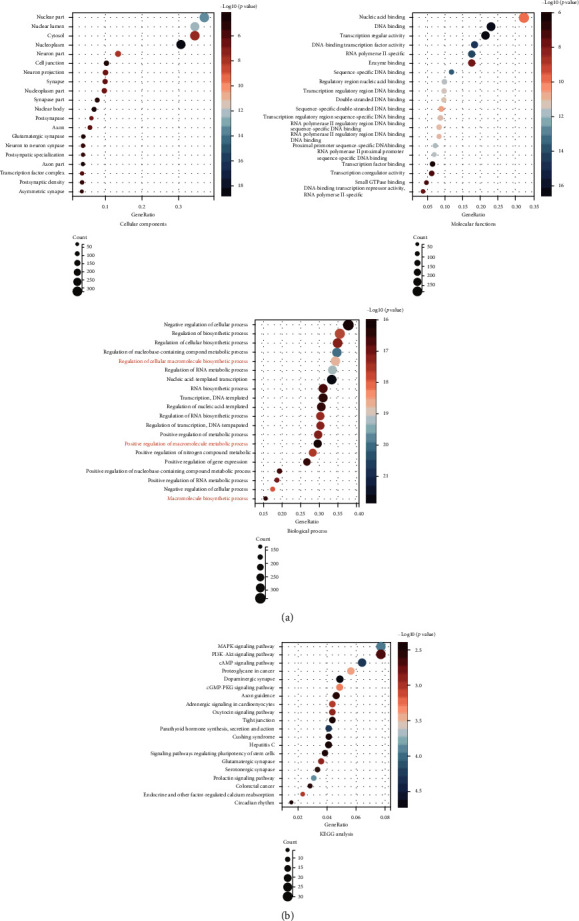
In our study, exosomes were extracted from circulating blood to identify differential miRNAs. After in vitro transfection of HUVECs with miR-144-3p mimics and inhibitors and the corresponding controls, cell counting kit-8, wound healing, Transwell migration, and tube formation assays were performed to study the viability, migration, and angiogenesis of HUVECs. Furthermore, bioinformatics analysis was used to predict miRNA targets. Western blotting was used to determine protein expression. In addition, exogenous supplementation with the fibronectin 1 (FN1) protein rescued the effects of miR-144-3p on changes in cell function in vitro.
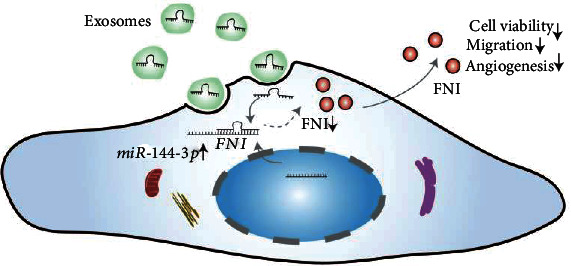
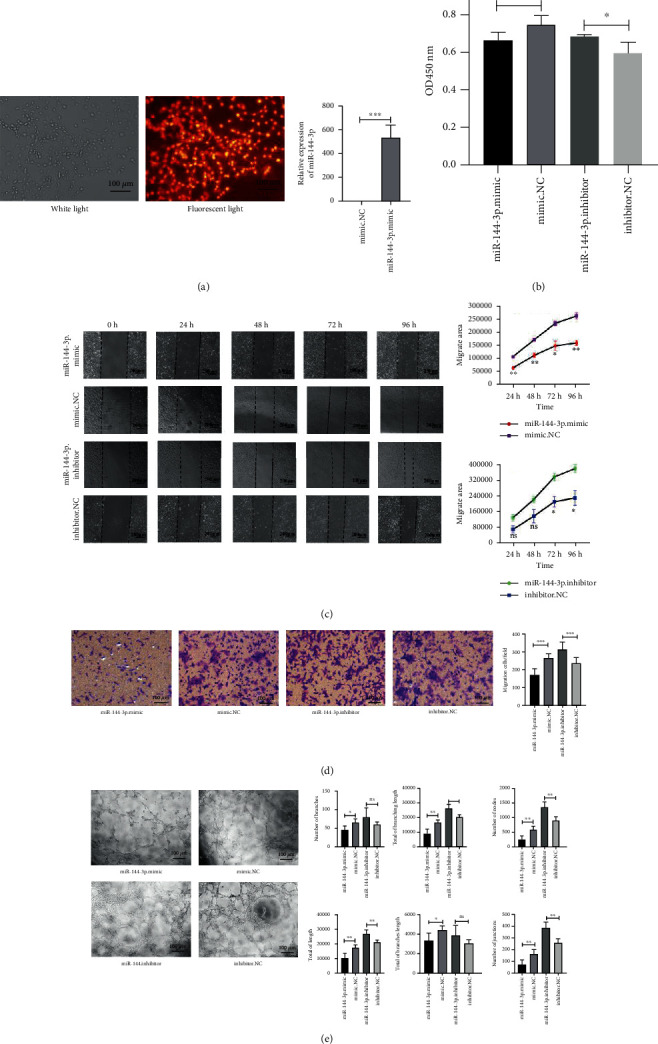
miR-144-3p was significantly increased in circulating exosomes of patients with CD compared with those in the control group. The promotion or inhibition of miR-144-3p correspondingly abolished or accelerated cell viability, migration, and angiogenesis. is a significant target of miR-144-3p, and exogenous FN1 administration improved the function of HUVECs in vitro.
Circulating exosomal miR-144-3p from patients with active CD contributes to vascular endothelial dysfunction by affecting the gene expression of . These findings suggested that circulating exosomal miR-144-3p could be a potential biological marker for CD.
克罗恩病(CD)是一种病因不明的慢性非特异性炎症性疾病,伴有与 CD 进展相关的血管改变。许多研究表明,miRNAs 参与 CD 的发生。然而,CD 患者循环外泌体中的 miRNAs 对血管内皮细胞的影响尚未得到研究。本研究旨在鉴定 CD 患者循环外泌体中的差异 miRNAs,并探索其在人脐静脉内皮细胞(HUVEC)中的潜在作用。
本研究从循环血液中提取外泌体,以鉴定差异 miRNAs。用 miR-144-3p 模拟物和抑制剂及其相应对照物转染 HUVEC 后,通过细胞计数试剂盒-8 法、划痕愈合实验、Transwell 迁移实验和管形成实验研究 HUVEC 的活力、迁移和血管生成。此外,还进行了生物信息学分析以预测 miRNA 靶标。用 Western blot 测定蛋白表达。另外,外源性补充纤维连接蛋白 1(FN1)蛋白可挽救 miR-144-3p 对体外细胞功能变化的影响。
与对照组相比,CD 患者循环外泌体中的 miR-144-3p 明显增加。miR-144-3p 的促进或抑制作用相应地消除或加速了细胞活力、迁移和血管生成。FN1 是 miR-144-3p 的一个显著靶标,外源性 FN1 给药可改善 HUVEC 的体外功能。
来自活动期 CD 患者的循环外泌体 miR-144-3p 通过影响 FN1 的基因表达,促进血管内皮功能障碍。这些发现表明,循环外泌体 miR-144-3p 可能是 CD 的潜在生物标志物。