Chen Yong, Ma Leikai, Ge Zhouling, Pan Yizhao, Xie Lubin
Department of Anesthesiology, The First Affiliated Hospital of Wenzhou Medical University, Wenzhou, China.
Department of Obstetrics and Gynecology, The First Affiliated Hospital of Wenzhou Medical University, Wenzhou, China.
Front Mol Biosci. 2022 May 25;9:888194. doi: 10.3389/fmolb.2022.888194. eCollection 2022.
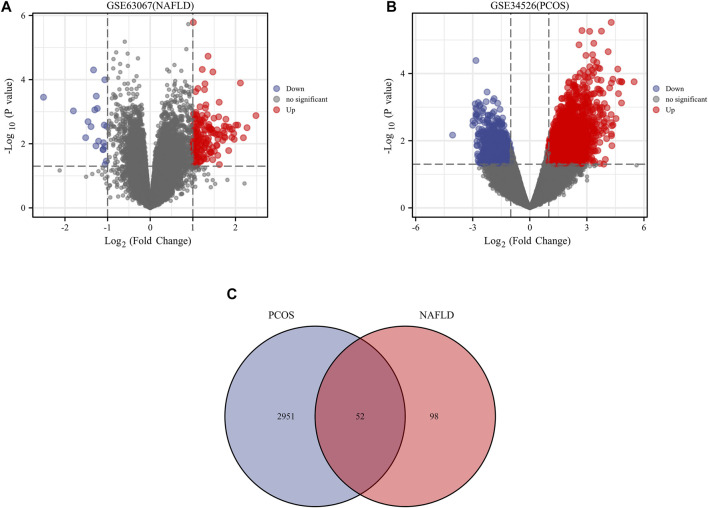
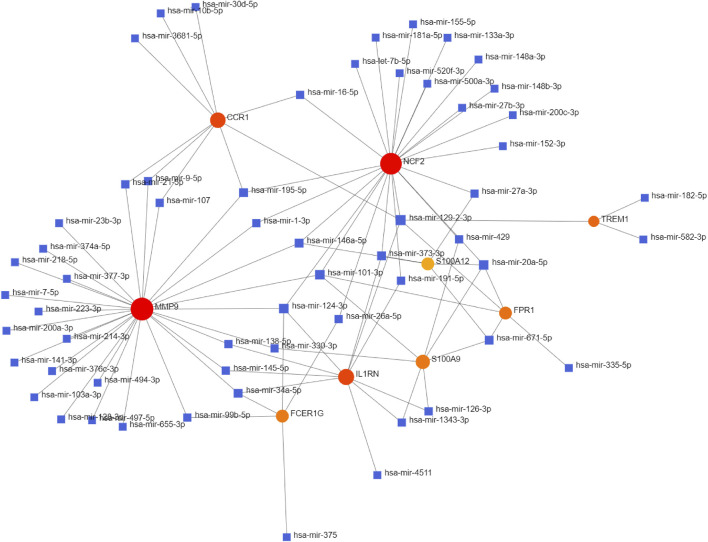
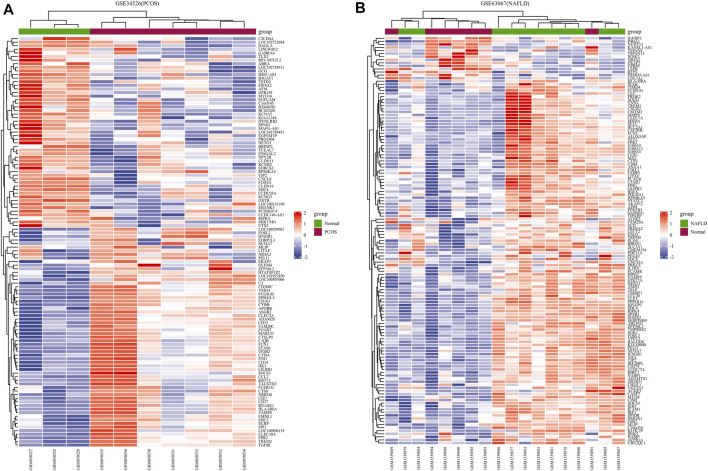
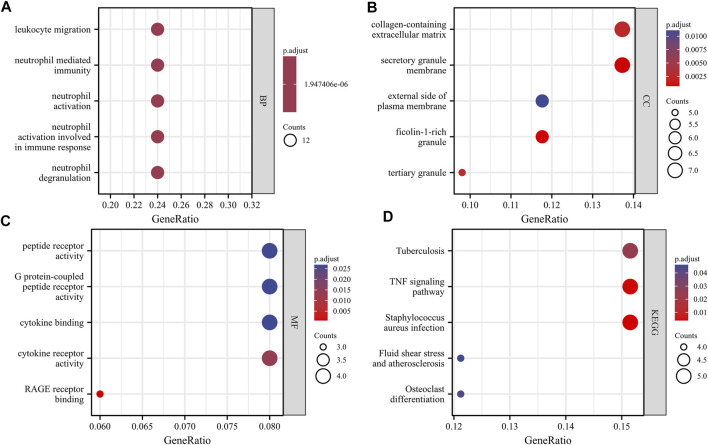
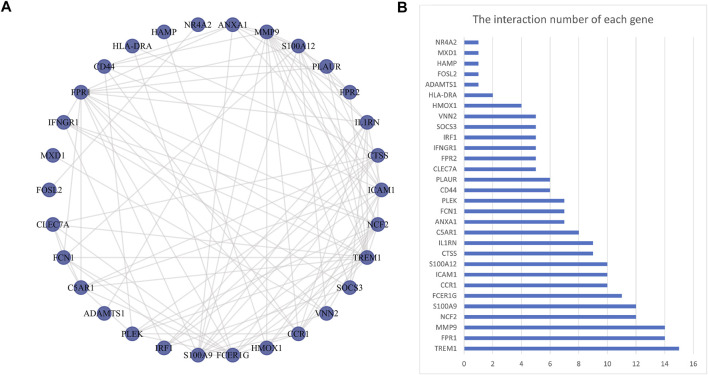
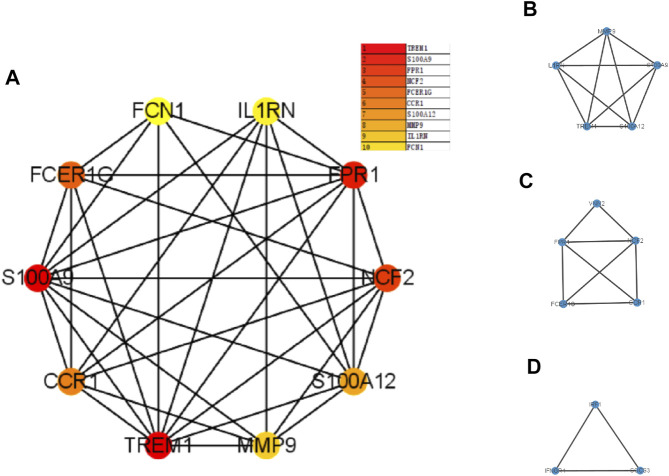
Polycystic ovary syndrome (PCOS) is the most common metabolic and endocrinopathies disorder in women of reproductive age and non-alcoholic fatty liver (NAFLD) is one of the most common liver diseases worldwide. Previous research has indicated potential associations between PCOS and NAFLD, but the underlying pathophysiology is still not clear. The present study aims to identify the differentially expressed genes (DEGs) between PCOS and NAFLD through the bioinformatics method, and explore the associated molecular mechanisms. The microarray datasets GSE34526 and GSE63067 were downloaded from Gene Expression Omnibus (GEO) database and analyzed to obtain the DEGs between PCOS and NAFLD with the GEO2R online tool. Next, the Gene Ontology (GO) and Kyoto Encyclopedia of Genes and Genomes (KEGG) pathway enrichment analysis for the DEGs were performed. Then, the protein-protein interaction (PPI) network was constructed and the hub genes were identified using the STRING database and Cytoscape software. Finally, NetworkAnalyst was used to construct the network between the targeted microRNAs (miRNAs) and the hub genes. A total of 52 genes were identified as DEGs in the above two datasets. GO and KEGG enrichment analysis indicated that DEGs are mostly enriched in immunity and inflammation related pathways. In addition, nine hub genes, including TREM1, S100A9, FPR1, NCF2, FCER1G, CCR1, S100A12, MMP9, and IL1RN were selected from the PPI network by using the cytoHubba and MCODE plug-in. Then, four miRNAs, including miR-20a-5p, miR-129-2-3p, miR-124-3p, and miR-101-3p, were predicted as possibly the key miRNAs through the miRNA-gene network construction. In summary, we firstly constructed a miRNA-gene regulatory network depicting interactions between the predicted miRNA and the hub genes in NAFLD and PCOS, which provides novel insights into the identification of potential biomarkers and valuable therapeutic leads for PCOS and NAFLD.
多囊卵巢综合征(PCOS)是育龄女性中最常见的代谢和内分泌疾病,而非酒精性脂肪性肝病(NAFLD)是全球最常见的肝脏疾病之一。先前的研究表明PCOS与NAFLD之间存在潜在关联,但其潜在的病理生理学仍不清楚。本研究旨在通过生物信息学方法鉴定PCOS和NAFLD之间的差异表达基因(DEG),并探索相关的分子机制。从基因表达综合数据库(GEO)下载微阵列数据集GSE34526和GSE63067,并使用GEO2R在线工具进行分析,以获得PCOS和NAFLD之间的DEG。接下来,对DEG进行基因本体(GO)和京都基因与基因组百科全书(KEGG)通路富集分析。然后,构建蛋白质-蛋白质相互作用(PPI)网络,并使用STRING数据库和Cytoscape软件鉴定枢纽基因。最后,使用NetworkAnalyst构建靶向微小RNA(miRNA)与枢纽基因之间的网络。在上述两个数据集中共鉴定出52个基因作为DEG。GO和KEGG富集分析表明,DEG主要富集于免疫和炎症相关通路。此外,通过使用cytoHubba和MCODE插件从PPI网络中选择了9个枢纽基因,包括触发受体表达于髓细胞上1(TREM1)、钙结合蛋白S100A9、甲酰肽受体1(FPR1)、中性粒细胞胞质因子2(NCF2)、高亲和力IgE受体γ链(FCER1G)、趋化因子受体1(CCR1)、钙结合蛋白S100A12、基质金属蛋白酶9(MMP9)和白细胞介素1受体拮抗剂(IL1RN)。然后,通过构建miRNA-基因网络,预测了4种miRNA,包括miR-20a-5p、miR-129-2-3p、miR-124-3p和miR-101-3p可能是关键miRNA。总之,我们首次构建了一个miRNA-基因调控网络,描绘了预测的miRNA与NAFLD和PCOS中的枢纽基因之间的相互作用,这为鉴定潜在生物标志物以及为PCOS和NAFLD提供有价值的治疗线索提供了新的见解。