Zhang Dongqin, Zheng Nan, Fu Xiaoli, Shi Jian, Zhang Jun
Department of Internal Medicine, Hebei Medical University, Shijiazhuang, China.
Department of Geriatrics, Baoding No. 1 Central Hospital, Baoding, China.
J Thorac Dis. 2022 May;14(5):1651-1662. doi: 10.21037/jtd-22-585.
Acute myocardial infarction (AMI) is one of the leading causes of mortality worldwide. Undesirable myocardial damage may occur during reperfusion of the ischemic myocardium, and this is known as "ischemic reperfusion injury" (IRI). Currently, there are few effective drugs to alleviate IRI. Dl-3-n-butylphthalide (NBP) is recommended for the treatment of acute ischemic stroke in China. This study investigated the effects of NBP on IRI and its underlying mechanisms.
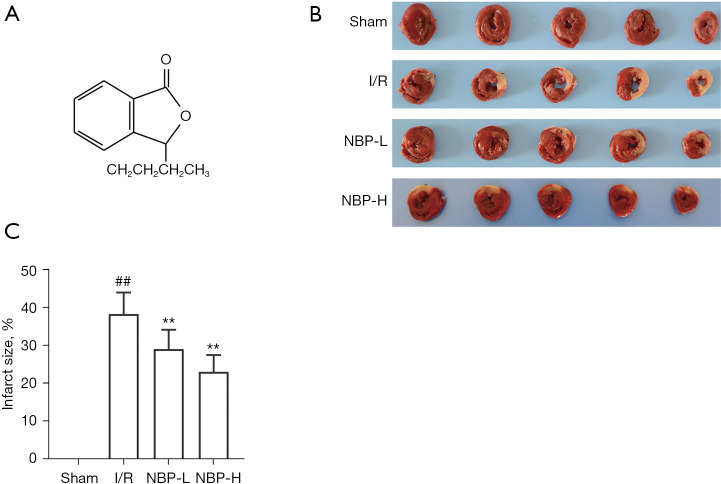
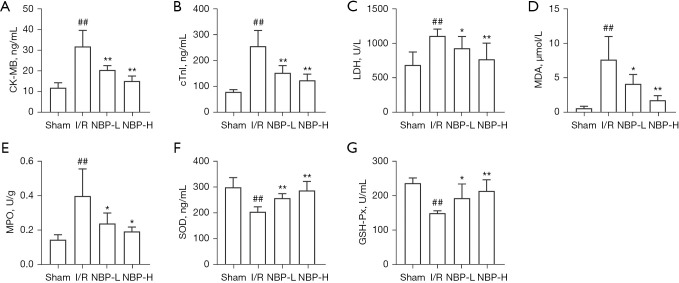
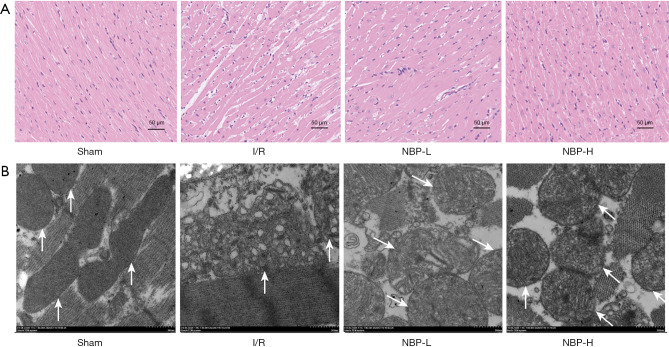
The left anterior descending (LAD) coronary arteries of rats were occluded for 30 minutes and reperfused for 6 hours to establish the ischemia/reperfusion (I/R) model. NBP was administered intraperitoneally 2 hours before modeling and immediately after reperfusion. At 6 hours after reperfusion, 2,3,5-triphenyltetrazolium chloride (TTC) staining, enzyme-linked immunosorbent assay (ELISA), oxidative stress index, myocardial injury index, hematoxylin and eosin (HE) staining, transmission electron microscopy (TEM), real-time polymerase chain reaction (PCR), immunofluorescence staining, and Western blot analyses were performed to investigate the protective effects of NBP against IRI.
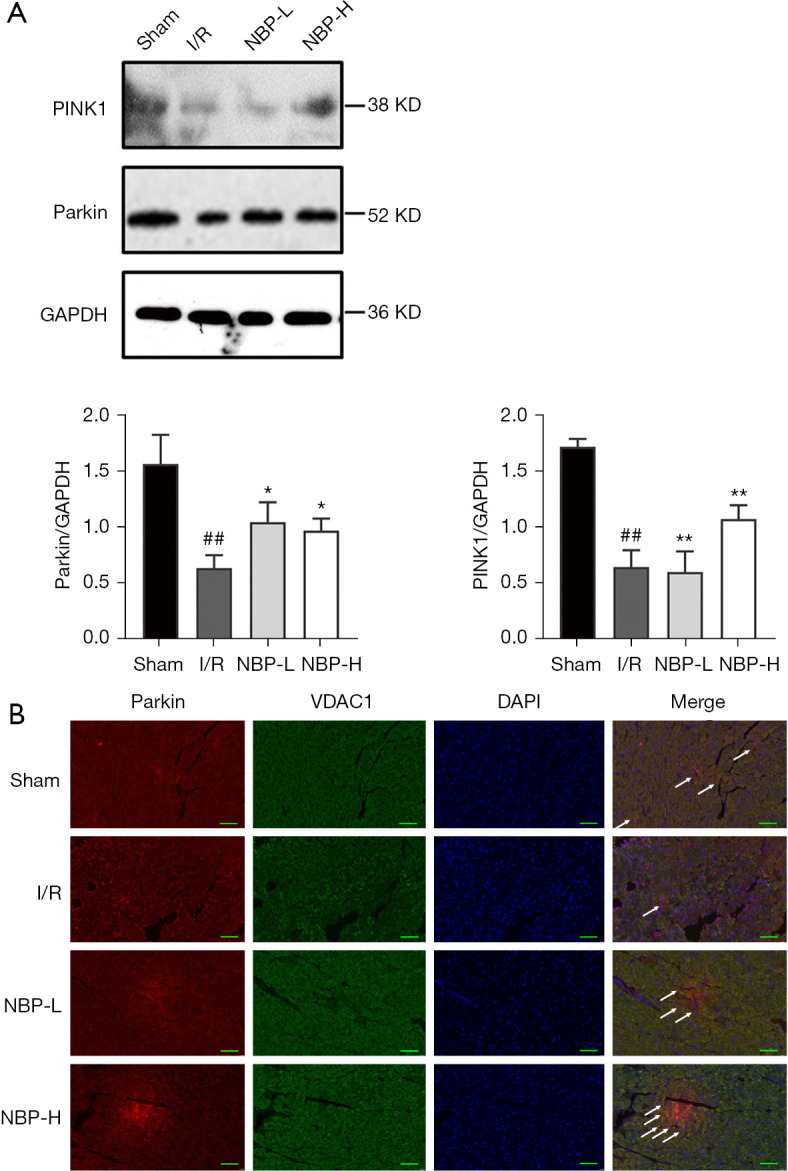
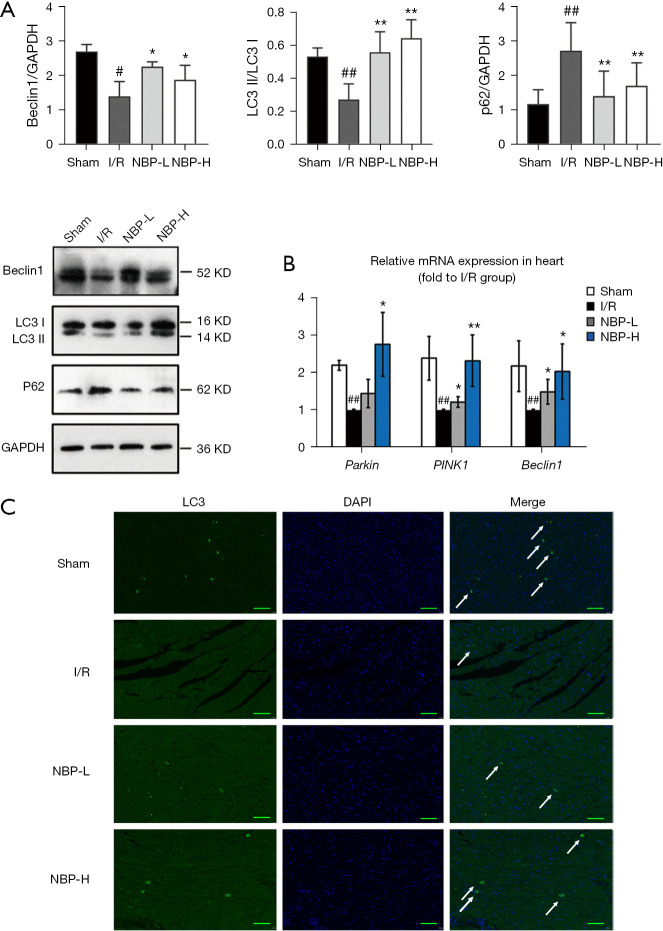
In the rat I/R model, NBP remarkably reduced the myocardial infarct size, alleviated myocardial injury and oxidative stress, improved the pathological alteration of cardiomyocytes and mitochondria, and upregulated mitophagy. In addition, the study demonstrated that the protective effects of NBP against IRI involved mitophagy mediated by the PTEN-induced putative kinase protein-1 (PINK1)/Parkin signaling pathway.
NBP was able to protect the myocardium from IRI in rats through inhibiting oxidative stress and activating mitophagy, mediated by the PINK1/Parkin pathway.
急性心肌梗死(AMI)是全球主要的死亡原因之一。缺血心肌再灌注期间可能会发生不良心肌损伤,这被称为“缺血再灌注损伤”(IRI)。目前,几乎没有有效的药物来减轻IRI。在中国,丁苯酞(NBP)被推荐用于治疗急性缺血性中风。本研究调查了NBP对IRI的影响及其潜在机制。
将大鼠左冠状动脉前降支(LAD)闭塞30分钟,再灌注6小时以建立缺血/再灌注(I/R)模型。在建模前2小时和再灌注后立即腹腔注射NBP。再灌注6小时后,进行2,3,5-三苯基氯化四氮唑(TTC)染色、酶联免疫吸附测定(ELISA)、氧化应激指数、心肌损伤指数、苏木精-伊红(HE)染色、透射电子显微镜(TEM)、实时聚合酶链反应(PCR)、免疫荧光染色和蛋白质免疫印迹分析,以研究NBP对IRI的保护作用。
在大鼠I/R模型中,NBP显著减小心肌梗死面积,减轻心肌损伤和氧化应激,改善心肌细胞和线粒体的病理改变,并上调线粒体自噬。此外,该研究表明NBP对IRI的保护作用涉及由磷酸酶和张力蛋白同源物(PTEN)诱导的假定激酶蛋白-1(PINK1)/帕金蛋白(Parkin)信号通路介导的线粒体自噬。
NBP能够通过抑制氧化应激和激活由PINK1/Parkin途径介导的线粒体自噬来保护大鼠心肌免受IRI损伤。