Lampe Paul D, Laird Dale W
Translational Research Program, Fred Hutchinson Cancer Center, Seattle, WA, USA.
Department of Anatomy and Cell Biology and Department of Physiology and Pharmacology, University of Western Ontario, London, ON, Canada.
Fac Rev. 2022 May 27;11:14. doi: 10.12703/r/11-14. eCollection 2022.
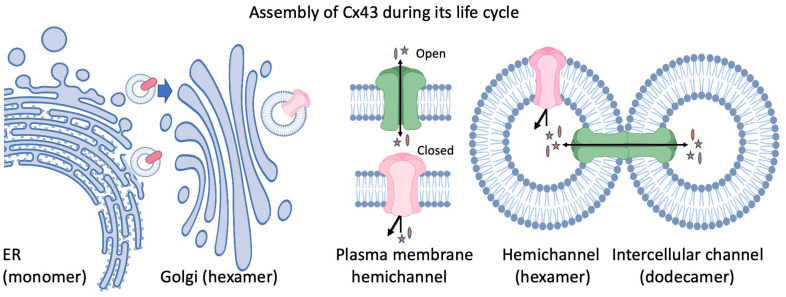
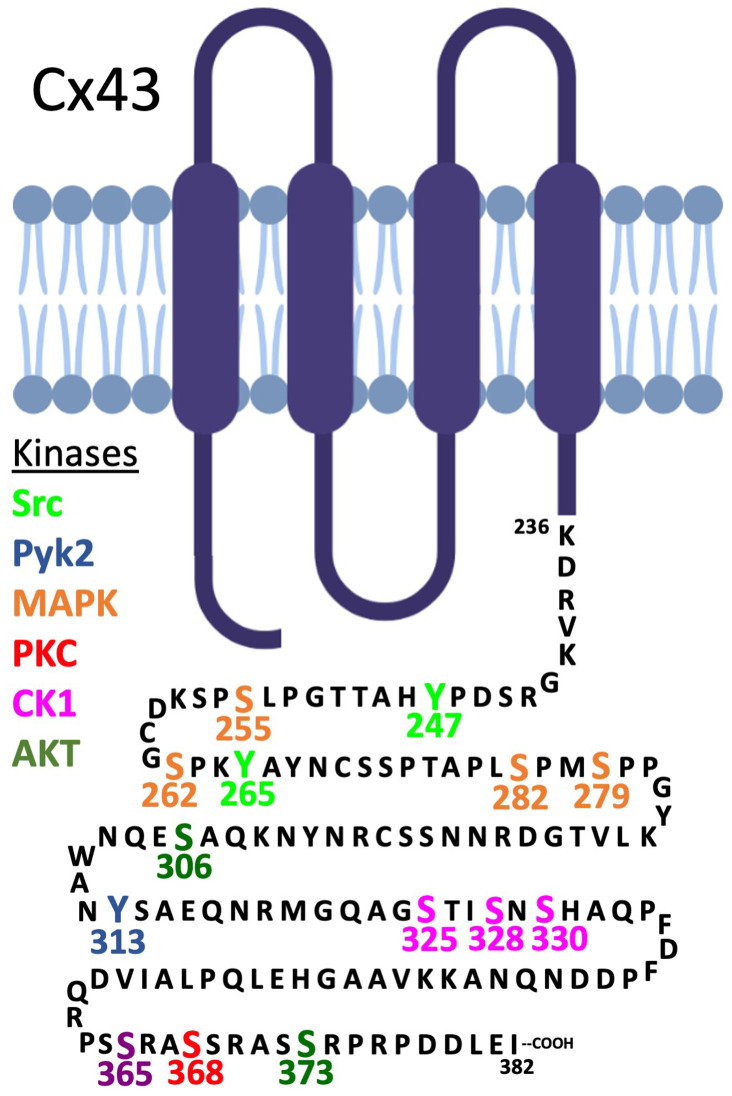
Connexins are assembled into dodecamer intercellular channels, a collection of which is termed a gap junction, and their canonical function allowing direct exchange of ions and metabolites has been unequivocally established. When initially assembled into undocked cell surface connexin hemichannels, healthy cells may also engage in cell signaling via a regulated small-molecule release. Recent advances in the field have led to an expanded view of the functional roles of intercellular channels and hemichannels in both physiology and pathology. As more of the 21-member human connexin family is intensely interrogated, mounting evidence points to the biological uniqueness of each member, and no longer can we confidently refer to all connexins engaging in the same cellular processes. Innovations in high-resolution cryo-electron microscopy have revealed important insights into the structure of functionally important domains of both hemichannels and channels. These and other studies have established a foundation of knowledge that should allow inhibitory smart drug design for situations where enhanced intercellular or hemichannel activity is at the root of a connexin-linked disease. Assessment of the connexin interactome, which varies widely for each connexin subtype, continues to provide regulatory insights into the assembly and function of connexins that exhibit a short half-life. As the most intensely studied, Cx43 is found in about 50% of all human cell types and is extensively regulated by multiple inhibitory and enhancing phosphorylation events that have direct implications on tissue function and outcomes of disease, including cancer. Here, we briefly discuss these advances and give our thoughts on where the field is headed.
连接蛋白组装成十二聚体细胞间通道,这些通道的集合称为间隙连接,其允许离子和代谢物直接交换的经典功能已得到明确证实。当最初组装成未对接的细胞表面连接蛋白半通道时,健康细胞也可能通过受调控的小分子释放参与细胞信号传导。该领域的最新进展使人们对细胞间通道和半通道在生理和病理过程中的功能作用有了更广泛的认识。随着对由21个成员组成的人类连接蛋白家族中越来越多的成员进行深入研究,越来越多的证据表明每个成员都具有生物学独特性,我们再也不能自信地认为所有连接蛋白都参与相同的细胞过程。高分辨率冷冻电子显微镜的创新揭示了关于半通道和通道功能重要结构域结构的重要见解。这些研究以及其他研究奠定了知识基础,这应该有助于设计抑制性智能药物,用于治疗那些细胞间或半通道活性增强是连接蛋白相关疾病根源的情况。对连接蛋白相互作用组的评估,每种连接蛋白亚型的相互作用组差异很大,这继续为对具有短半衰期的连接蛋白的组装和功能提供调控见解。作为研究最深入的连接蛋白,Cx43存在于约50%的人类细胞类型中,并受到多种抑制性和增强性磷酸化事件的广泛调控,这些事件对组织功能和包括癌症在内的疾病结局有直接影响。在这里,我们简要讨论这些进展,并对该领域的发展方向发表我们的看法。